We are operators first, and we have run the floor we are asked to fix
Four partners, one principal and no junior bench. Every engagement is delivered by someone who has carried a payroll, missed a deadline and rebuilt a schedule that was failing.


Figures are illustrative and shown to demonstrate this design.
Started on a shop floor, not in a strategy practice
Ruth Halden spent eleven years running operations for a family owned fabricator in Colorado. The firm was profitable on paper and out of cash every February. Fixing that taught her the pattern we still work from: the constraint hides one step upstream of the complaint, and the numbers usually already know.
We opened in 2019 with two rules. Nobody bills for a discovery phase, and nobody hands over a binder. What leaves with the client is a one page map, a weekly report they build themselves and a named owner beside every number on it.
Seven years in, the work has not changed much. Two days on the floor, one week in the numbers, then the smallest change that moves the constraint.

A plan is real once someone owns the number.
We stay until the owner and date exist.
Four habits we do not trade away
They are unglamorous and they are the reason clients keep the routine after the engagement closes.
We say the number
If the margin is thin, you hear it in week one, not in the closing deck.
We work on site
Two days on the floor beats two weeks of interviews and a survey link.
We leave the tools
The report, the meeting and the rules stay yours, in plain spreadsheets.
We name an owner
Every fix gets one person, one date and one measure. No shared accountability.
Five people, all of them senior
Every engagement is staffed by a partner. You will not meet one person in the pitch and another on site.
Work with us Ruth HaldenFounding partner
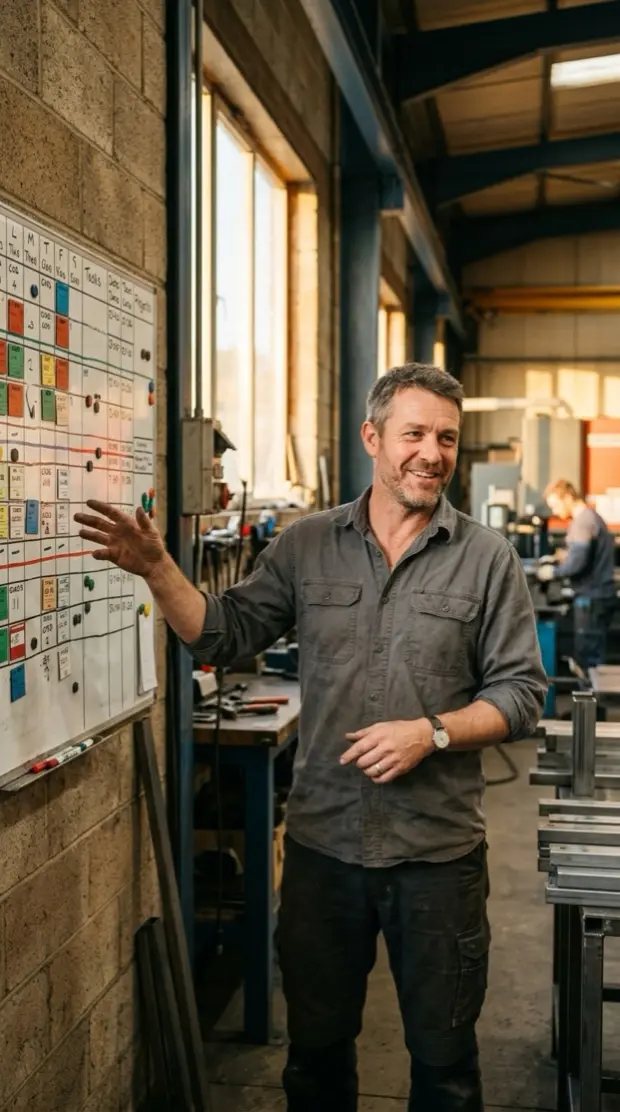 Owen BaptistePartner, operations
 Nadia SorelPartner, growth
 Theo LindqvistPrincipal, analytics