We do not guess where an implant goes. We plan it in three dimensions and let a printed guide put it there.
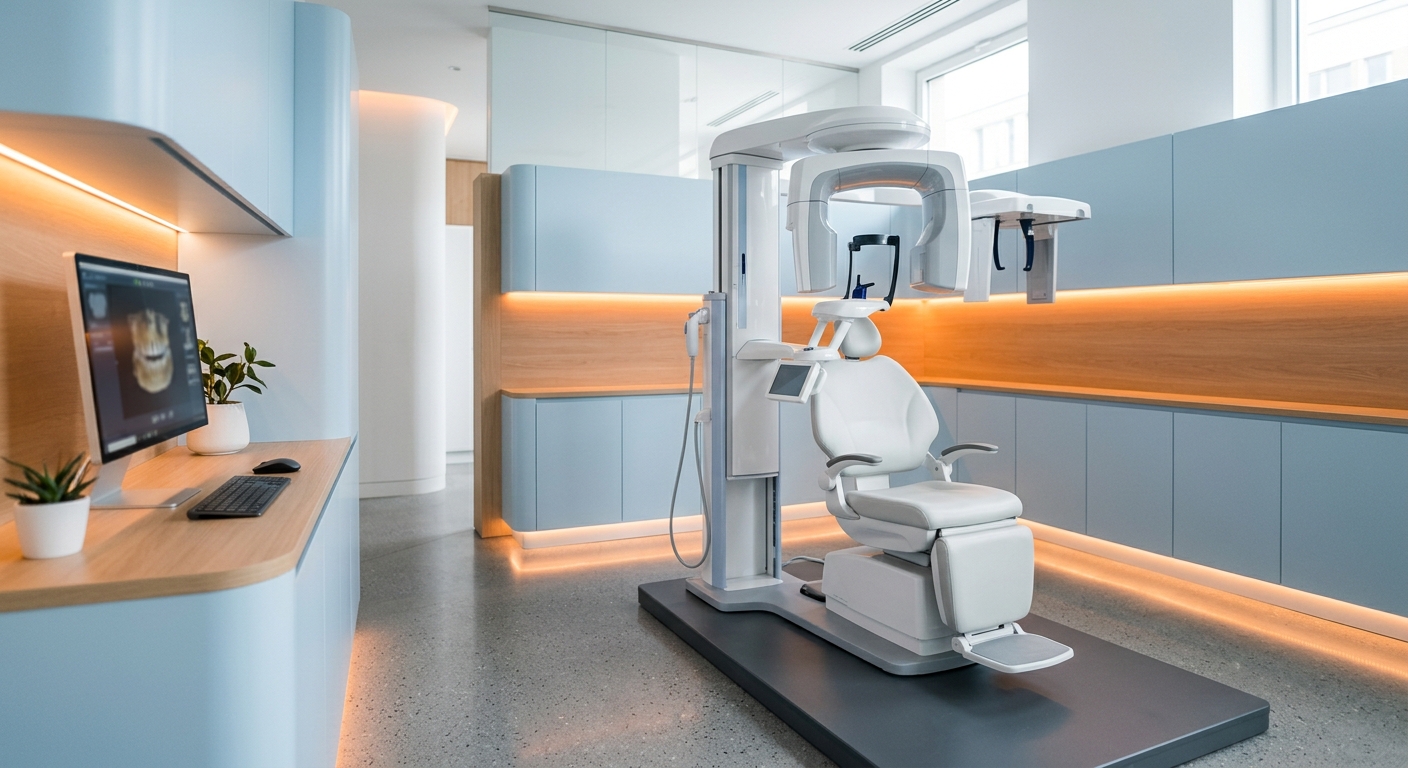
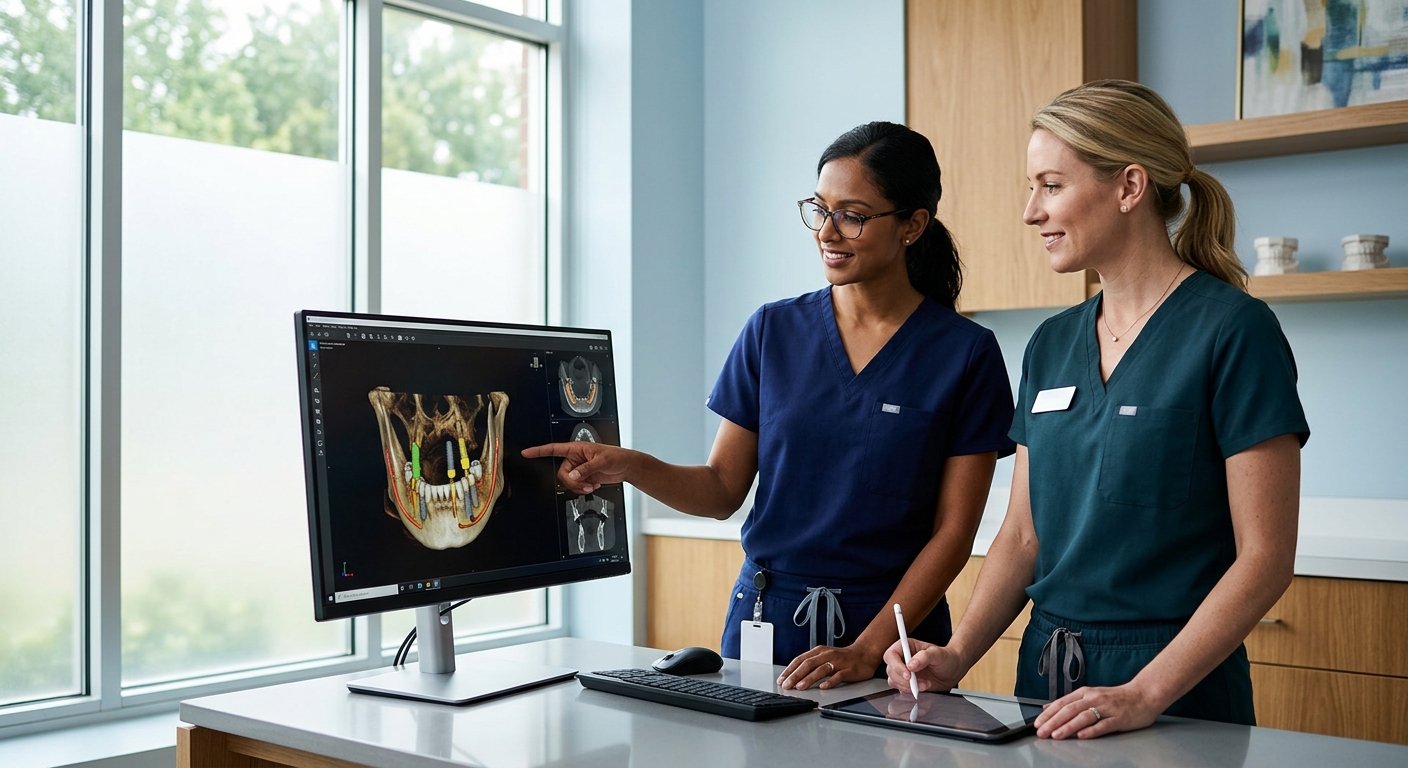
A low-dose cone-beam scan turns your jaw into a real 3D model, so we can see nerve position, bone density and the exact angle a tooth needs long before any surgery.
From that model we design the placement digitally and print a surgical guide that makes the plan and the procedure the same thing. Less guesswork, smaller openings, faster healing, and a result you could see on screen before we started.
Thousands of implants placed, one careful appointment at a time
Questions, answered
Most adults with a missing or failing tooth are. We confirm it with a 3D scan that shows your bone height and density, and if you are short on bone we can often build it back with a small graft before placement.
The procedure itself is done under local anesthetic with sedation options, so you feel pressure at most. Most patients tell us the recovery was far easier than the tooth problem that brought them in.
A single implant with its crown is quoted as one flat figure after your scan, with no surprise add-ons. We review every number with you up front and can spread it over monthly payments through our financing partners.
All-on-4 anchors a full fixed arch of teeth on four implants. In most cases we place the implants and attach a fixed temporary arch on the same day, then swap in your final arch once healing is complete.
A well-placed implant is designed to be permanent, and with routine cleanings the large majority are still going strong decades later. The crown on top may need replacing eventually, like any restoration.