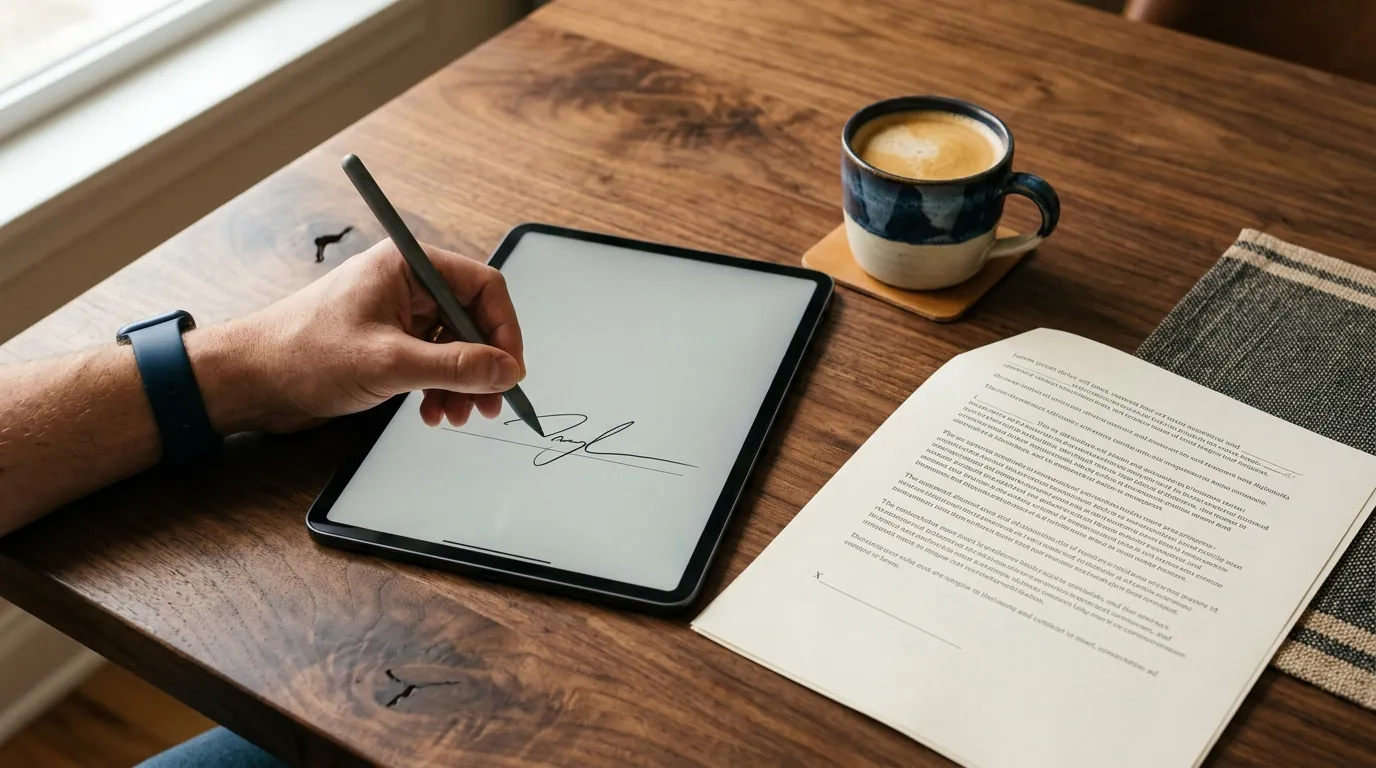
Electronic signatures are legally valid for most business contracts in the United States under the federal E-SIGN Act and state laws based on the Uniform Electronic Transactions Act. What matters is showing intent to sign, consent to do business electronically, and a reliable record of the signed version.
The legal basis
Federal law and the version of the Uniform Electronic Transactions Act adopted in Colorado both give electronic signatures the same effect as ink for most commercial agreements. A few document types, such as wills and certain notices, still follow separate rules.
| Usually fine to sign electronically | Check before signing electronically |
|---|---|
| Customer and vendor agreements | Wills and trusts |
| Offer letters and NDAs | Certain court filings |
| Purchase orders and statements of work | Documents requiring notarization |

What makes a signature enforceable
- Show intentThe signer takes a clear action, such as typing a name or clicking a button labeled as a signature.
- Record consentBoth parties agree to conduct the transaction electronically, often in the agreement itself.
- Keep the recordStore the final signed version with its audit trail so it cannot be quietly changed.
“The software rarely decides a signature dispute. The record of who signed what, and when, usually does.”
Common questions
It can be, when the context shows the person intended to sign. A dedicated signing platform makes that intent easier to prove.
No. Each side can sign through whatever process the agreement allows, as long as intent and the record are clear.
Colorado allows remote notarization under specific procedures, which differ from a simple electronic signature.
This article is general information, not legal advice for your situation.

Marcus Hale
Marcus negotiates supply, licensing and services agreements, drawing on years spent as in-house counsel for a manufacturer.
marcus@brandtlegal.example