North Ridley
Bicycle Accident Lawyer.
A cyclist is not in a car, but the statute that decides who pays the first medical bills still has an answer for you, and it does not require you to own a vehicle.
Yes. A typical state's first party benefit statute sets an order of priority that reaches people who were not in a vehicle at all, so a cyclist claims on a household policy if there is one and, if there is not, on the policy covering a vehicle involved in the crash.
Whose Insurance Pays For A Cyclist?
The statute works down a list, and it stops at the first line that fits you. Read it in order rather than picking the one that sounds right.
You are a named insured on a car policy
Your own policy, even though you were on a bikeThe statute puts a named insured on the policy on which they are the named insured, first in the order, without asking what they were traveling in at the time.
Somebody in your household has one
A spouse, a relative, a parent you live withThe order of priority names an insured in second place, immediately after the named insured. Whether you are an insured on a particular household policy is answered by that policy and by the traffic code's definitions, which is why the declarations page is the first document to find.
Nobody in the household has one
The case cyclists assume is hopelessFor a person who is not the occupant of a motor vehicle, the statute names the policy on any motor vehicle involved in the accident. A cyclist is not an occupant of a motor vehicle.
Where it happened
North Ridley, Millbrook and the streets betweenThe North Ridley office is on Mercer Avenue, and the towns and neighborhoods each office covers are listed on its own page.
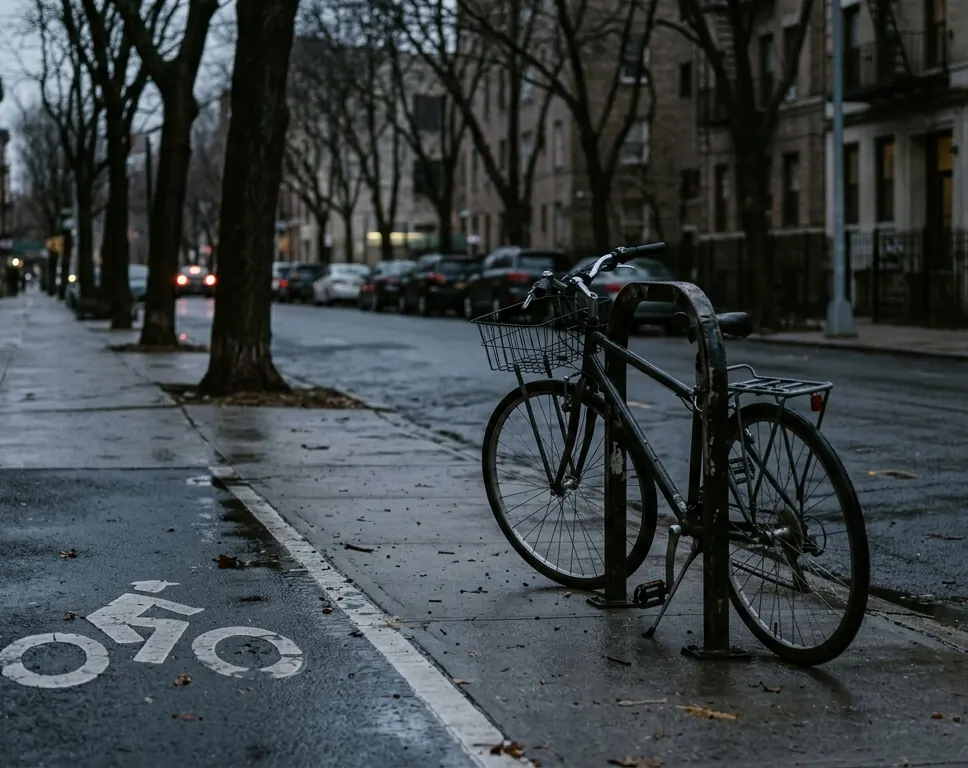
What Should I Photograph?
A bicycle gets picked up, carried home and leaned against a wall within the hour, and once it has been moved nobody can put it back.
- The bike where it came to rest, before anybody lifts it
- The damage to the bike and to the car, from both sides
- The lane markings, the bike lane if there is one, and where the car ended up
- The junction as a whole, from where the driver would have been looking
- Your helmet, your clothing and your shoes, however they ended up
- The driver's license, registration and insurance card, photographed rather than copied out
Does Riding Without A Helmet Hurt My Claim?
The pedalcycle section answers this one directly, which is unusual and worth knowing.
Many states require a helmet for a person under 12 years of age riding or being carried on a pedalcycle. It then says something the motorcycle section does not: that in no event shall a violation or alleged violation of that requirement be used as evidence in a trial of any civil action, nor shall failure to use a pedalcycle helmet be considered as contributory negligence, nor shall it be admissible as evidence in the trial of any civil action.
The other thing drivers and insurers get wrong is the right to be there at all. Every person riding a pedalcycle upon a roadway is granted all of the rights and is subject to all of the duties applicable to the driver of a vehicle, except where the pedalcycle subchapter says otherwise. A cyclist on Mercer Avenue is traffic, not an obstruction.
Where a cyclist did something wrong, many states reduce a recovery in proportion to the share of negligence attributed to them and bars it only where that share was greater than the causal negligence of the defendants. That is an argument about proportion, and it is worth making properly rather than conceding on a phone call.
What If The Driver Left The Scene?
Still a claimA hit and run does not end the claim. The first party benefit order in the statute does not depend on identifying the driver, and where the vehicle is never found the question becomes what coverage exists on your side. Report it to the police the same day, get the incident number, and ask somebody to read your declarations page before you assume there is nothing there.
- Which policy pays firstRules that set the order of policies usually look first to your own policy, then to the vehicle you were in, then to a vehicle involved.
- Required medical benefitStates that require a medical benefit on auto policies set a minimum amount and often exempt motorcycles from it.
- Riders and the rules of the roadA person riding a bicycle on a road usually has the same rights and duties as the driver of a vehicle.
- Bicycle helmetsMany states require helmets for young riders only, and a missing helmet does not decide a civil claim on its own.
- Comparative negligenceWhere the injured person shares the blame, many states reduce the award by that share rather than barring it, up to a limit the state sets.
Questions From Riders On Two Wheels.
The firm's own guidance covers e-bikes, scooters and pedal bikes together. These are the questions that actually come up on the phone.
No. For a person who is not the occupant of a motor vehicle, the statute names the policy on any motor vehicle involved in the accident. That is the line that covers most cyclists who assume they have nothing.
It is an argument about proportion, not about whether there is a claim. Many states reduce a recovery in proportion to the share attributed to the injured person and bars it only where that share was greater than the other side's.
Ask, because the answer depends on the machine. How a particular vehicle is classified under the traffic code changes which sections apply to it, and that is a question to settle on the facts rather than on a web page.
In most states an injury lawsuit has to be started within a set time, often two years. If a government unit is in the file there is also a written statement to file within six months of the injury, and that one is missed far more often.
The North Ridley office is at 410 Mercer Avenue and the main office is at 88 Mercer Pike in Millbrook. One number, (555) 018-4420, reaches both, and someone will come to you at home or in the hospital.