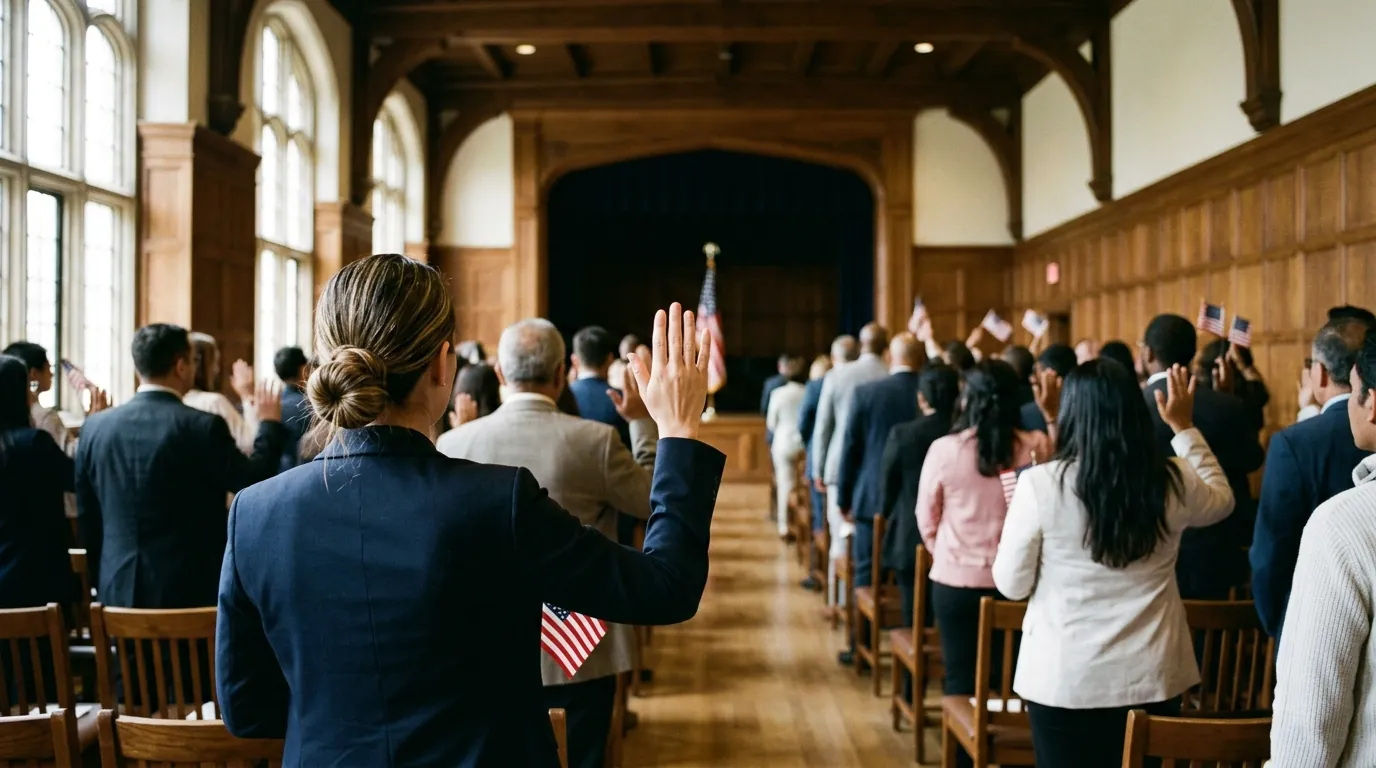
What citizenship adds
A green card already gives you a permanent home and the right to work here. Citizenship goes further. Citizens can vote in federal elections, hold a U.S. passport, serve on juries, qualify for many federal jobs, petition for a wider range of relatives and pass citizenship to children born abroad in many situations. Most importantly, citizenship cannot be taken away for the reasons that can end permanent residence.
For many clients the decision is also emotional. Citizenship can mean finally feeling settled, being able to vote in the community you have lived in for years, or bringing relatives through a faster category. We talk through both the practical and the personal reasons, because they often shape the timing.
Basic eligibility
Most applicants must meet each of these requirements on the day they file and again at the interview:
- Be at least 18 years old
- Hold a green card for five years, or three years if married to and living with a U.S. citizen spouse during that time
- Show continuous residence for that period without breaks caused by long trips
- Be physically present in the United States for at least half of that period
- Live for three months in the state or USCIS district where you file
- Demonstrate good moral character
- Pass English and civics tests unless an exception applies
- Support the principles of the Constitution and take the oath
Special timelines. Some applicants qualify on special timelines. Spouses of citizens employed abroad by certain organizations, people who served honorably in the U.S. military and some others may apply sooner or with fewer residence requirements. If any of these apply, tell us at the first meeting.
Dates, travel and residence
Counting your dates. USCIS allows most people to file up to ninety days before the anniversary that makes them eligible. Counting correctly matters: filing a single day early can lead to a denial and a lost fee. We calculate the date from your card and entry records and confirm it before you pay anything.
Travel and continuous residence. Trips of more than six months but less than a year create a presumption that continuous residence was broken, which you can try to overcome with evidence of ongoing ties such as keeping a job, a home and tax filings here. A trip of a year or longer generally breaks residence unless you obtained approval in advance. We reconstruct your travel history using passports, flight records and, if needed, government records requests.
Physical presence. Physical presence is counted separately. It adds up the actual days you spent inside the United States during the statutory period, and you must reach at least half. Frequent travelers, including people who work abroad for part of the year, should count carefully before filing.
Certain people working abroad for the U.S. government, for American companies or for qualifying organizations may be able to preserve residence while overseas by filing in advance. Ask us before a long assignment begins.
Good moral character
Conduct officers review. Officers look at conduct during the statutory period and sometimes before it. Issues that can raise questions include arrests or convictions, unpaid taxes, failure to pay court-ordered child support, false claims to citizenship, voting when not eligible and certain immigration violations. Many issues can be explained, but some must be resolved before filing. Always tell your attorney about any arrest, even one that was dismissed.
Disclose everything. Disclosing a record is almost always better than leaving it out. An officer who discovers an undisclosed arrest may question everything else in the file. We obtain certified court records, explain the outcome in plain language and, when needed, advise waiting until a problem is resolved before filing.
Taxes. Taxes deserve particular attention. Applicants who owe back taxes can often qualify if they have an approved payment plan and are keeping up with it. Bring your tax transcripts to the consultation.
Filing the application
The form. The application, Form N-400, asks detailed questions about residence, employment, travel, marriages, children and background. Answers must be complete and consistent with your earlier immigration filings. We compare your answers against prior applications, gather supporting records and flag anything that needs a written explanation or certified court documents.
Common mistakes include listing the wrong dates for trips, forgetting a prior marriage, answering yes or no questions too quickly and leaving out children who live abroad. Each can cause delays or raise doubts. We go through every question with you, including the long list of yes or no questions near the end of the form.
Fees and reductions. Filing fees change from time to time. Applicants with lower household incomes may qualify for a reduced fee, and some may request a waiver. We check current rules and income guidelines with you before filing.
Biometrics. After filing, USCIS schedules an appointment to take fingerprints and a photograph for background checks. Bring your appointment notice and green card. If you cannot attend, request a new date promptly; missing it without rescheduling can lead to a denial.
Background checks sometimes take longer than expected, especially for people with common names or records in several countries. A slow check does not mean anything is wrong. If a case sits much longer than the local average, we can make inquiries on your behalf.
The interview and tests
At the interview. An officer places you under oath, confirms your identity and reviews your application question by question. Expect to explain changes since filing, such as a new address, job or trip. Bring originals of the documents listed on your notice, including your green card, passports and any court records.
Arrive early and bring everything listed on the notice, even documents you think the officer already has. If you have changed your name, bring the legal documents showing the change. If your address or employment changed after filing, tell the officer at the beginning rather than waiting to be asked.
The English and civics tests. The English test covers reading, writing and speaking, and the speaking portion happens throughout the interview. The civics test asks questions about U.S. history and government from an official list. Applicants who fail a portion usually get a second chance at a later appointment. Certain older, long-term residents may take the civics test in their own language, and people with qualifying disabilities may request an exception with a medical certification.
Practice sessions. We run mock interviews that follow the format officers use. We review your own application with you, practice the civics questions and rehearse explaining any sensitive history clearly and briefly. Clients often tell us that the practice was harder than the real thing, which is the goal.
After the interview
Possible outcomes. The officer may approve the application, continue it to request more documents, or deny it. A continuance is common and is not a denial. If an application is denied, you may request a hearing with a different officer within a set period, and we can advise whether that is the best route or whether to wait and file again.
A continuance usually comes with a written list of what the officer needs and a deadline. Respond completely and on time; we prepare the response and track the case until a decision is issued. If the officer has concerns that cannot be resolved with documents, we discuss whether withdrawing and refiling later would be wiser.
The oath ceremony. Citizenship becomes official when you take the Oath of Allegiance, sometimes on the day of the interview and sometimes at a later ceremony. Until then you are still a permanent resident, so keep your green card and avoid international travel if you can. After the oath, you can apply for a passport and register to vote.
At the ceremony you return your green card, take the oath and receive your certificate of naturalization. Check the certificate for errors before you leave, since corrections are much easier on the day. Keep the original in a safe place and use copies for everyday purposes.
Children and citizenship
Children under 18 who hold green cards and live in the legal and physical custody of a citizen parent often become citizens automatically when the parent naturalizes. They can document it with a certificate or a passport. Children born abroad to citizen parents may already be citizens without knowing it. We review family situations to find these cases.
Parents sometimes ask whether a child needs to file anything at all. A certificate of citizenship or a passport serves as proof, and obtaining one makes future school, work and travel much simpler. We help families decide which document to request first.
Where to start
How long naturalization takes depends on the local office and the details of your case, and it varies considerably across the country. Preparation is what you control.
If you think you may be eligible, a short review of your dates, travel and history is a good place to begin. We will tell you whether to file now or plan for a later date.