

Dental Care
Thorough dental cleanings with monitored anesthesia and full-mouth X-rays, followed by a home routine you can stick with.
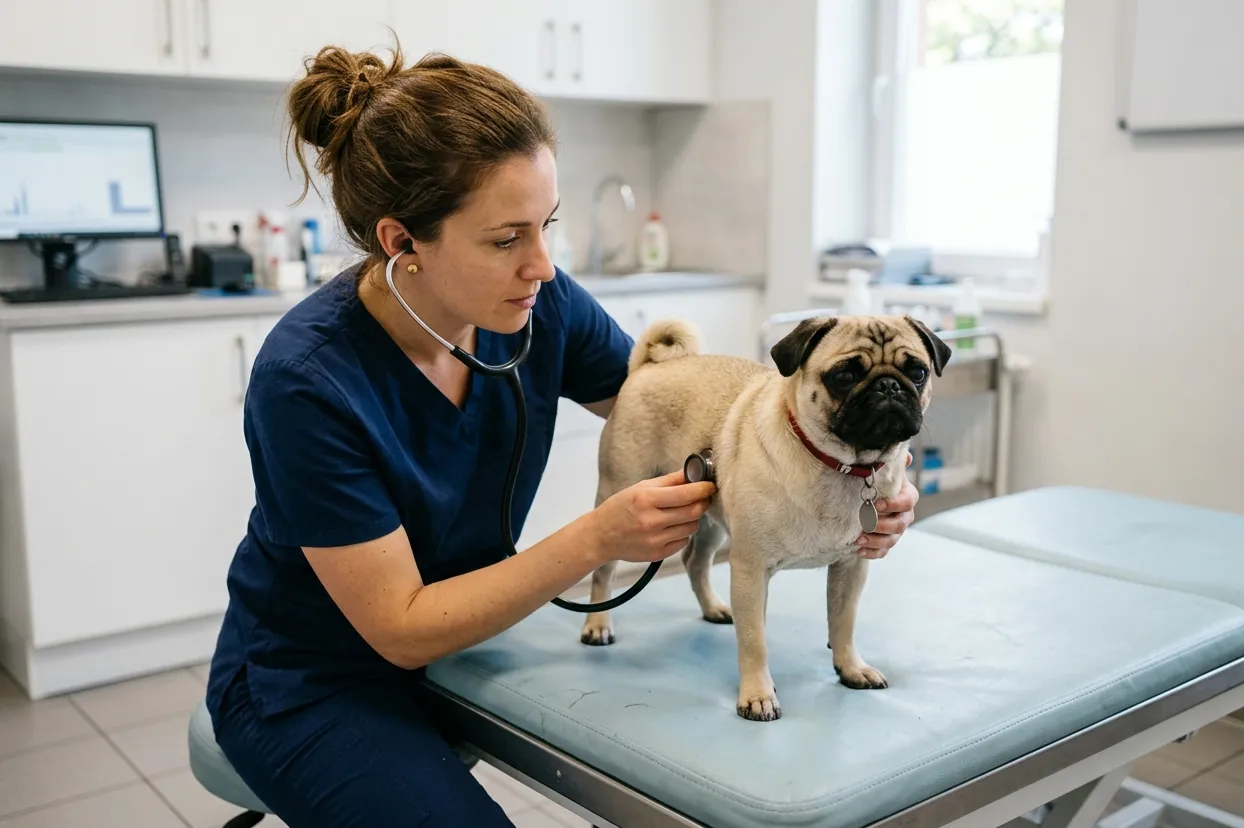
Dental Care
Most dogs and cats show some dental disease by middle age, and much of it sits below the gumline where you cannot see it. A cleaning at home with a toothbrush helps, but tartar under the gums, loose teeth and root problems need a proper look with the pet asleep and X-rays taken.
Every dental procedure starts with an exam and pre-anesthetic bloodwork. On the day, a veterinary technician stays with your pet from the moment they drift off until they are awake and warm, watching heart rate, breathing, oxygen and blood pressure. We clean above and below the gumline, polish, chart every tooth and call you before any extraction so you are part of the decision.
Who it is for
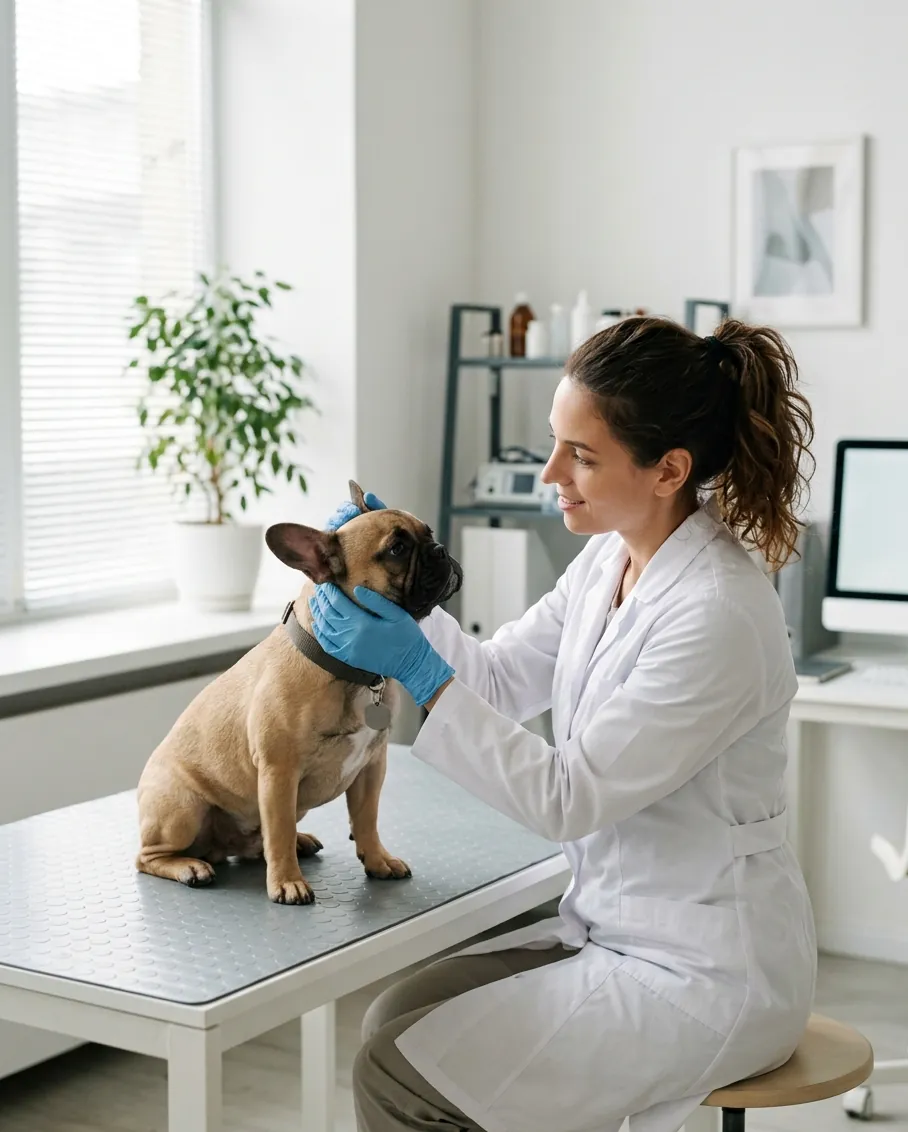
Small breeds, flat-faced dogs and many cats are prone to dental disease, but any pet can develop painful teeth. Because pets keep eating through a lot of discomfort, the first sign is often subtle: a change in chewing, a dropped kibble or a reluctance to play tug.
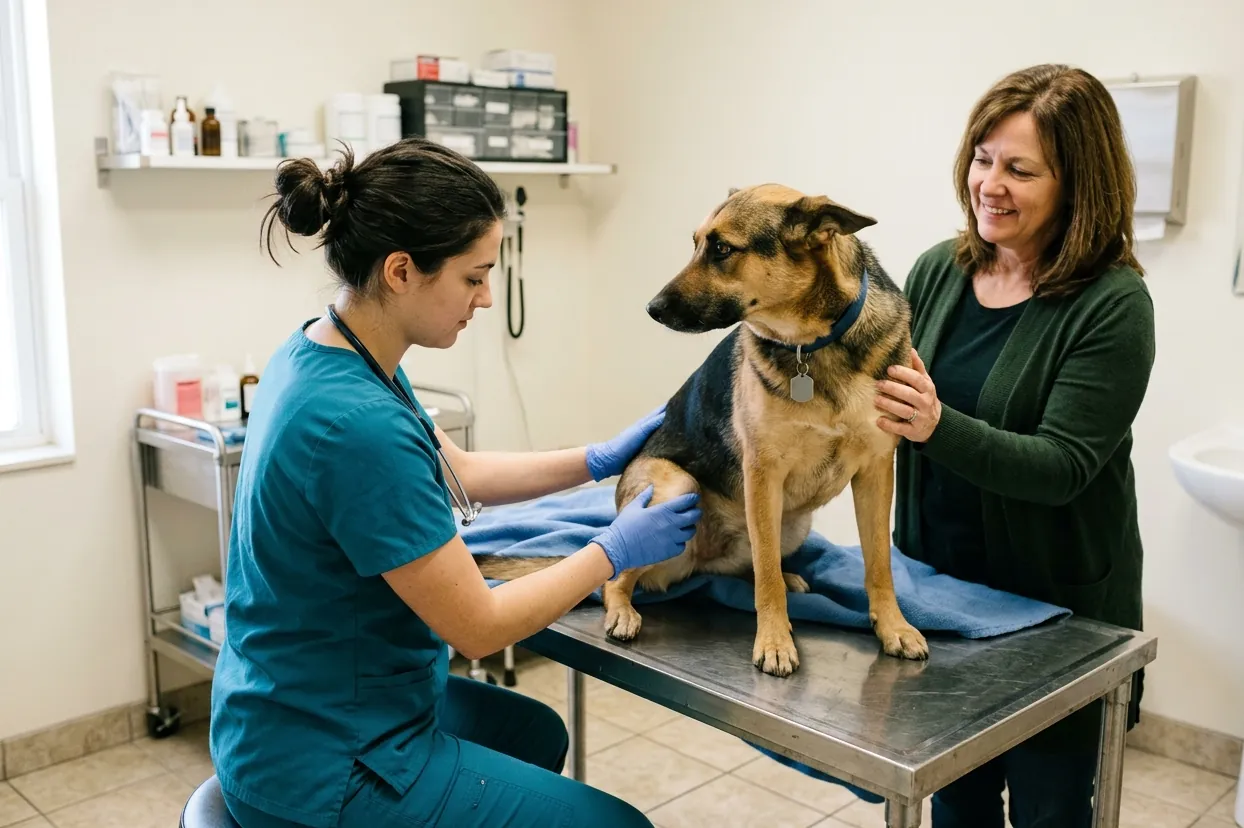
Older pets are not too old for dental care. For seniors we take extra time with bloodwork and the anesthesia plan, keep the procedure as short as the mouth allows and add warming and fluid support. You will always know what we found, what we recommend and what it costs before we go further.
What is included
- A conscious dental exam before any procedure is booked
- Pre-anesthetic bloodwork and an IV line for every patient
- Full-mouth dental X-rays to see roots and bone
- A written estimate and a phone call before extractions
Most pets go home the same afternoon, a little sleepy. Soft food for a few days, pain relief as prescribed and a recheck in about ten days are typical when teeth have been removed.
By life stage
| Dental grade | What we usually see | Typical next step |
|---|---|---|
| Grade 1 | Mild redness at the gumline | Home brushing, recheck in 6 months |
| Grade 2 to 3 | Tartar and gum pockets | Cleaning with X-rays |
| Grade 4 | Loose teeth or bone loss | Cleaning with likely extractions |
Good to know
Bad breath, dropping food, chewing on one side and pawing at the mouth are the signs owners notice most often. If you see any of them, book an exam; we will tell you honestly whether a cleaning can wait a few months or should be scheduled soon.
From our doctors
Many owners are surprised by how much brighter their pet seems after painful teeth are treated. A sore mouth often looks like slowing down, picky eating or grumpiness rather than an obvious problem. We would always rather catch dental disease early, when a cleaning and a good home routine are enough, than late, when several teeth need to come out.
Pricing facts: Dental cleanings with X-rays typically range from $450 to $750 before any extractions.
Illustrative pricing. Not an offer.
Families on dental care at Birchline
“Our cat hates car rides, yet she left calmer than she arrived. The quiet cat room really helps her.”
 Ellen T.Owner of Mochi
“The estimate matched the bill and every line was explained. No surprises, just honest care.”
 Hannah R.Owner of Juniper
“Daniel booked our two dogs back to back so I could do one trip. Small thing, huge help.”
 Jordan W.Owner of Lou and Max
“They sent the vaccine certificate to my inbox before I even got home. Boarding was easy.”
Dana K.Owner of Clover

What to expect at a dental care visit
Dental exam
We look at the mouth while your pet is awake and give you a written estimate range.
Procedure day
Drop off in the morning; a technician monitors your pet throughout the cleaning and X-rays.
Home routine
You get a short brushing routine, chew suggestions and a recheck date.
Dental Care questions, answered
Cleaning below the gumline and taking X-rays cannot be done thoroughly on an awake pet. Anesthesia is planned around your pet's age and bloodwork, and a technician monitors them the whole time.
Most pets are dropped off between 7:30 and 8:30 and go home mid to late afternoon.
No. We call you with what the X-rays show and talk through options before any extraction.
It varies. Some pets need one every year, others every two to three years with good home care.
Yes, a small soft meal the same evening is usually fine. If teeth were removed, we send soft food home and a schedule for returning to kibble.
Some help as part of a routine. We will suggest options that suit your pet's size and mouth, but none replace brushing and exams.
Related services
Wellness Exams
A nose-to-tail check once or twice a year, with a written plan for food, weight, parasites and the months ahead.
Vaccinations
Core and lifestyle vaccines on a schedule built for your pet, with every date tracked and reminders sent for you.
Surgery
Spays, neuters, lump removals and other soft tissue procedures, with careful anesthesia planning and pain control.