Radiofrequency skin tightening supports firmer skin gradually. Expect a subtle change after the first few sessions and the most meaningful improvement two to six months after a series of three to four.
Why the forties are a common starting point
Collagen production slows steadily from our twenties, and by the forties many people notice a softer jawline, crepey texture on the neck and fine crinkling around the eyes. At this stage the change is often mild enough for non-surgical tightening to help.
- Softening along the jaw and early jowls
- Crepey texture on the neck
- Fine lines and looseness around the eyes
What a series involves
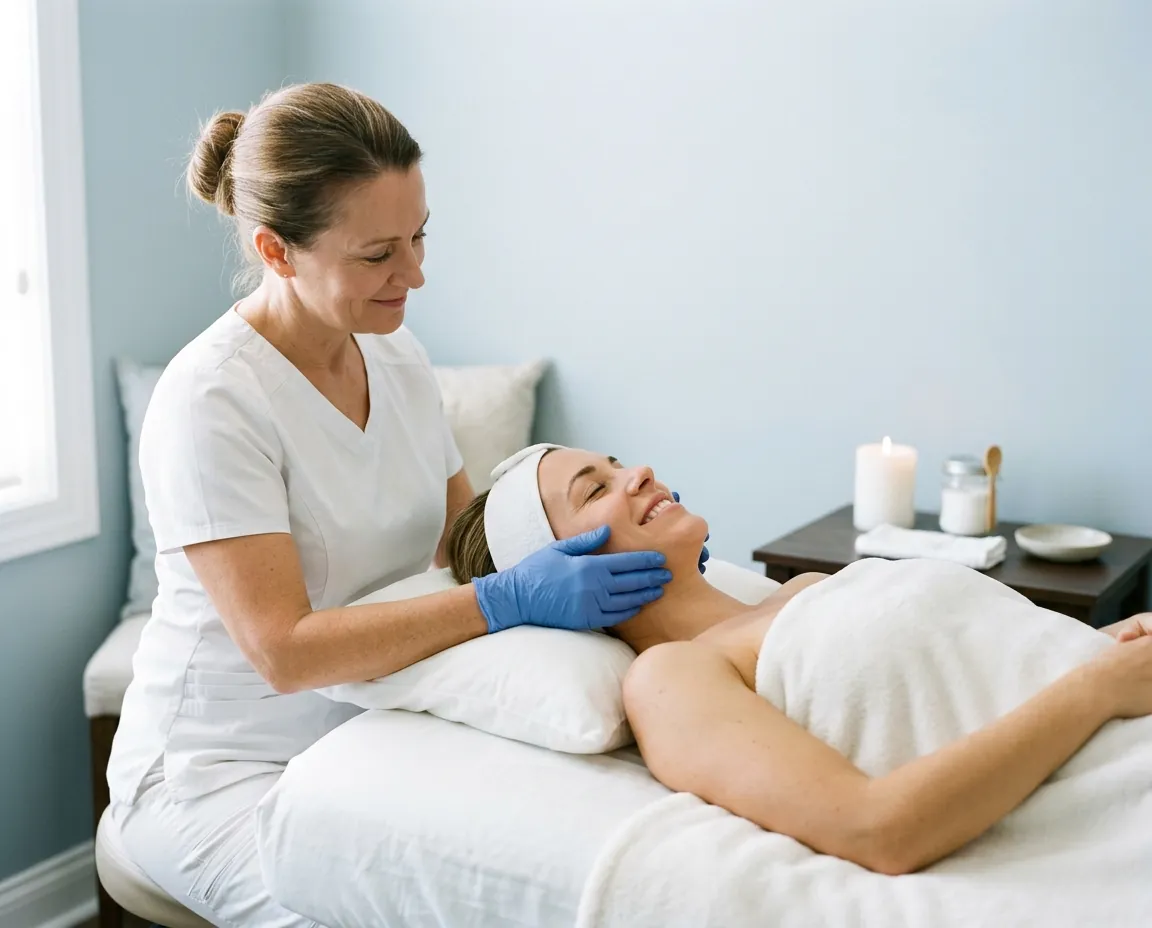
Sessions are comfortable and quick to recover from.
- Mapping and photos at the first visit
- Session 1: warm handpiece passes, about 45 minutes
- Sessions 2 to 4: one month apart
- Month six: review photos and plan maintenance
Pairing it with other treatments
Tightening supports the skin itself. Volume loss responds better to filler, and movement lines to relaxers. Combining them thoughtfully usually looks more natural than pushing any single treatment too far.
Small, steady changes add up to a face that still looks like yours.
Keeping expectations grounded
Tightening will not match a surgical lift for significant sagging, and we say so openly. For the right candidate, it offers a gradual improvement with no time away from work or family, and results vary.
Quick questions
Can I go back to work right after?
Yes. Slight flushing fades within an hour and makeup can go on straight away.
How long do results last?
Often a year or more, with maintenance sessions helping as the skin continues to age.
Is it safe for all skin tones?
Radiofrequency is generally suitable across skin tones because it does not target pigment.
Illustrative demo. Individual results vary. Pricing shown is illustrative. This article is general information, not medical advice.
Back To Journal