Introduction to laser hair removal
Laser hair removal uses concentrated light that is absorbed by the pigment in the hair. The light turns to heat inside the follicle and disables its ability to grow a new hair. Because only follicles in an active growth phase respond, a single visit treats just part of the hair on an area, which is why treatment is planned as a series.
Our device uses a wavelength chosen for a wide range of skin tones and a cooling tip that keeps the surface comfortable. Most clients see a significant reduction in hair after a full series, with some fine regrowth that responds to occasional maintenance. We describe it as long-term reduction, because hair biology varies from person to person.
Planning your sessions
Sessions are spaced four to eight weeks apart depending on the area, since facial hair cycles faster than hair on the legs. Most people need six to eight sessions for a full series. Shave the area the day before, avoid waxing or plucking for four weeks beforehand, and skip self-tanner so the laser can target the hair rather than the skin.
In Arizona the sun is the biggest scheduling factor. Tanned skin absorbs more laser energy, so we ask you to avoid direct sun on the area for two weeks before and after each visit. Many clients start a leg or bikini series in the fall and finish in early spring.
What a visit is like
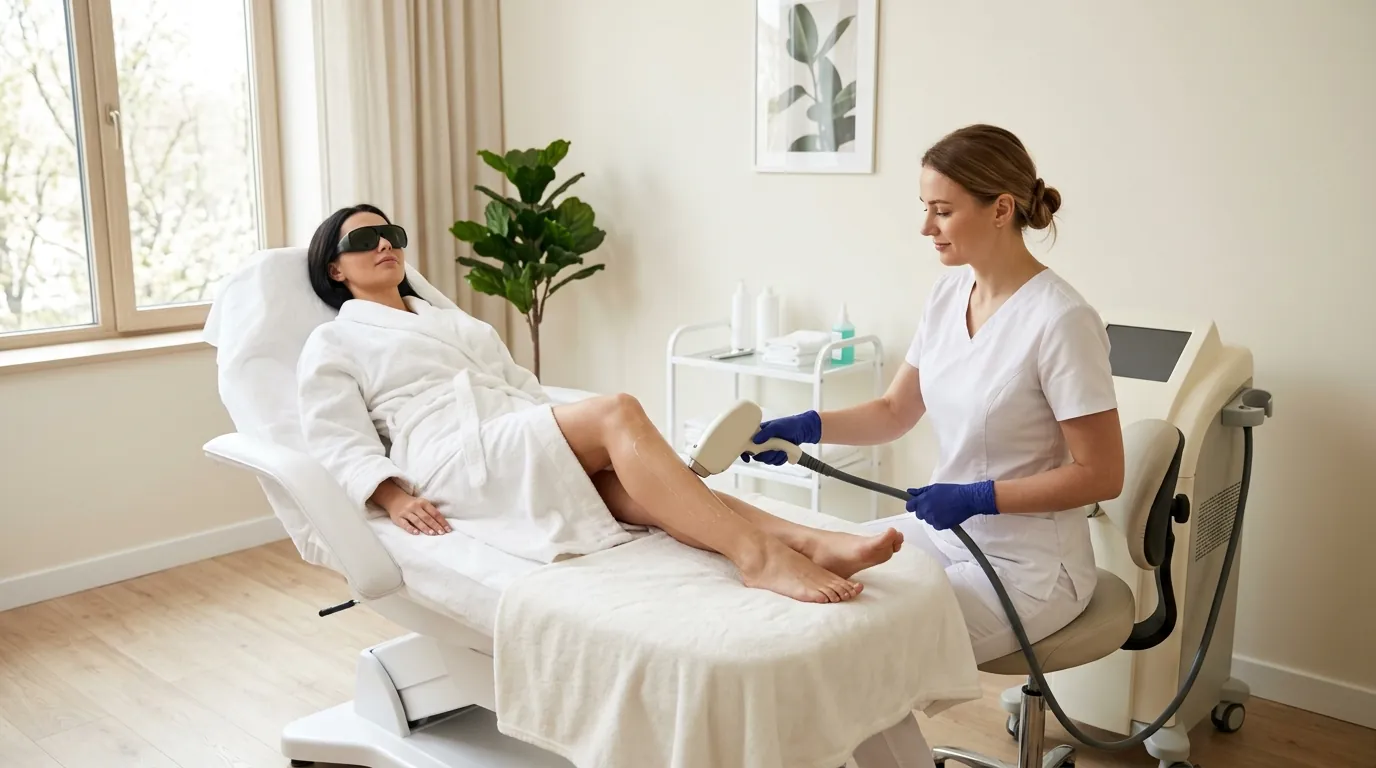
Most areas take 10 to 45 minutes. The sensation is often compared to a warm snap of a rubber band, softened by the cooling tip. The skin can look pink with small bumps around the follicles for a few hours.
- Arrive shaved, with no lotion or deodorant on the area
- Expect short sessions you can fit into a lunch break
- Treated hairs shed over one to three weeks
Who should wait
Laser responds most to dark hair; light blond, red, gray and white hair has too little pigment to respond well. We do not treat over tattoos, on freshly tanned skin or during pregnancy. If you take medication that increases sun sensitivity, your nurse will review timing with you before the first session.
Aftercare between sessions
Treated skin can feel like a mild sunburn for a few hours. Cool compresses and a fragrance-free moisturizer help. Skip hot showers, saunas and workouts that cause heavy sweating for a day, and hold off on exfoliating the area for a few days.
Over the next one to three weeks, treated hairs push out and shed; gentle exfoliation after the first week can help them release. Keep the area out of direct sun and use a broad-spectrum sunscreen on any exposed skin. Your nurse records the settings used at each visit so your next session is adjusted to how your hair and skin responded.