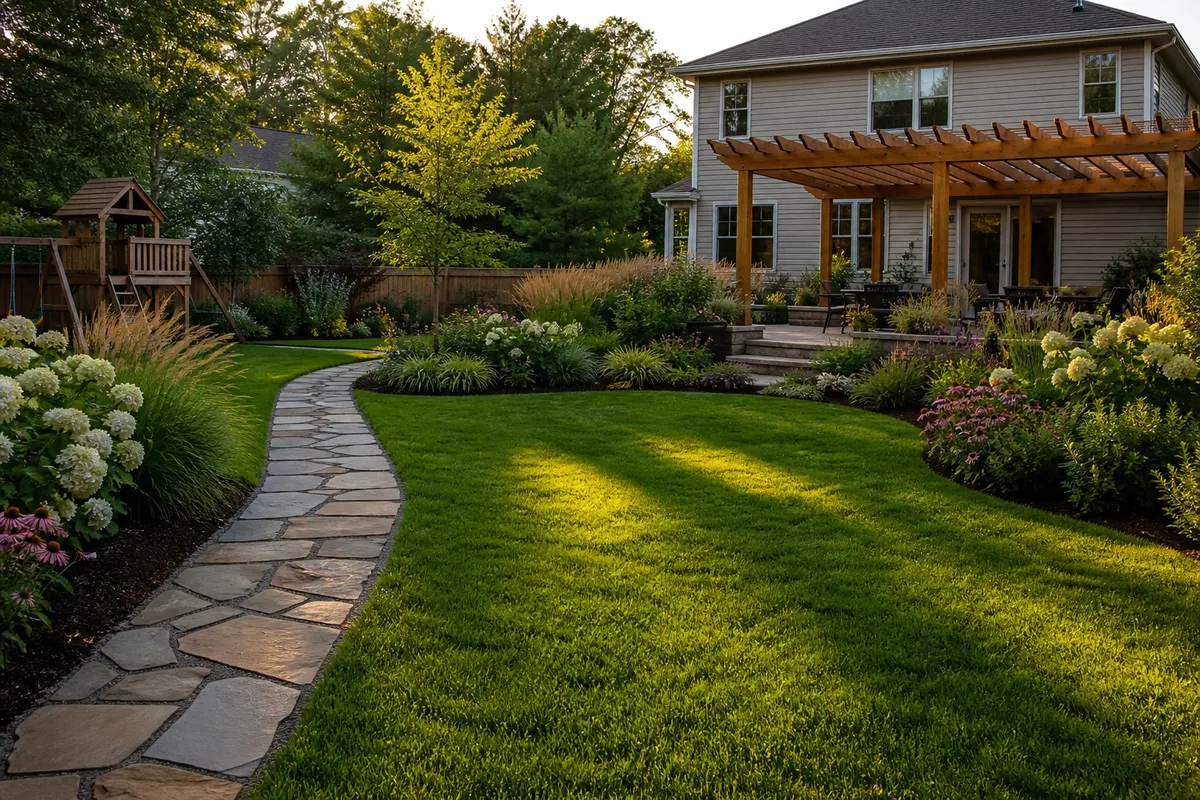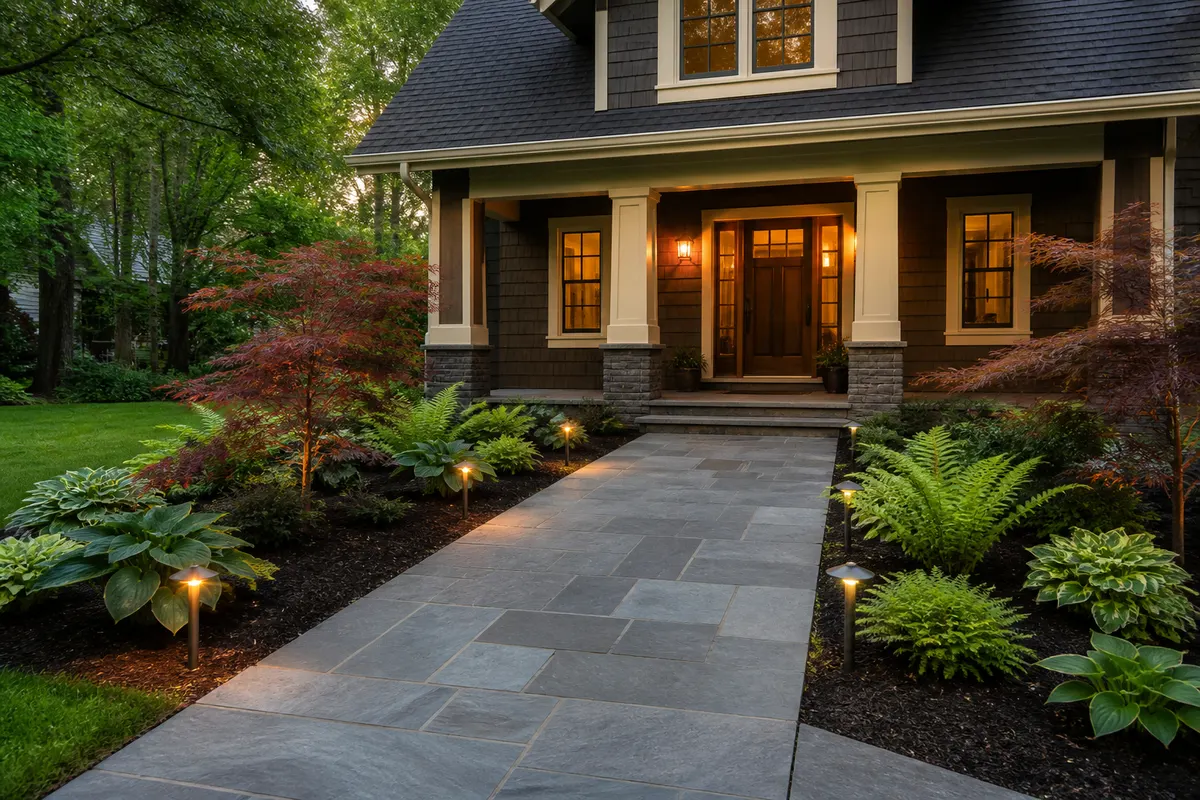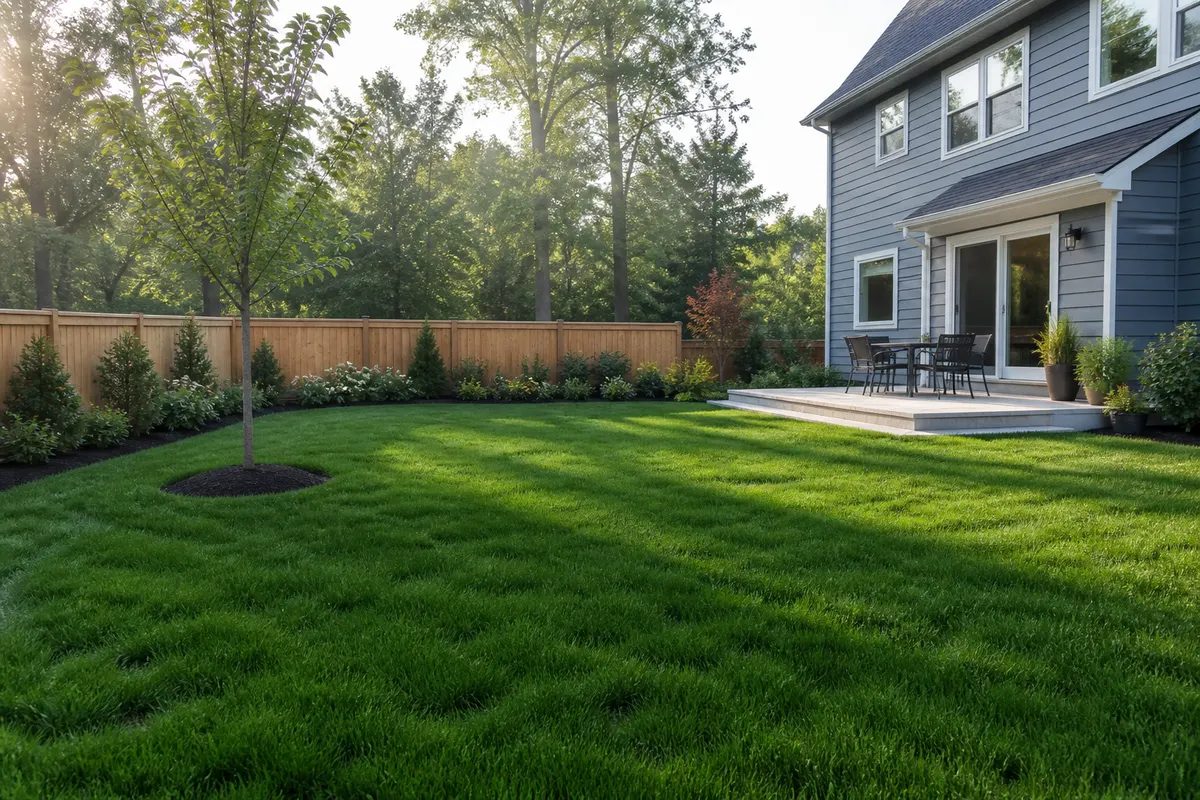
Patios and walkways built on a base that stays level for decades
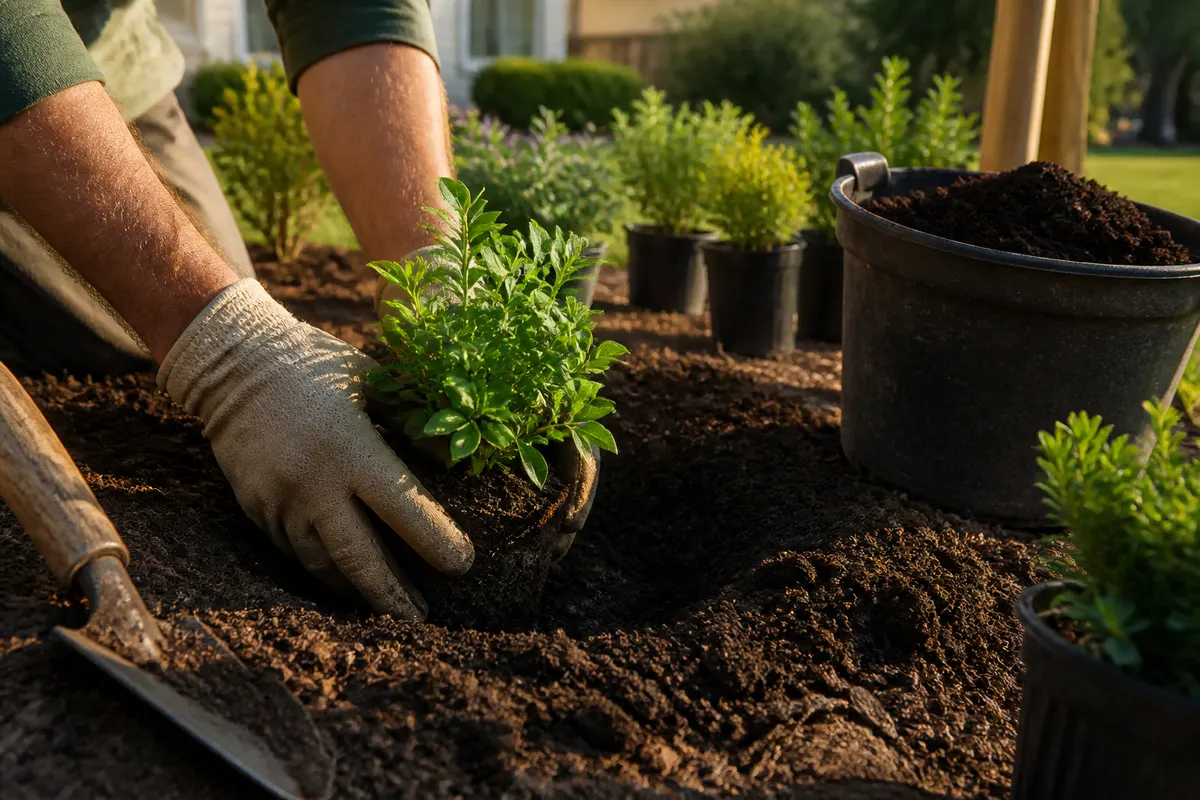
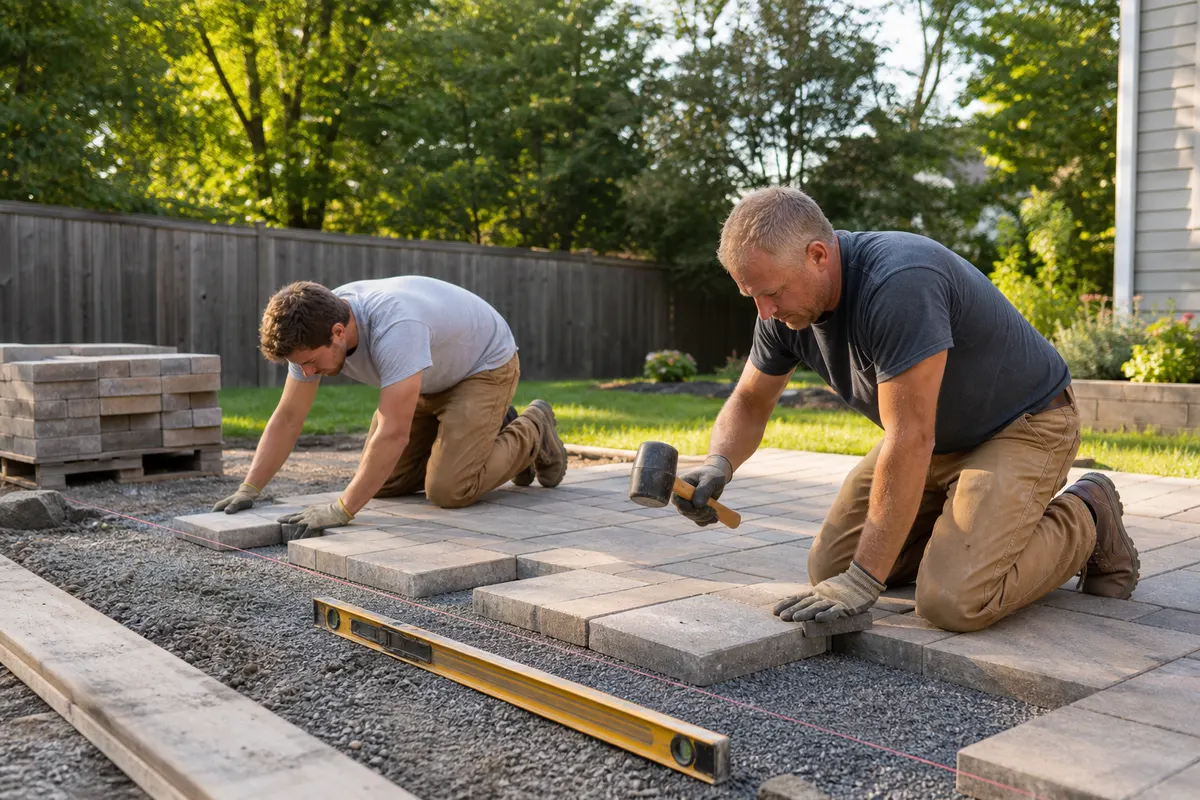
The part of a patio you never see decides how long it lasts. Kansas winters heave anything built on thin gravel, so every patio, walk and wall we build starts with excavation, geotextile fabric and a compacted base sized for the soil. On top go pavers, flagstone or natural stone laid to a gentle slope, with edges locked so the surface stays flat and drains away from the house. One crew lead runs the job from layout to cleanup, and you get a short daily note on progress.
What is included
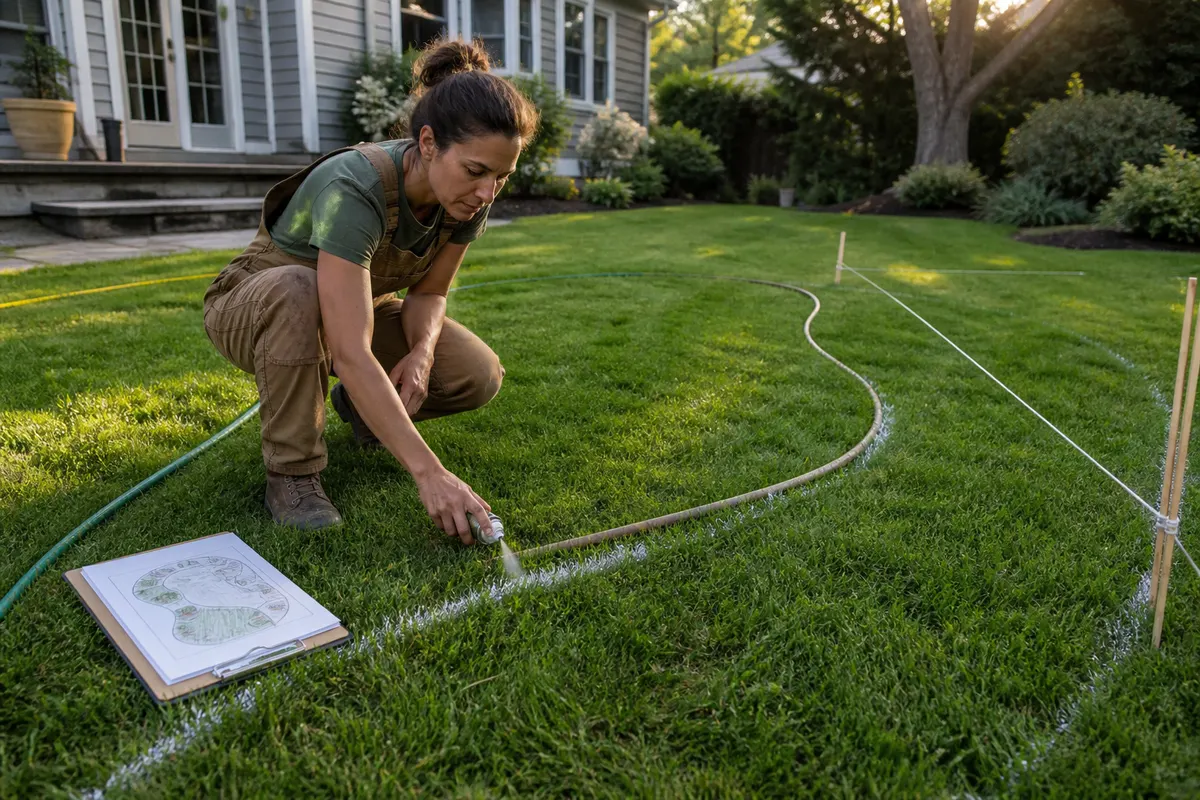
- Layout marked on site before any digging
- Excavation and haul-off of spoil
- Geotextile fabric over native clay
- Compacted crushed-stone base in lifts
- Pavers, flagstone or natural stone laid to slope
- Edge restraint so pavers stay locked
- Polymeric sand joints
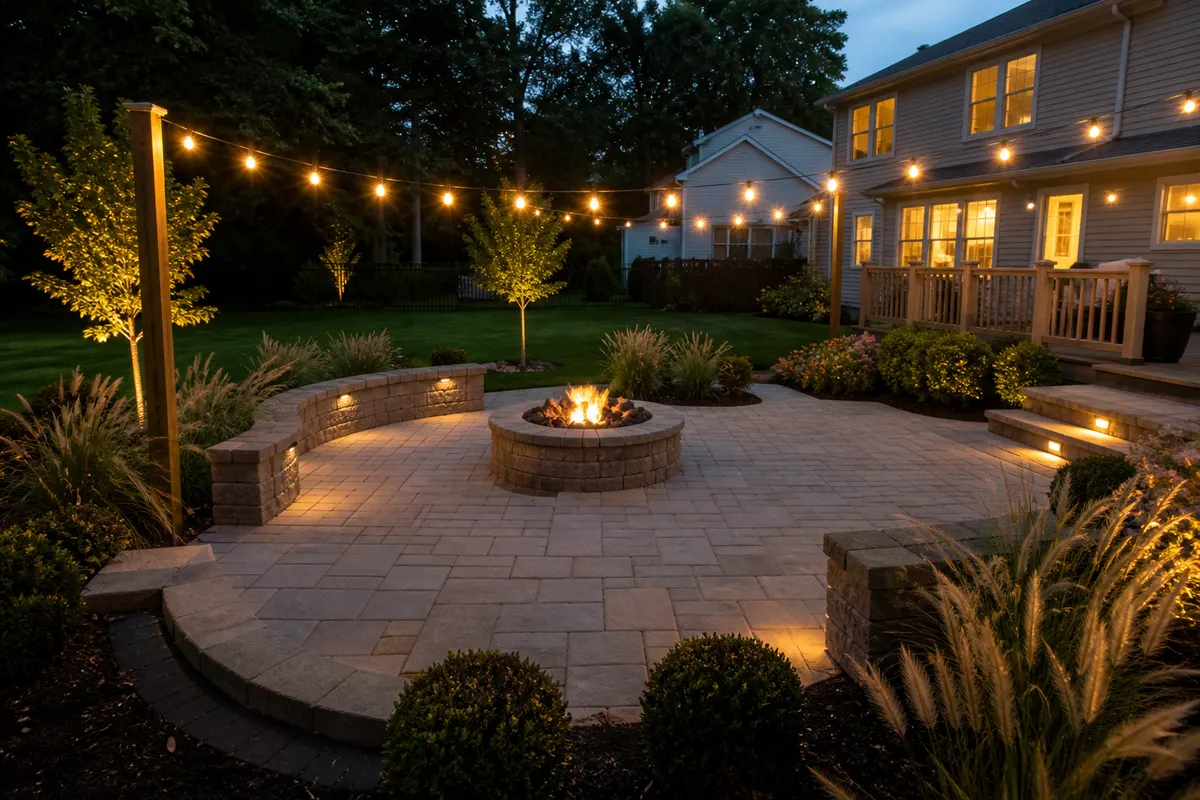
- Seat walls, steps and fire pits
- Sleeves for future lighting and irrigation
- Low-voltage lighting on request
- Cleanup and lawn repair at the edges
What sets the price of a patio
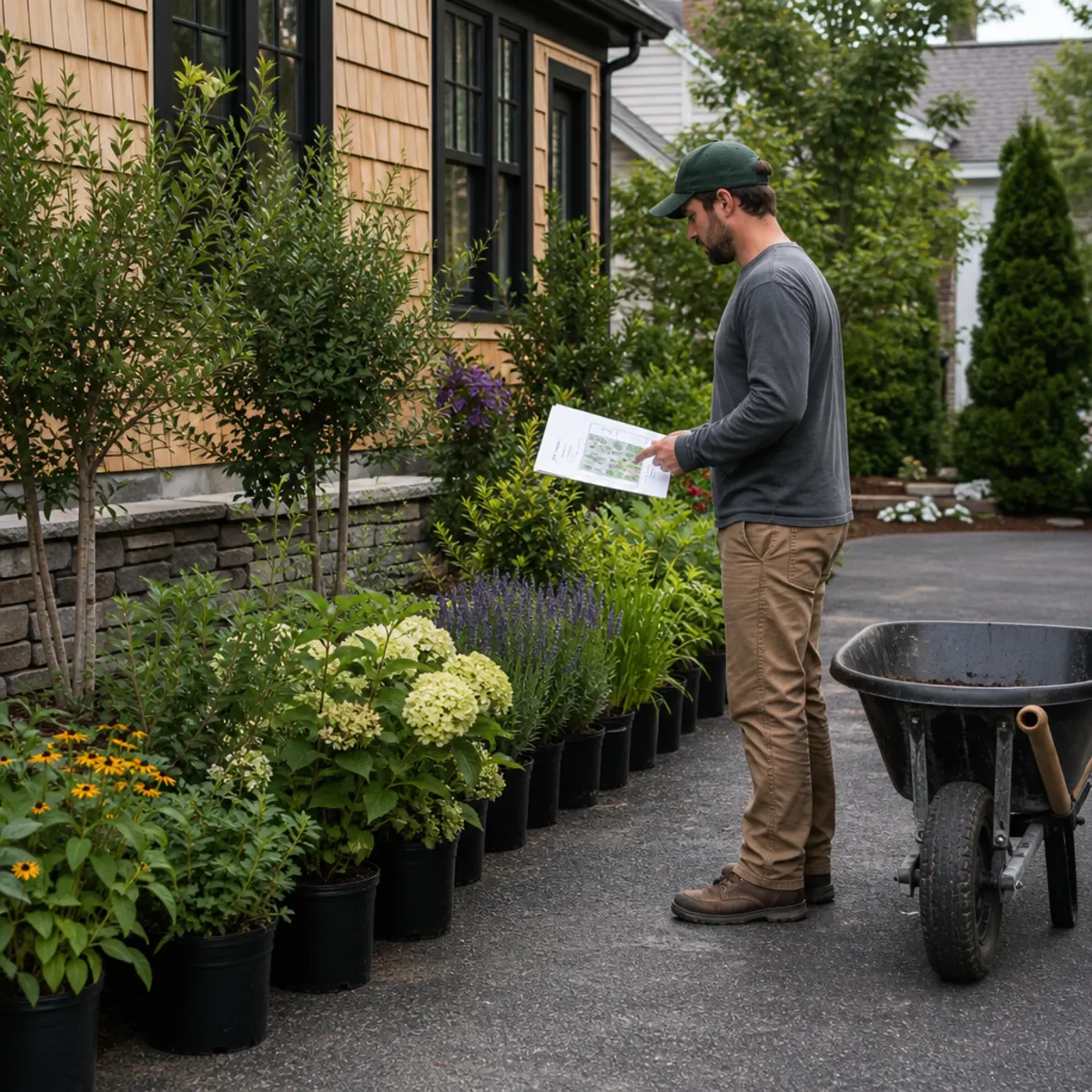
Square footage matters most, but access is close behind: if the crew can drive a skid steer to the site, excavation is quick; if every load goes by wheelbarrow through a side gate, it takes longer. Material comes next, with concrete pavers the most affordable, then natural flagstone and cut bluestone. Seat walls, steps, fire pits and lighting are priced as line items, so you can add them now or plan for them later.
The best time to build
We build patios from March through early December, whenever the ground is not frozen or saturated. Spring and fall are the most comfortable seasons to work, which is why they book up first; summer builds move just as quickly and leave the patio ready for evenings outside. Material orders take one to three weeks, so booking a month or two ahead is usually enough to get the date you want.
Why the base matters
Clay swells when wet and shrinks when dry. A thick, compacted base spreads the load and lets water drain, so the surface does not sink by the door or lift at the corners after the first hard winter.
Sized for how you gather
A table for six needs about twelve by twelve feet to push chairs back comfortably. We plan patios around furniture, grill and fire pit clearances, then shape the edges to fit the yard rather than a rectangle.
“They laid out the patio with our actual table and chairs before digging. Three winters later there is not a sunken paver anywhere, and the fire pit is where everyone ends up.”
How hardscape and patios works with us
- 01
Measure and mark
We lay out the patio with paint and your furniture, check drainage and pick materials together.
- 02
Excavate and base
The area is dug out, fabric laid and crushed stone compacted in layers to a level, sloped base.
- 03
Lay and lock
Pavers or stone are set, cut to fit, edged and jointed with polymeric sand.
- 04
Finish and clean up
Walls, steps, lighting and the lawn edge are finished and the site is left clean.
Hardscape and patios questions, answered
Most paver patios in the area run $28 to $45 per square foot installed, depending on access, base depth and material. Projects start around $8,500.
Pavers cost a little more up front but flex with freeze and thaw, and single pavers can be lifted and relaid. Concrete is cheaper, but its cracks are permanent.
A typical 300 to 500 square foot patio takes one to two weeks, including excavation, base, laying and cleanup.
Most ground-level patios in Johnson County do not, but some cities and HOAs require approval. We check the rules for your address before we schedule.
Yes, and we often plan for it by leaving a pad or sleeves for gas and wiring, so adding them later is simple.