Sacramento car and truck crash lawyers who take every insurer call.
A crash claim opens within days, and the carrier wants it closed before anyone knows how badly you are hurt. We keep the file open until your treatment shows the full cost, and we answer the insurer for you in the meantime.


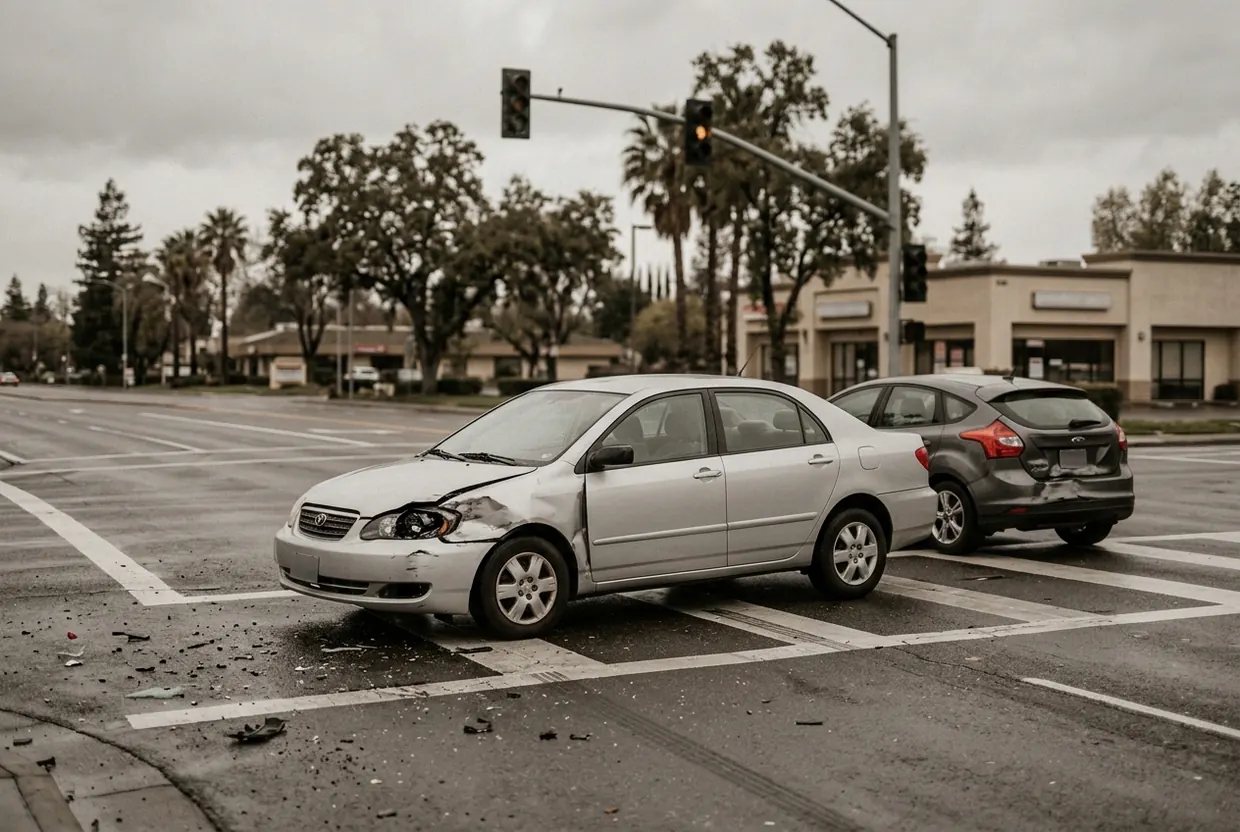
1 call
is all it takes for the insurer to start calling us instead of you.
2 years
The usual California deadline to file an injury lawsuit
6 months
For a written claim when a public agency is involved
1/3
Our fee, from a recovery only. No recovery means no fee and no costs to repay.
How it works
General information, not advice on your case.
How a crash claim actually works in California
California is a fault state. The driver who caused the crash, and their liability insurer, owe you for the harm the crash caused: your medical care, the pay you lost, the care you will still need and the pain and disruption in between. Nothing is paid automatically. A claim is opened with their insurer, an adjuster is assigned, and from that moment the file is being built, by them or by both sides.
Most claims never see a courtroom. They are settled by negotiation once your treatment has run its course and the full cost of the injury can be shown. That timing matters more than anything else: a claim settled while you are still in physical therapy is a claim settled on guesses, and the guesses are rarely in your favour.
Fault is not all or nothing here. Under California's pure comparative fault rule, if you were partly to blame your recovery is reduced by your share rather than wiped out. Insurers know this and often open by assigning you a larger share than the evidence supports. Every point of that percentage is worth arguing, and the evidence gathered in the first weeks is what wins the argument.
The short answer
Who pays, layer by layer.
Who pays after a crash in Sacramento?
In California the driver at fault, through their liability insurer, pays for the harm they caused: medical bills, lost pay, future care and the pain the injury brings. When that policy is too small, your own underinsured motorist coverage can add to it. When the driver was working, an employer or a carrier may be responsible as well.
Truck cases change the scale. A freight carrier has its own insurer, its own investigators and its own records: engine data, driver logs and maintenance files. Those records decide most truck cases, and they are the reason a carrier moves quickly to shape the story in the first week.
| Coverage layer | What it pays | Typical size |
|---|---|---|
| At-fault driver's liability | Your injuries, up to the limit | California minimum $30,000 per person |
| Your underinsured motorist | The gap above their limit | Your own policy limit |
| Your medical payments | Early bills, whoever was at fault | Often $1,000 to $10,000 |
| Employer or carrier | Crashes by someone driving for work | Interstate freight at least $750,000 |
General figures, not a statement about any policy.
Your first week
What we ask every crash client to do.

What should you do in the days after a crash?
Evidence disappears faster than most people expect
Cars are repaired or salvaged within weeks. Store and traffic cameras record over themselves in days. Truck engine data and driver logs can be overwritten in the normal course of business unless someone asks, in writing, for them to be kept. Witnesses move, change numbers and forget. The first thing we do on a crash file is send preservation letters, because a strong case built late is often a weaker case than it should have been.
- 01
Get seen within 72 hours
Urgent care is fine. A timely record that links your symptoms to the crash is worth more than any later explanation of why you waited.
- 02
Photograph both vehicles
Before repairs or a salvage yard. Crush damage, airbags and the inside of the cabin all tell the engineers something.
- 03
Keep the claim number, not the conversation
Give the other insurer your contact details and stop there. Fault, speed and symptoms can wait.
- 04
Send us every letter
Offer letters, records requests and releases. Signing a broad medical release can open your whole history.
What a claim can include
California recognises each of these.
The bills are usually the smallest part of a crash claim.
| Part of the claim | What it covers | How it is shown |
|---|---|---|
| Medical care | Ambulance, ER, imaging, therapy and care still to come | Bills plus your doctor's view of the future |
| Lost income | Missed shifts now and reduced earning ability later | Pay records and employer letters |
| Out of pocket | Rides, prescriptions, braces, the car | Receipts and the repair estimate |
| Pain and daily life | Sleep, work, family routines the injury took | Your account, records and people who know you |
Illustrative figures for this demo, not a study or a promise.
How we answer

What the insurer will usually do, and how we answer it
Expect a call within a day or two, a friendly voice and a request to record your account. Expect an early offer, often within weeks, sized to the bills you already have and nothing beyond them. Expect a request for a broad medical authorization that opens your full history, so that an old back strain can be blamed for a new injury.
Once you hire us, every one of those requests comes to our desk. We decline the recorded statement, release only the records that relate to the crash, and do not discuss numbers until your doctor can describe what the future looks like. When the demand goes out, it carries the records, the bills, the wage proof and a plain account of how the injury changed your days. Our fee is a share of what we recover, set in writing. If there is no recovery, you owe no fee and you do not repay the costs we advanced.
Crash matters we have handled
Illustrative examples. Past results do not predict future outcomes.
Each began as a far lower offer.
$1.9M
Commercial truck, 2025Neck fusion after a freight carrier rear-ended a commuter on I-80. The carrier disputed the cause until the engine data was produced.
Opening offer $180,000Illustrative
$415K
Rideshare crash, 2023The driver's app was on between rides, which brought the platform's policy into play.
Opening offer $52,000Illustrative
$240K
Rear-end crash, 2025Light bumper damage was used to argue a light injury. The MRI settled that question.
Opening offer $48,000Illustrative
Illustrative examples. Past results do not predict future outcomes. Each outcome depended on its own facts.
Client voices
Illustrative client stories, names withheld.
Crash clients describe the same relief: the calls stopped coming to their phone.
4.8
Rating from clients
186
Reviews left
11 yrs
Serving Sacramento
Each quote comes from someone we represented. Names stay private, and we have never paid for a review.

They handled every call from the insurer. That alone gave me my weeks back while my back healed.

I thought I had waited too long to call anyone. They sorted out the timeline in one conversation.

Nobody rushed me. Every month I got a short update, even when the update was that nothing had moved.
The adjuster kept calling me first. Once I signed, those calls simply stopped coming to my phone.

Name kept private
Truck crash, Sacramento, 2025
Crash questions
General information, not advice on your case.
What people ask in the first week after a crash.
Short answers to the questions we hear most. Your own case may turn on facts these cannot cover.
How long do I have to file a crash claim in California?
Usually two years from the crash for an injury lawsuit. If a public agency is involved, such as a city bus or a county road, a written claim is generally due within six months.
Should I accept the insurer's first offer?
Rarely before your doctor can say what the injury will cost going forward. First offers arrive early because the future cost is not known yet.
What if the other driver has no insurance?
Your own uninsured motorist coverage can step in. It is part of most California auto policies unless it was declined in writing.
Is a truck crash handled differently from a car crash?
Yes. Freight carriers carry larger policies and keep records such as engine data and driver logs. Those records need to be requested quickly, before routine deletion.
The crash was a rideshare. Who pays?
It depends on what the driver's app was doing. A ride in progress usually brings the platform's larger policy into play; an app that was off usually does not.
What does it cost to hire you?
A share of what we recover, agreed in writing before we start. If there is no recovery, you owe no fee and you do not repay the costs we advanced.


Rated 4.8 over 186 reviews"They handled every call from the insurer. That alone gave me my weeks back."
After a crash
Tell us what happened on the road. We will tell you honestly what it depends on.
If there is no recovery, you owe no fee and you do not repay the costs we advanced.