Porcelain, layered by hand to vanish
A veneer is a thin shell of porcelain bonded to the front of a tooth to change its shape, shade, or alignment. Done well, it does not announce itself. Done here, it is built by hand to the light and translucency of the teeth beside it.
- Hand-layered, characterised porcelain
- A preview of the finished set before we begin
- Minimal, conservative tooth preparation
- Shade and translucency matched to your enamel
The art is in the layers
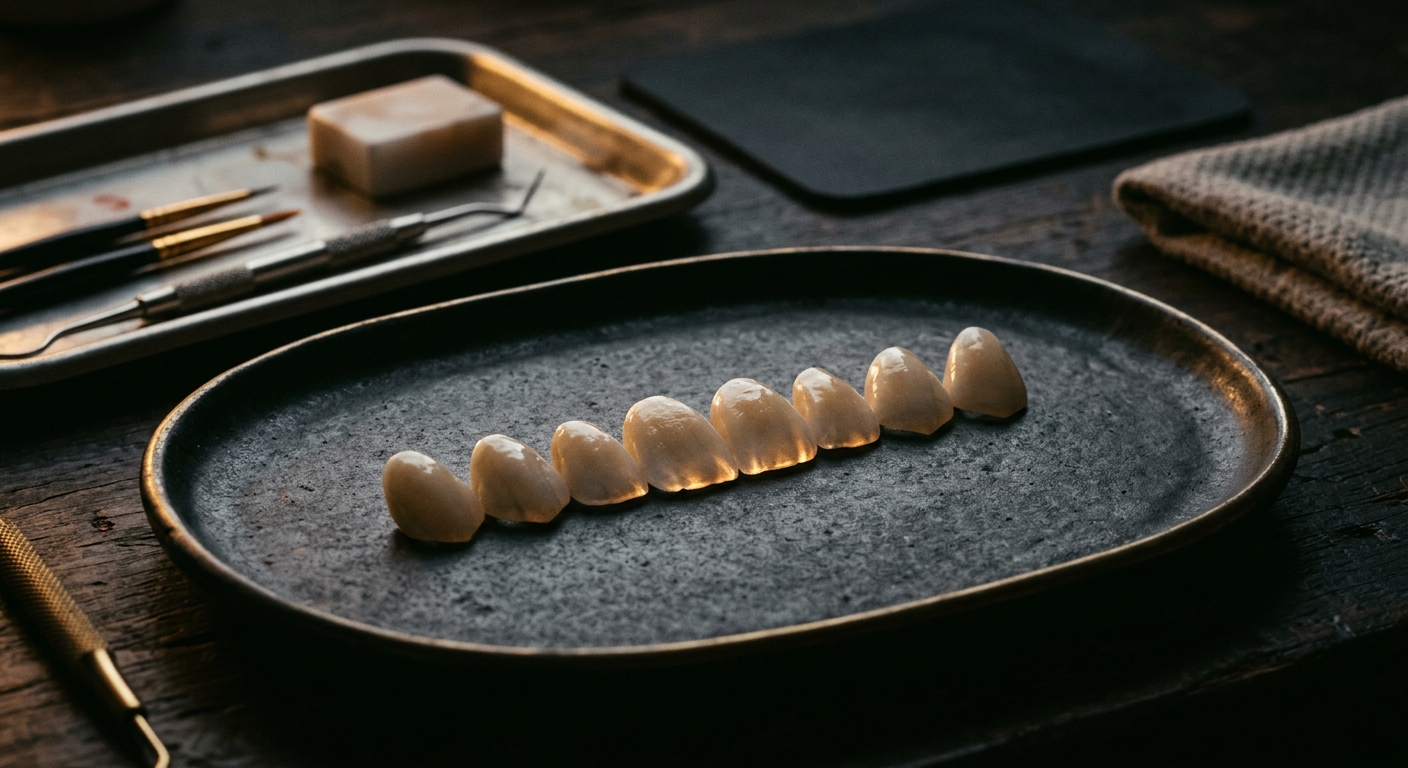
Natural enamel is not one colour. It is translucent at the edge, warmer at the body, and slightly different on every tooth. A convincing veneer reproduces that, which is why ours are layered and characterised by hand in a ceramic studio rather than milled to a single flat shade. It is slower, and it is the entire difference between a smile that looks real and one that looks applied.
We prepare teeth as conservatively as the case allows, design the finished set with Digital Smile Design, and let you preview it before any porcelain is bonded. When the veneers are fitted, they are matched to your face, your bite, and the way you smile, not to a template.
Built to be forgotten
The measure of a veneer case is whether anyone can tell. Friends should notice you look well, not that you have had work done. That standard governs every decision we make, from the amount of tooth we keep to the final polish, and it is why our veneer patients so often say the same thing: they forget the veneers are there at all.
The veneer appointments
A veneer case is deliberately unhurried. Four stages, two chair visits, and a preview you approve before any porcelain is made.
Design and shade
Photographs, a scan, and a digital design of the finished set. We choose shade and translucency in daylight rather than under the operatory lamp.
The preview
A wax or resin mock-up is placed over your own teeth so you can see and feel the proposed shape before we prepare anything.
Conservative preparation
Only the enamel the design actually requires is reduced, often a fraction of a millimetre, and temporaries carry the approved shape while the ceramist works.
Layering and fit
Porcelain is built up and characterised by hand in the lab, then bonded, checked in several kinds of light, and polished.
the typical thickness of a hand-layered veneer in this demo studio
Illustrative. Roughly the thickness of a contact lens, which is why conservative preparation matters: the less enamel removed, the stronger the tooth underneath stays for the rest of its life.
Questions
about
this care
Let us look at it properly
A $99 welcome visit covers a full exam, 3D imaging and a hygiene cleaning, and becomes the foundation of your written plan.