The short answer
Check under sinks, around toilets and at the water heater once a month, run a dye test in each toilet twice a year, and read your water meter with everything turned off. Most leaks caught this way cost under $250 to fix.
How much water does a small leak really waste?
A drip sounds harmless, but it runs all day, every day. The bigger cost is usually not the water bill; it is the swollen cabinet floor or the ceiling stain that shows up months later.
Illustrative figures based on typical Wake County visits, not a study.
How do you check for a hidden leak with the meter?
Your water meter is the simplest leak detector in the house. Most meters have a small triangle or dial that spins whenever water moves.
- 01
Turn everything off
No dishwasher, laundry, irrigation or ice maker running, and nobody using a tap.
- 02
Read the meter
Photograph the dial or note the leak indicator position.
- 03
Wait two hours
Do not use any water in the meantime.
- 04
Compare
If the reading moved, water is going somewhere. Start with toilets, then outdoor spigots.
How do you test a toilet for a silent leak?
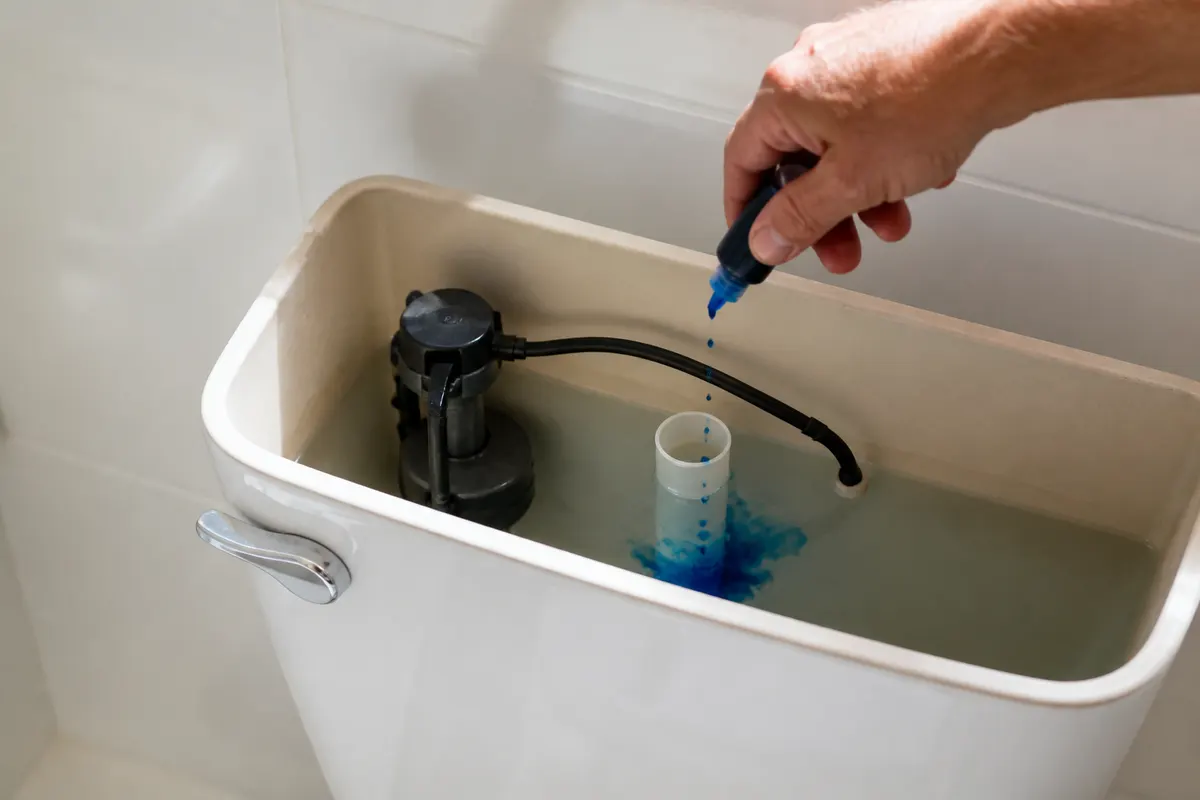
Wait fifteen minutes after adding the colour, and do not flush. A tinted bowl means the flapper or its seat is letting water past, which is one of the most common and cheapest leaks to fix.
Where do leaks usually start?
| Where | Early sign | What to do |
|---|---|---|
| Under sinks | Warped cabinet floor, musty smell | Tighten or replace the supply line |
| Toilets | Tank refills on its own, rocking base | Replace flapper or reset the wax ring |
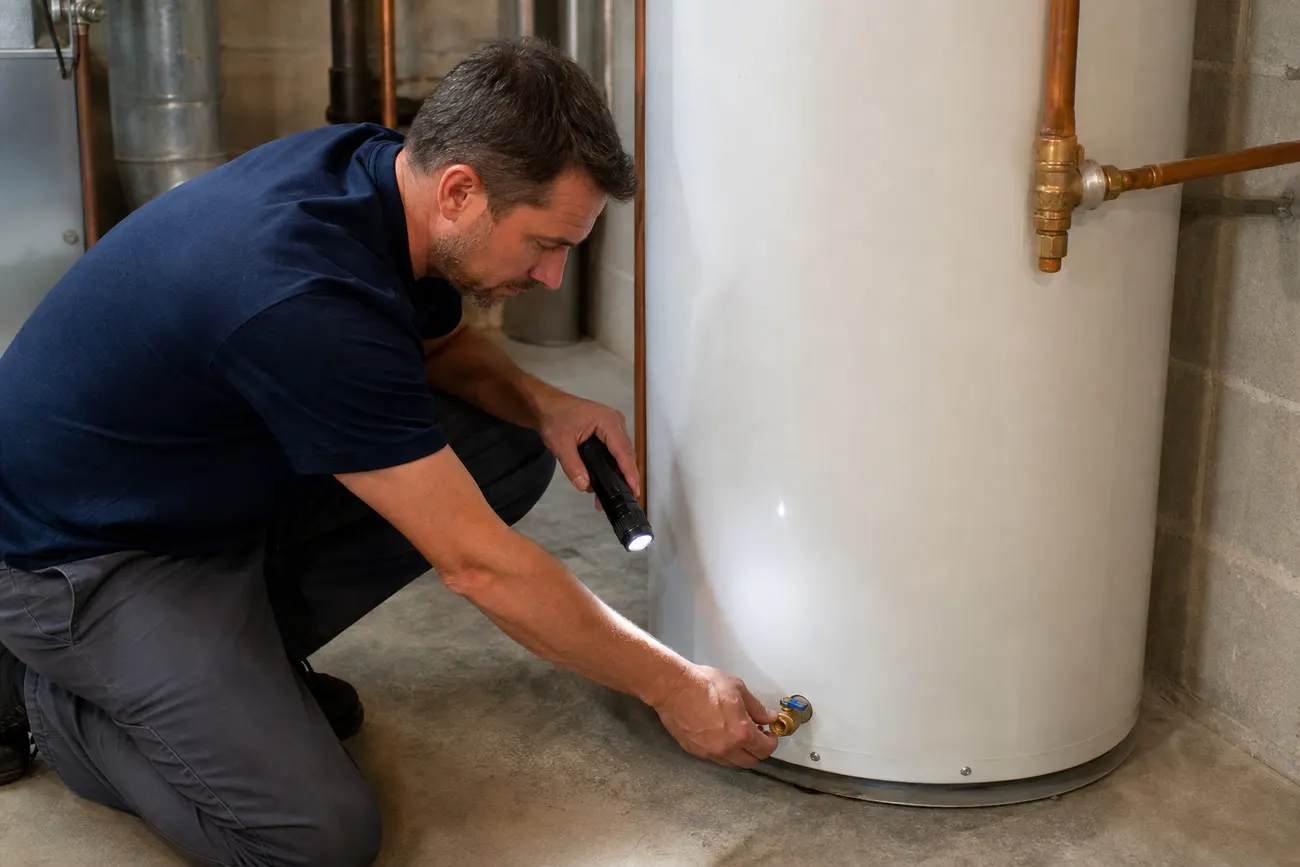
| Water heater | Rust at the base, damp pan | Book a check; the tank may be failing |
| Washer | Bulging or cracked hoses | Swap to braided steel hoses |
| Outdoor spigots | Wet siding after a freeze | Replace with a frost-free spigot |
What can you fix yourself, and what needs a visit?
Good DIY fixes
- Replacing a toilet flapper
- Swapping washer hoses
- Tightening a loose supply nut a quarter turn
- Re-caulking a tub edge
Book a visit
- A leak inside a wall or ceiling
- A water heater that is rusting or dripping
- A shutoff valve that will not close
- Anything that needs a pipe cut
What does a leak repair usually cost?
| Repair | Typical Hollis price |
|---|---|
| Toilet flapper or fill valve | $129 to $189 |
| Sink supply line and valve | $145 to $240 |
| Wax ring reset | $179 to $260 |
| Frost-free spigot swap | $220 to $340 |
Illustrative 2026 ranges. Water damage repair is quoted separately after the leak is fixed.
Catch a leak while it is still a drip and it stays in the first column. Leave it until a stain appears and you are paying for drywall, paint and sometimes flooring too.
What else do homeowners ask?
Walk the sinks, toilets and water heater once a month, and run a meter check and toilet dye test twice a year.
Yes. A flapper that never seals can waste hundreds of gallons a day, and the fix is usually quick and inexpensive.
Check outdoor spigots and irrigation next. If nothing shows, the leak may be under the slab or in a wall, which needs a professional.
Rubber hoses older than about five years are worth swapping for braided steel ones. It is a cheap way to avoid a flood.
Yes. Once the source is fixed and the area is dry, we repair drywall, trim and paint, quoted as a separate job.