The short answer
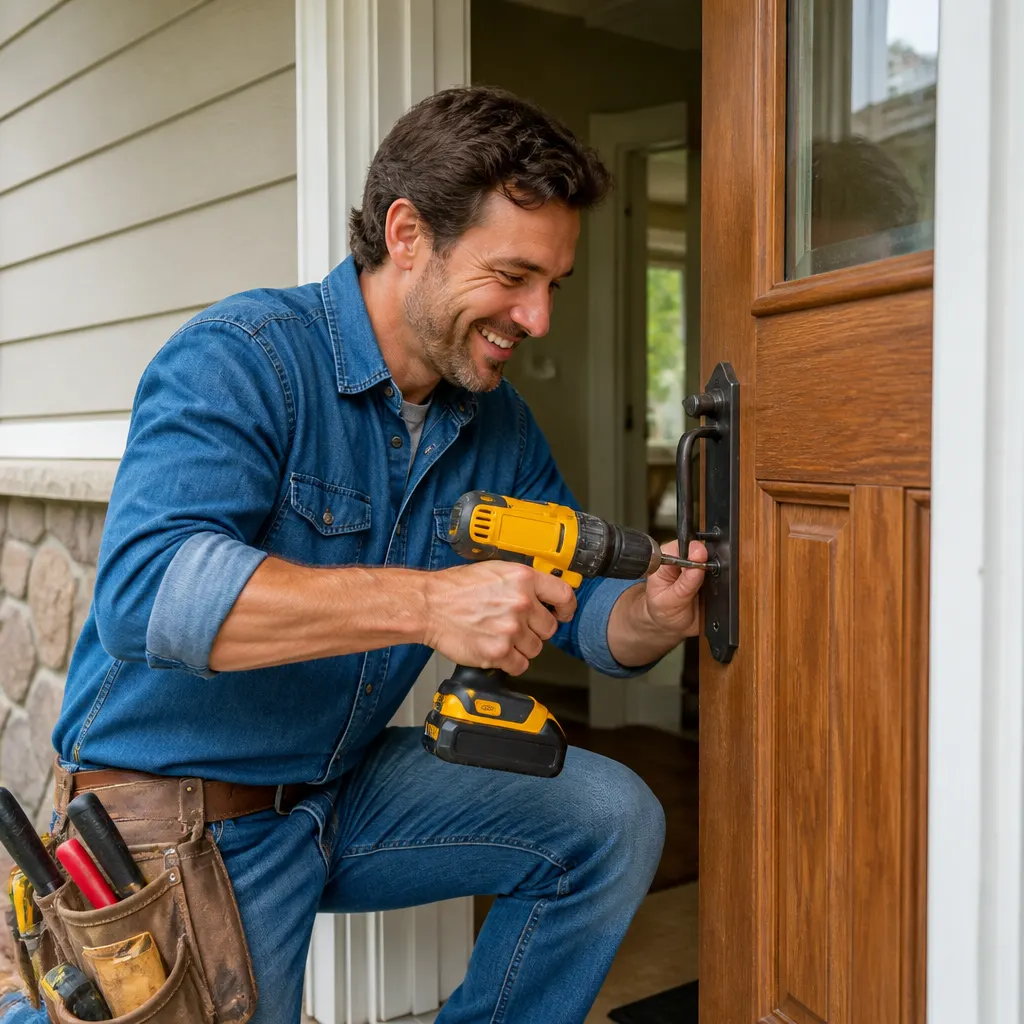
Most summer sticking comes from humidity swelling the wood and from top hinges that have sagged. Drive a 3-inch screw through the top hinge into the stud first. If the door still rubs, find the tight spot with chalk, plane or sand it lightly, then seal the bare edge.
Why does a door stick when it is humid?
Wood takes on moisture from the air and swells across the grain. A door that closes easily in January can bind in July, especially at the top latch corner where gravity has already pulled it down a little.
Exterior doors swing through the biggest humidity changes, but bathroom and laundry doors take the most steam, so they are usually the first interior doors to bind.
Illustrative figures based on typical Wake County visits, not a study.
How do you find where it rubs?
Take a photo of the gaps before you start. It makes it easy to see whether each change actually helped.
- 01
Look at the gap
Close the door and check the gap along the top and latch side. Where it narrows is where it rubs.
- 02
Use chalk
Rub chalk on the door edge, close it, and see where it transfers to the frame.
- 03
Check the hinges
Open the door halfway and lift the handle. Movement at the hinge means loose screws.
- 04
Mark the spot
Pencil the rub area on the door before you change anything.
Will longer hinge screws fix it?
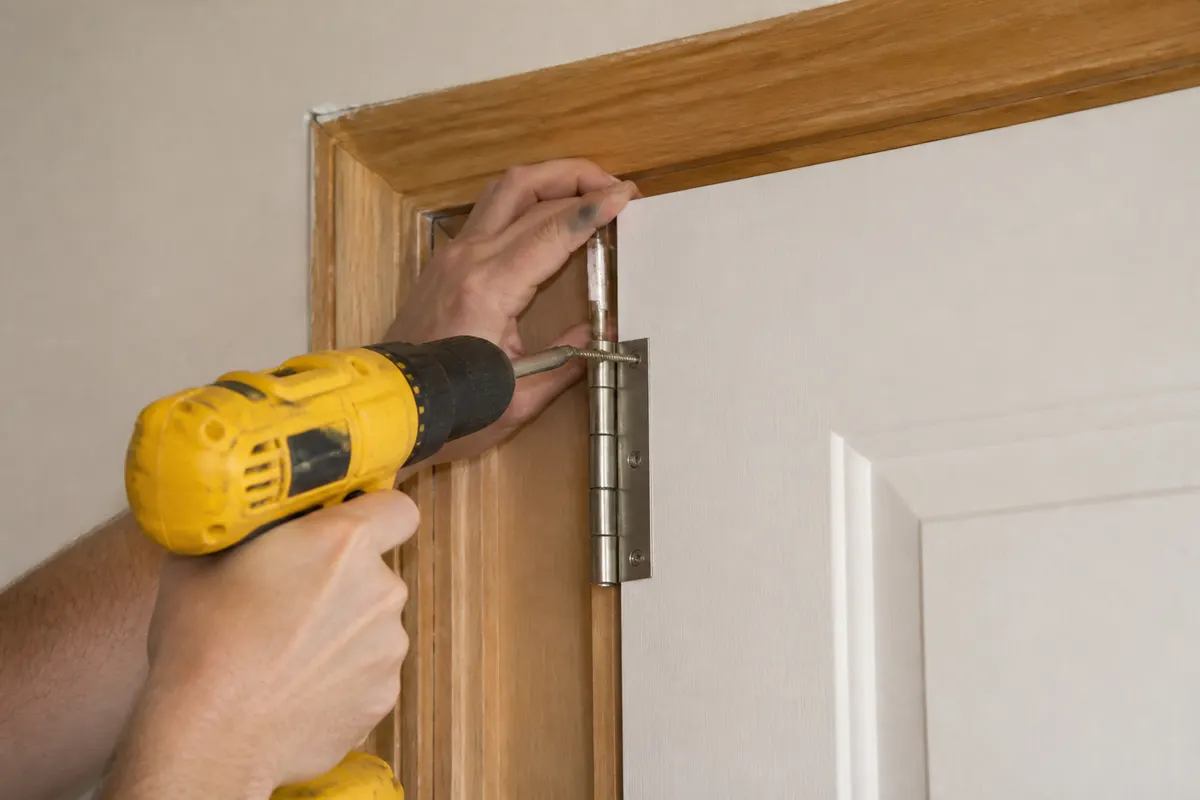
Often, yes. Short hinge screws only reach the thin jamb. Replacing the middle screw of the top hinge with a 3-inch screw pulls the whole door up and back toward the hinge side.
Should you plane the door or adjust the frame?
| Symptom | Likely cause | Best fix |
|---|---|---|
| Rubs at top latch corner | Sagging top hinge | Long screw in top hinge |
| Rubs along the whole edge | Swollen wood | Light plane, then seal the edge |
| Latch misses the strike | Settled frame | Move or file the strike plate |
| Gap at the bottom widens | Hinge side pulling away | Shim behind the bottom hinge |
Plane as little as possible and always seal the bare wood, or the door will swell again next summer.
If the latch side rubs and the hinge side shows a wide gap, do not plane anything yet. Fix the hinge first; planing a sagging door leaves a permanent gap once it is rehung.
What does a door fix usually cost?
| Fix | Typical Hollis price |
|---|---|
| Hinge screws and strike adjustment | $129 to $179 |
| Plane, seal and rehang | $179 to $260 |
| Replace hinges and strike plate | $189 to $280 |
| New interior prehung door | Quoted per door |
Illustrative 2026 ranges, hardware included.
Good DIY fixes
- Tightening or lengthening hinge screws
- Adjusting a strike plate
- Adding weatherstripping
Worth a visit
- Planing an exterior or fire-rated door
- A frame that has shifted or cracked
- Doors that stick year-round
What else do homeowners ask?
Humidity swelling may ease, but sagging hinges will not. Fix the hinge now and the door usually stops sticking in every season.
Lightly, if you seal the edge right away. Metal-clad and fire-rated doors should not be planed.
The door or frame has shifted so the latch misses the strike. Tightening hinges or moving the strike plate usually fixes it.
It can ease a slight rub for a while, but it hides the cause. Check the hinges first.
Most hinge and strike adjustments take under an hour. Planing and sealing adds time for the finish to dry.