The short answer
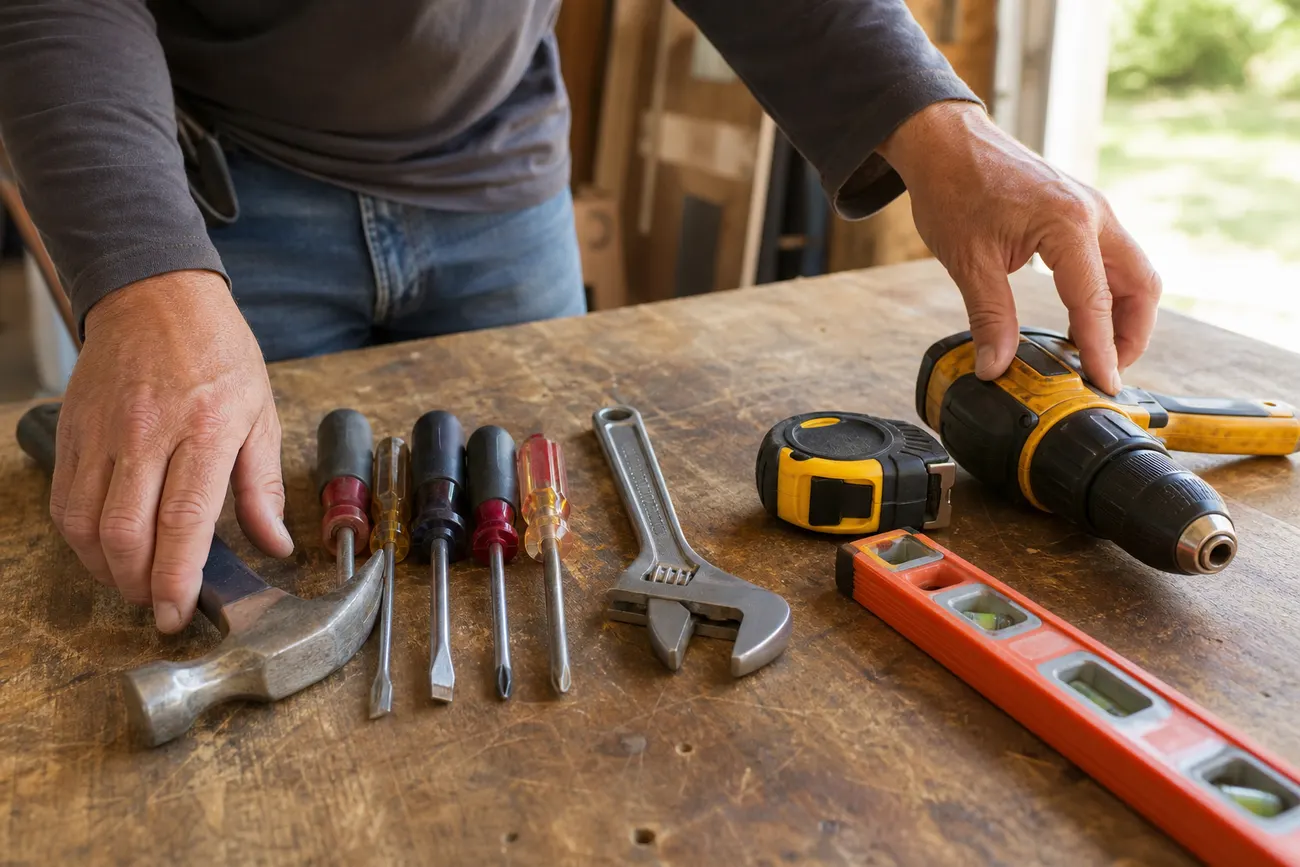
A claw hammer, a multi-bit screwdriver, a 25-foot tape measure, a 24-inch level, an adjustable wrench, a stud finder and a cordless drill cover most small repairs. Buy mid-range versions, keep them together in one bag, and add specialty tools only when a real job asks for them.
Which seven tools cover most home repairs?
Our technicians carry far more than this, but these seven do the bulk of the work on a typical punch list. If you own them and know where they are, most small jobs stop being a reason to wait.
- 01
Claw hammer
A 16-ounce hammer with a smooth face hangs pictures, sets finish nails and pulls the ones that bend.
- 02
Multi-bit screwdriver
One handle with Phillips, flat and square bits covers outlet covers, hinges and cabinet hardware.
- 03
25-foot tape measure
A wide, stiff blade reaches across a room without flopping, which matters when you are working alone.
- 04
24-inch level
Long enough for shelves and TV mounts, short enough to fit inside a cabinet.
- 05
Adjustable wrench
An 8-inch wrench handles supply lines, shower heads and most bolts around the house.
- 06
Stud finder
Find framing before you hang anything heavy, and check for wiring before you drill.
- 07
Cordless drill
A 20-volt drill with two batteries drives screws, drills pilot holes and saves your wrist on every other job.
How much should a starter kit cost?
You do not need professional-grade tools for occasional repairs, but the cheapest set on the shelf usually costs more in stripped screws and bent blades. Mid-range tools last a decade of weekend use.
| Tool | Budget | Mid-range |
|---|---|---|
| Claw hammer | $12 | $25 |
| Multi-bit screwdriver | $8 | $20 |
| Tape measure | $8 | $18 |
| 24-inch level | $10 | $25 |
| Adjustable wrench | $9 | $22 |
| Stud finder | $15 | $35 |
| Cordless drill kit | $70 | $150 |
Illustrative 2026 retail ranges. A full mid-range kit lands around $300.
Where should you keep them?
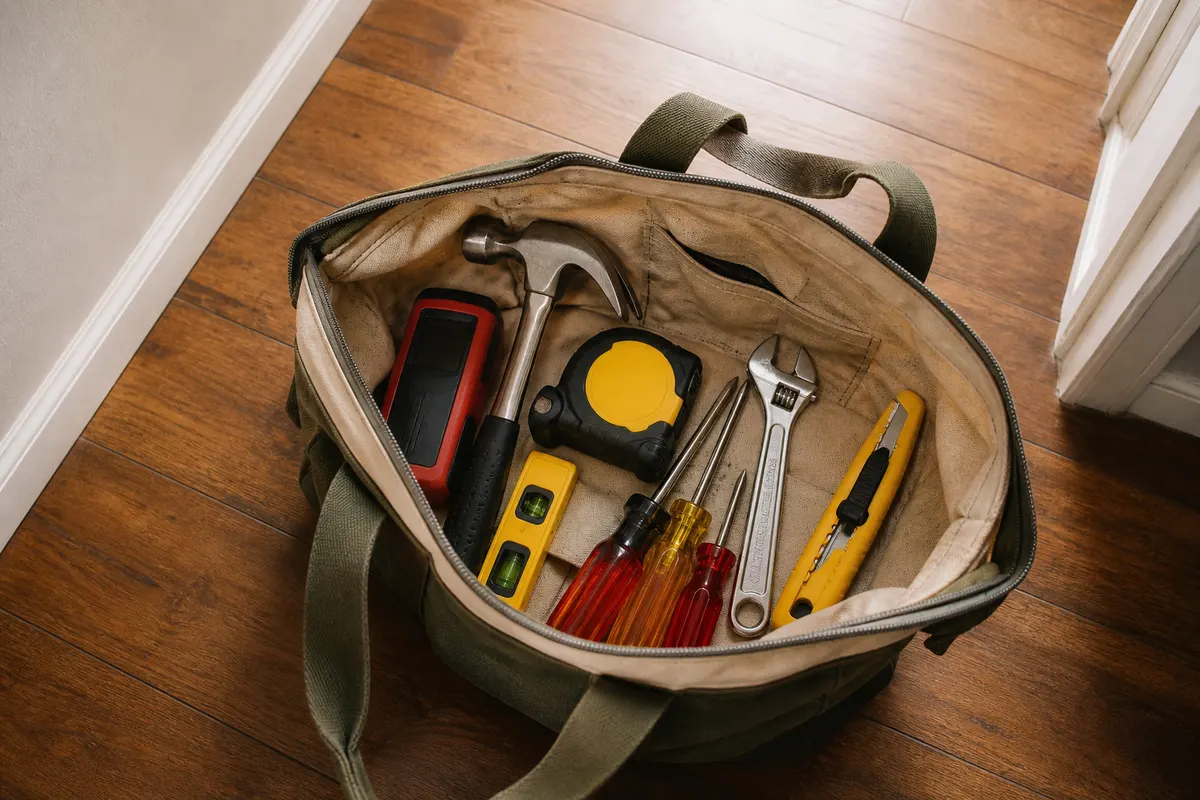
A soft canvas bag beats a toolbox with trays for most homes. It fits under a sink, it does not rust, and you can carry it to the job instead of making six trips to the garage.
What do homeowners usually buy too early?
Specialty tools are tempting when a project video makes them look essential. Most of them end up in a drawer after one use.
Worth owning
- A 20-volt drill with two batteries
- A magnetic bit set with a bit holder
- A utility knife with spare blades
- A small flashlight or headlamp
Skip for now
- A full mechanic's socket set
- A tile saw for one backsplash
- A laser level before you own a spirit level
- A reciprocating saw for a single cut
Which jobs still need a pro, even with a full kit?
Good tools make small jobs easy. They do not make a new circuit or a moved drain line a small job.
Anything that adds wiring, moves plumbing, touches gas or carries weight over people is worth a professional visit. So is any job where a mistake would cost more than the call. If you are not sure which side a job falls on, send the office a photo and we will tell you honestly.
What else do homeowners ask?
Cordless. A 20-volt drill with two batteries handles every household job, and you never have to hunt for an outlet near the work.
Knocking works on some walls, but a stud finder also flags wiring and pipes before you drill. For TVs and heavy shelves it is worth the $30.
A 16-ounce claw hammer suits almost everyone. Heavier hammers are for framing, and lighter ones bend nails.
Single mid-range tools usually beat a 200-piece set. Big sets pad the count with bits and sockets you will never use.
Store them in a dry bag or cabinet off the floor, wipe them after damp jobs, and toss a silica gel pack in the bag.