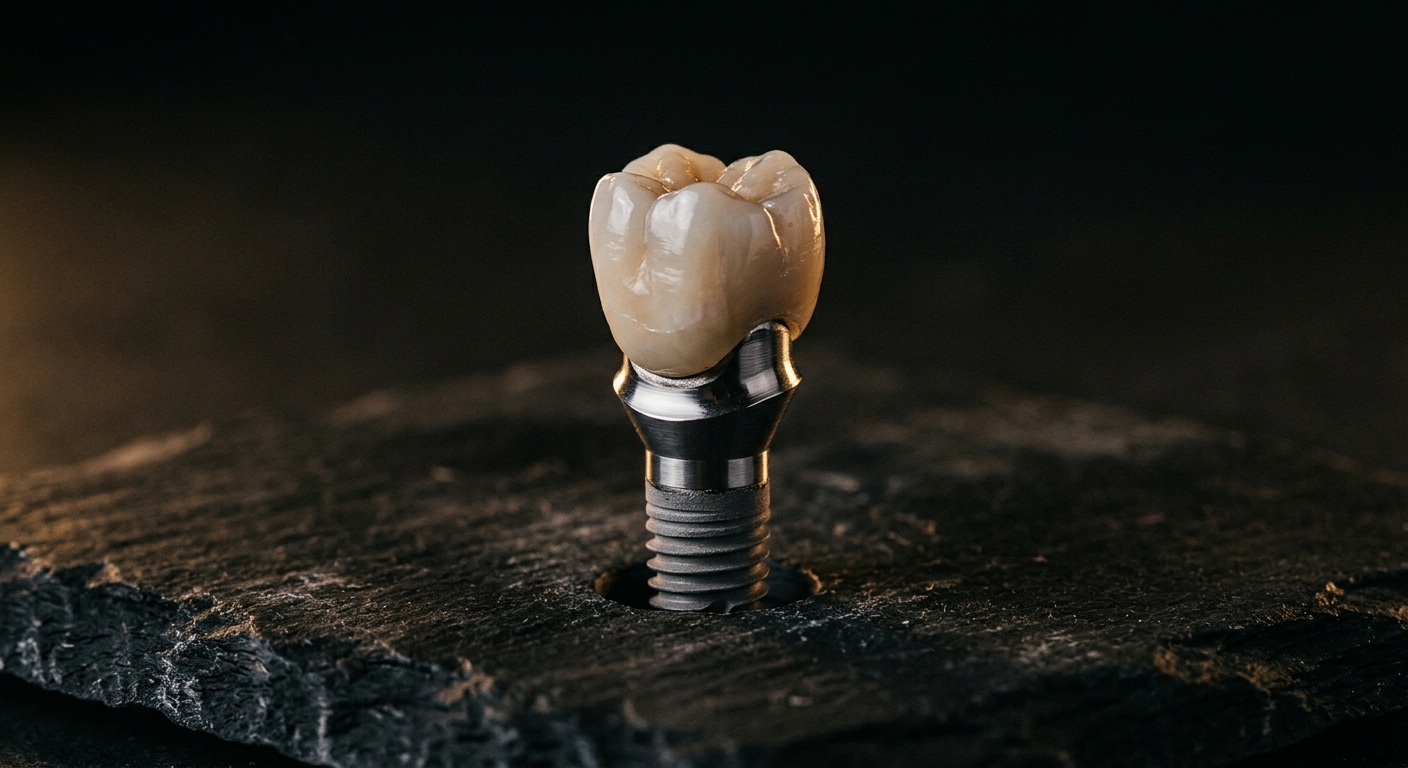
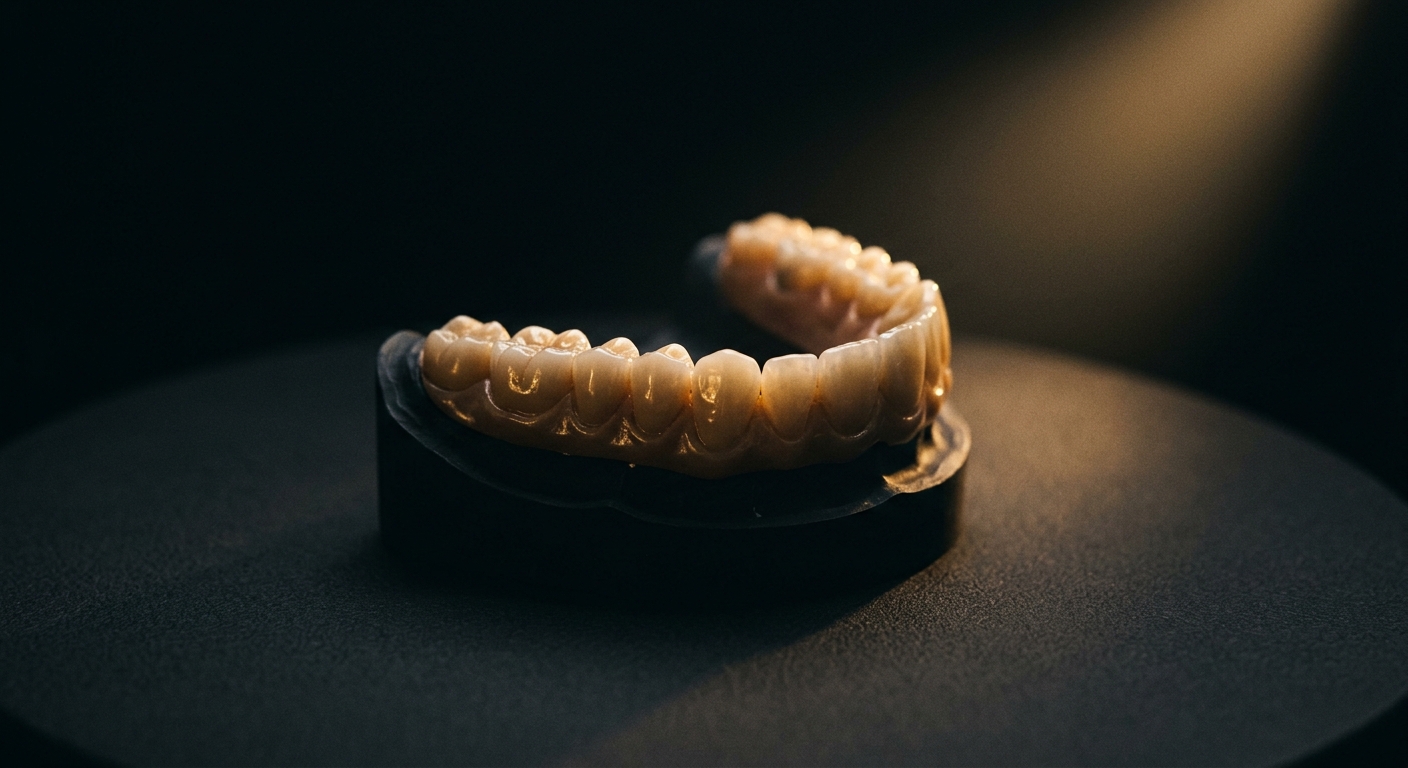
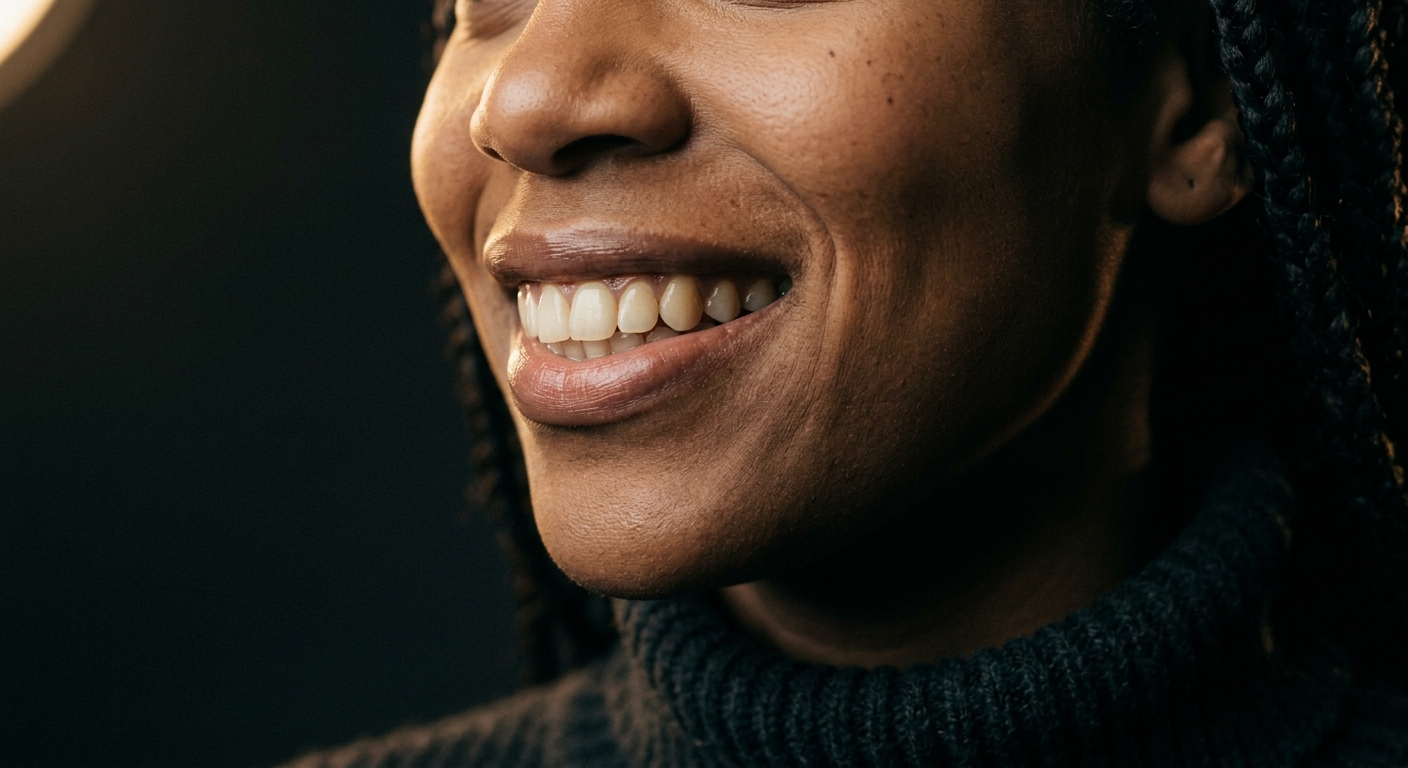
You can usually spot a veneer case across a restaurant table. Not because the teeth are white, but because they are all exactly the same white, in a mouth that never had a flaw in it. Here is what we do differently, and why it takes longer.
The tell is always the same
Ask people what gives a veneer case away and they will say the colour. It is almost never the colour. It is the uniformity: ten teeth cut to identical rectangles, identical opacity, identical edges, arranged in a perfect row like a shop display. Real teeth are not like that. The lateral incisors sit slightly back and are a touch smaller. The canines are stronger and a shade warmer. Edges wear differently on the side you chew on.
A natural smile is full of tiny asymmetries that no one consciously notices and everyone unconsciously reads. Reproduce them and the work vanishes. Erase them and the smile is legible as work from three metres away, which is exactly what most patients say they do not want.
Translucency is the whole trick
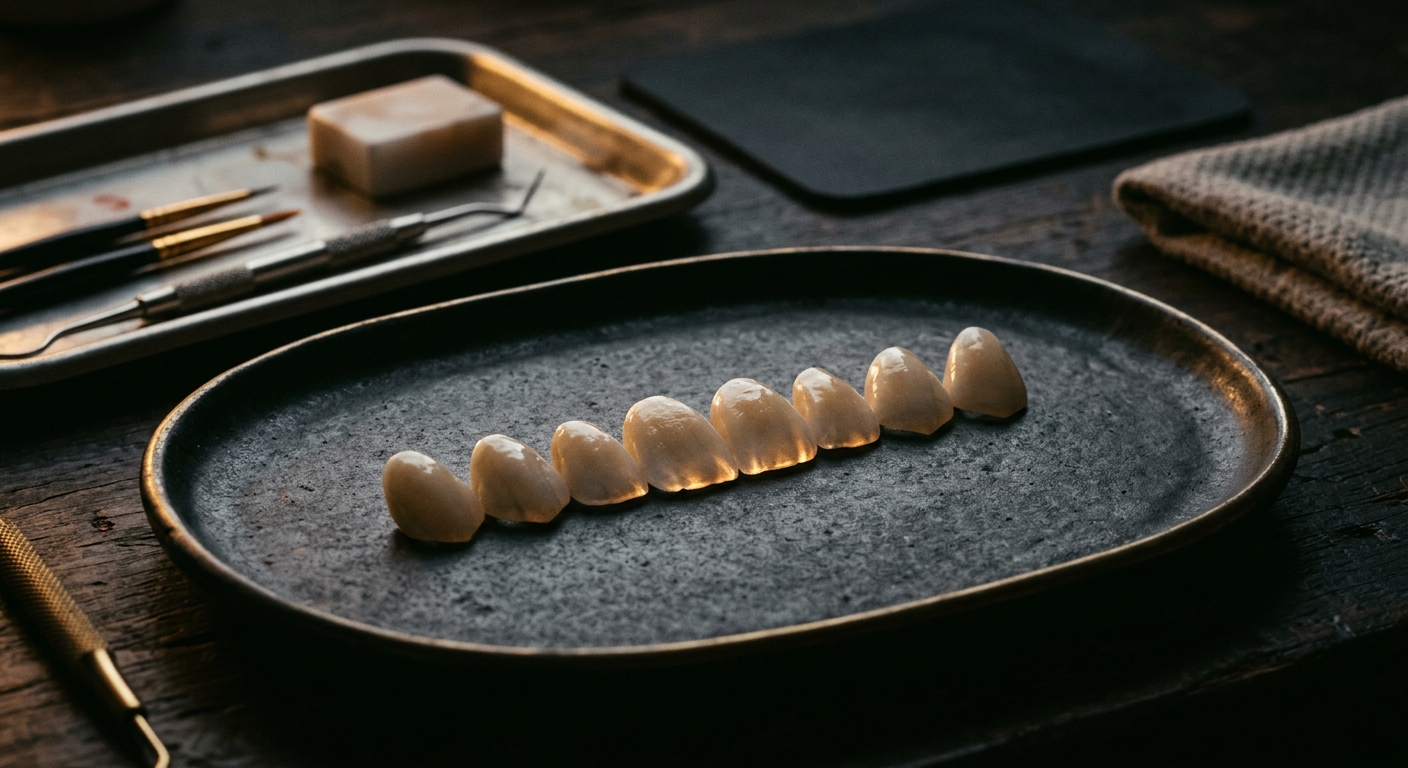
Enamel is not a colour, it is a material light passes through. At the biting edge it is nearly glass, picking up the darkness of the mouth behind it. Toward the gum it thickens and warms, taking dentine colour from underneath. That gradient is why a natural tooth looks alive and a flat ceramic shell looks like a fingernail.
A tooth is a small optical instrument. If the porcelain does not handle light the way enamel does, no amount of whiteness will save it.
Reproducing the gradient means building the veneer in layers: a dentine core, a body layer, an incisal layer with the translucency dialled up, and characterisation in between. That is hand work at a bench, under a lamp, by a ceramist who will look at photographs of your other teeth while doing it. A single milled shade cannot do it, which is why we do not use one for front teeth.
Shape belongs to your face
The second half of the job has nothing to do with material. Tooth proportion, the curve of the smile line, how much tooth shows at rest and in a full laugh: these are decided against your face, your lip mobility and your age, not against a chart. A twenty-six year old and a sixty year old should not be given the same edges.
This is also where restraint pays. We would rather leave a small rotation that reads as character than flatten a smile into symmetry. If a change will look impressive in the first photograph and strange in five years, we will say so and suggest the smaller version.
What to ask before you commit
The answers tell you more than any gallery of finished cases. Anyone can photograph a good result under a ring light. What you are trying to learn is whether the person in front of you is designing for your face, or fitting you to a template that happens to be on the shelf.