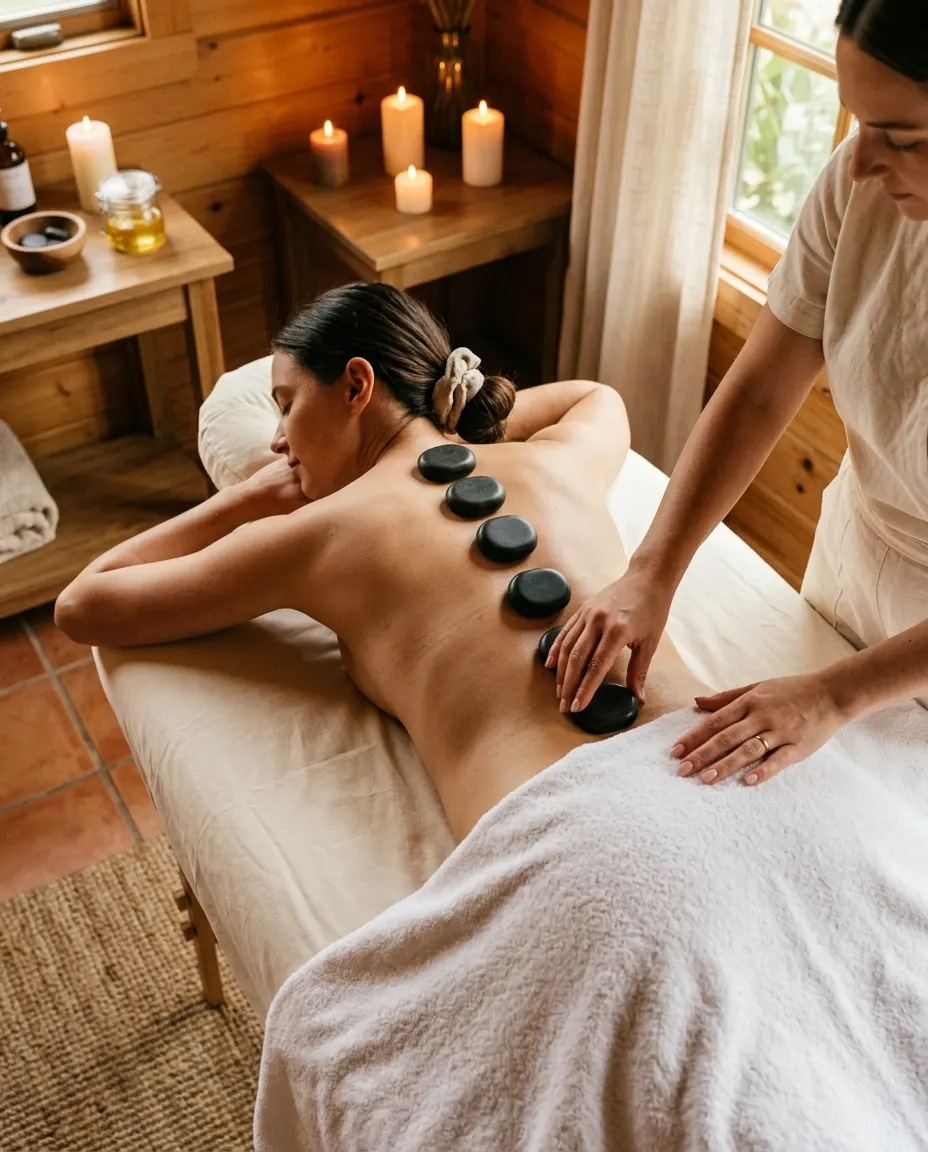
Heated basalt stones soften muscles before the hands arrive, so a stone session feels deep and thorough without heavy pressure, which is exactly what chilly bodies want in autumn.
Every October the same thing happens at our front desk: the phone fills with requests for stones. Cold mornings make muscles guarded, and heat is the fastest way to coax them out of it.
How the stones are used
Stones are warmed in water, tested on the therapist's wrist and placed along the back, in the palms and between the toes. Later they are held in the hand and glided along the muscles in long strokes.
- Heat helps muscles soften so less force is needed.
- Smooth stone edges spread pressure evenly.
- A cool stone at the end leaves you alert rather than groggy.
Reserve a quiet hour
Pick a treatment and a time; we will confirm within a day.
Who it suits best
People who always feel cold, anyone who finds deep pressure too intense, and guests who want a massage that feels like a warm bath. It is not advised during pregnancy or with certain circulation conditions, so ask us if unsure.
Heat does half the work, which leaves the therapist free to be gentle.
Pairing it well
A stone session followed by twenty quiet minutes in the lounge with ginger tea is our unofficial autumn ritual.
Questions readers ask
Will the stones burn?
No. Every stone is checked on the therapist's own skin before it touches yours.
How long is a stone session?
Seventy-five minutes as standard, with a longer hundred-minute option.