The short answer
Match the repair to the hole: spackle for nail holes, a mesh patch for holes up to about four inches, and a new piece of drywall on backing for anything larger. Feather thin coats wider than the patch, prime with a stain-blocking primer, then paint the whole wall section.
Which patch fits your hole?
| Hole size | Method | Drying time |
|---|---|---|
| Nail or screw hole | Lightweight spackle | Under 1 hour |
| Up to 4 inches | Self-adhesive mesh patch and compound | Overnight between coats |
| 4 to 8 inches | Drywall piece on wood backing | Two to three coats, overnight each |
| Larger or water damaged | Cut back to studs and replace | Book a visit |
Using a smaller fix than the hole needs is the most common reason patches crack or bulge later.
Before any patch, press around the hole with your palm. If the drywall feels soft or crumbles, the damage is wider than it looks and the repair needs to reach solid board on every side.
What do you need before you start?
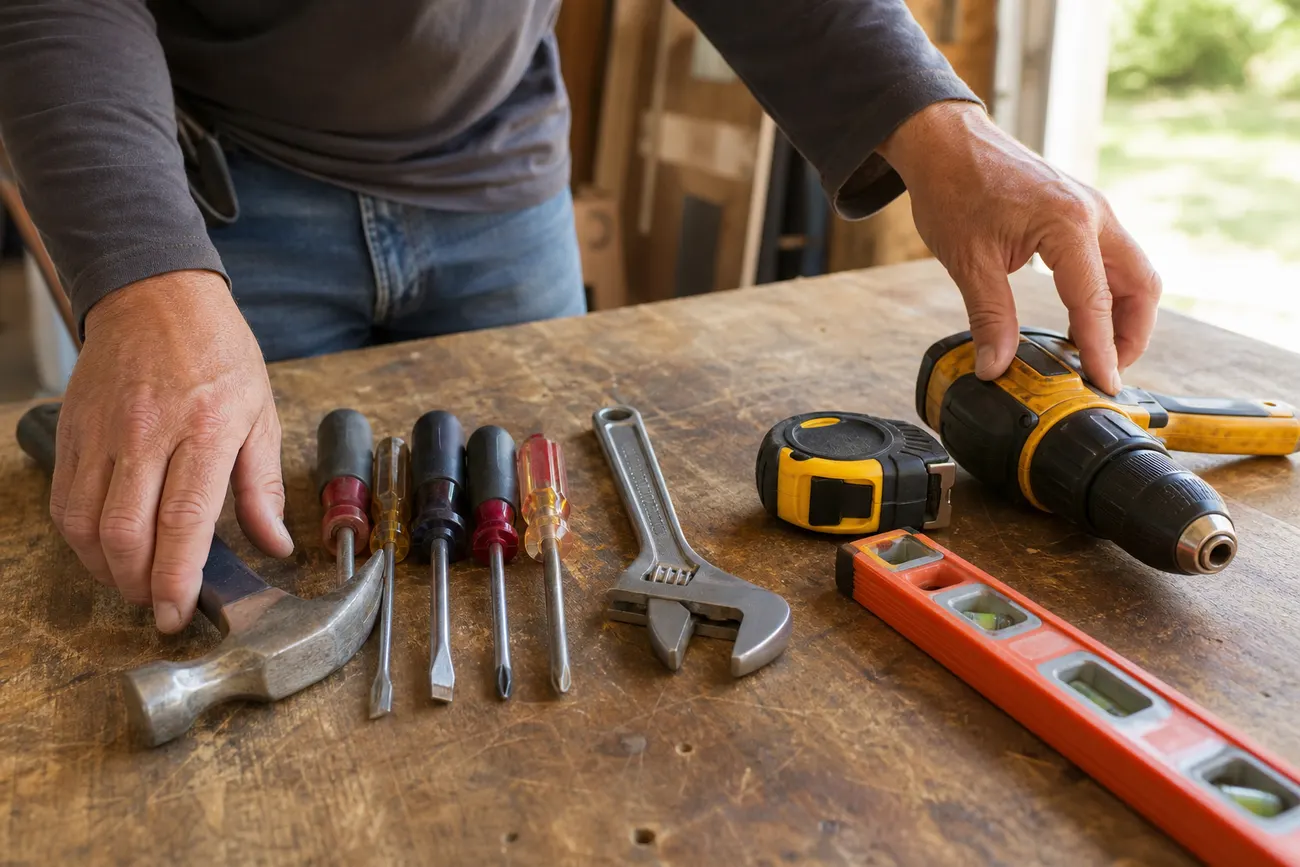
Most of this kit costs under $40 and keeps for years if you seal the compound bucket with a thin layer of water on top.
Bring
- All-purpose joint compound
- 6-inch and 10-inch taping knives
- Mesh patch or drywall scrap
- Fine sanding sponge
- Stain-blocking primer
Avoid
- Spackle for large holes
- Paint without primer on bare compound
- A single thick coat
How do you set and feather the patch?
- 01
Clean the edges
Cut away loose paper and crumbled gypsum so the patch sits flat.
- 02
Set the patch
Press the mesh or screw the drywall piece to backing, flush with the wall.
- 03
Coat thin and wide
Spread compound past the patch, then wider on each later coat.
- 04
Sand lightly
Sand only the ridges, and check with a light held flat against the wall.
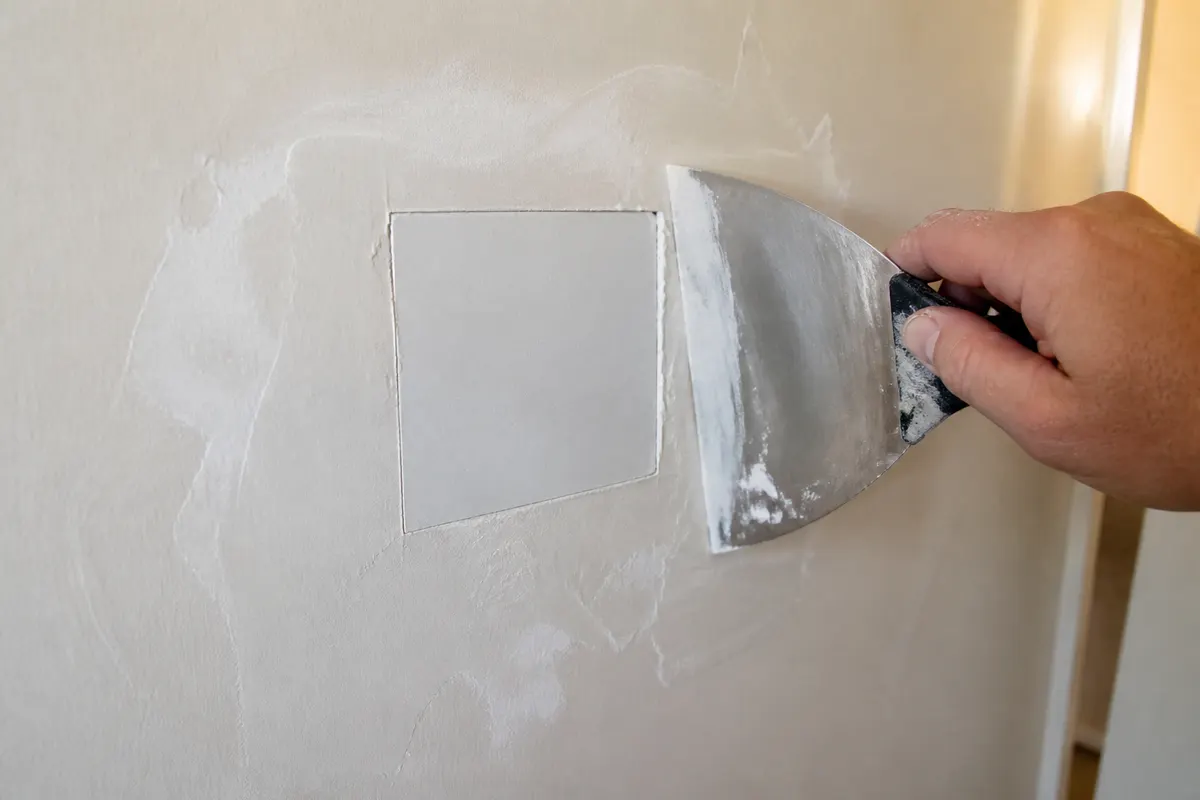
Give each coat until the next morning. Compound that looks dry on the surface can still be soft underneath, and sanding it early tears the edge.
Why do patches show through the paint?
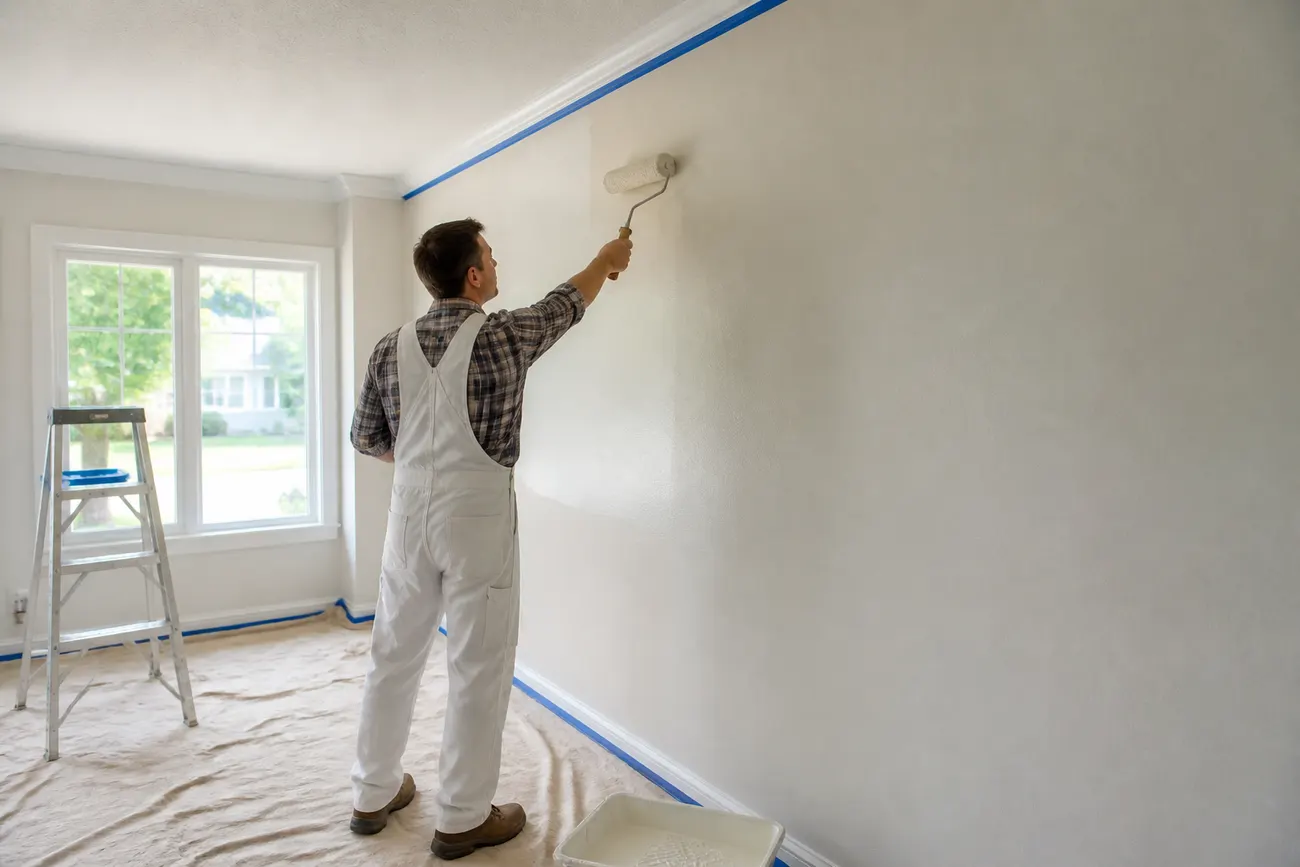
Nobody sees a good patch. They see a square of different sheen. Prime it and paint the whole wall.
Semi-gloss and eggshell paints show flashing the most and flat ceiling paint the least. On glossier walls, plan to repaint corner to corner.
When is it worth calling a pro?
Textured walls, ceilings, water-stained areas and anything larger than a hand are where a professional patch saves time and a second attempt.
| Repair | DIY materials | Hollis visit |
|---|---|---|
| Nail holes, one room | $10 | $165 |
| Doorknob hole | $20 | $165 to $220 |
| Ceiling stain after a leak | $35 | $220 to $290 |
| Texture match, one wall | $30 | $240 to $320 |
Illustrative 2026 ranges, paint included when we supply it.
Illustrative figures based on typical Wake County visits, not a study.
What else do homeowners ask?
Lightweight spackle in small holes is often paintable within an hour. Prime it first so the sheen matches.
Usually the compound went on too thick, or the hole needed a mesh patch or backing that was skipped.
For an invisible result, paint the full section between corners or trim. Spot painting often shows in daylight.
Yes. We match knockdown, orange peel and smooth finishes and blend them into the surrounding wall.
Fix the leak, let the area dry, replace any soft drywall, then seal the stain with a stain-blocking primer before painting.