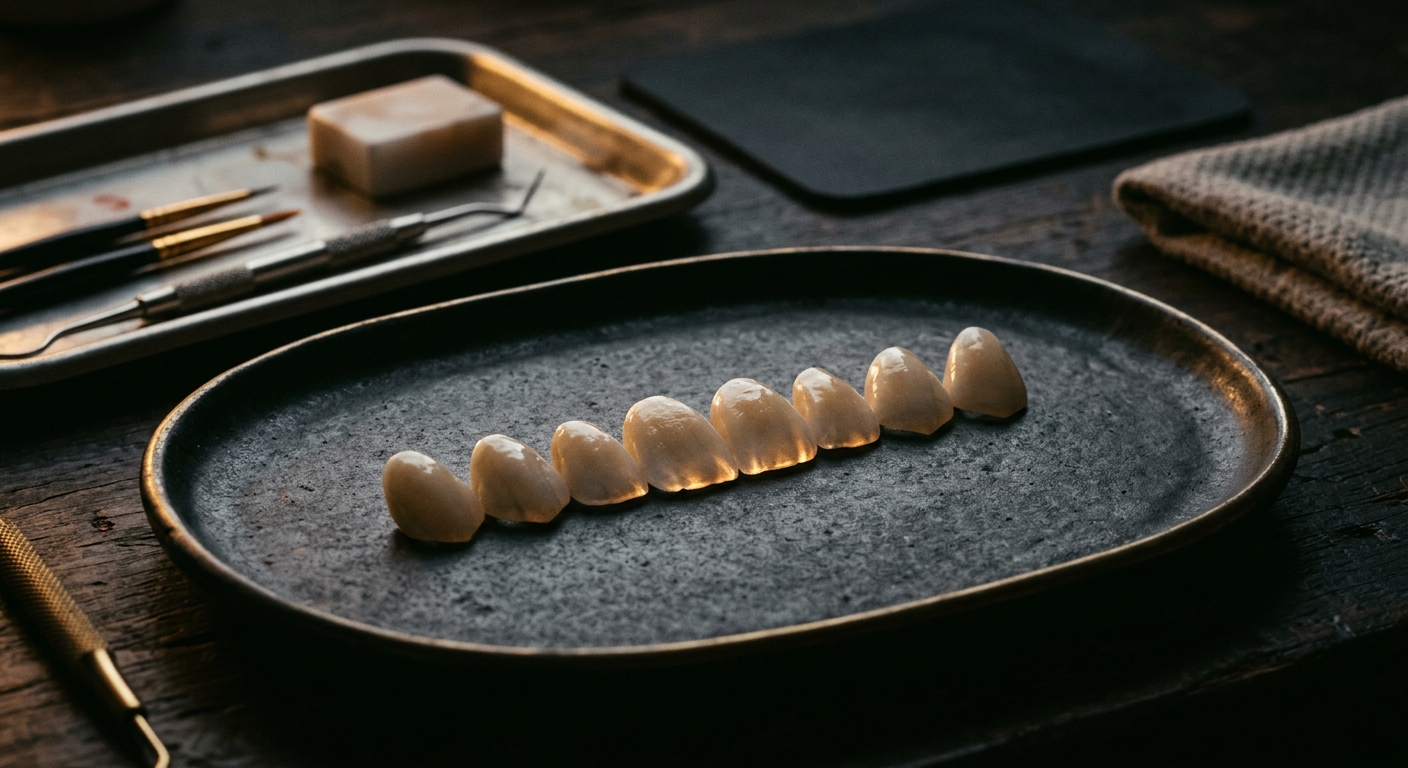
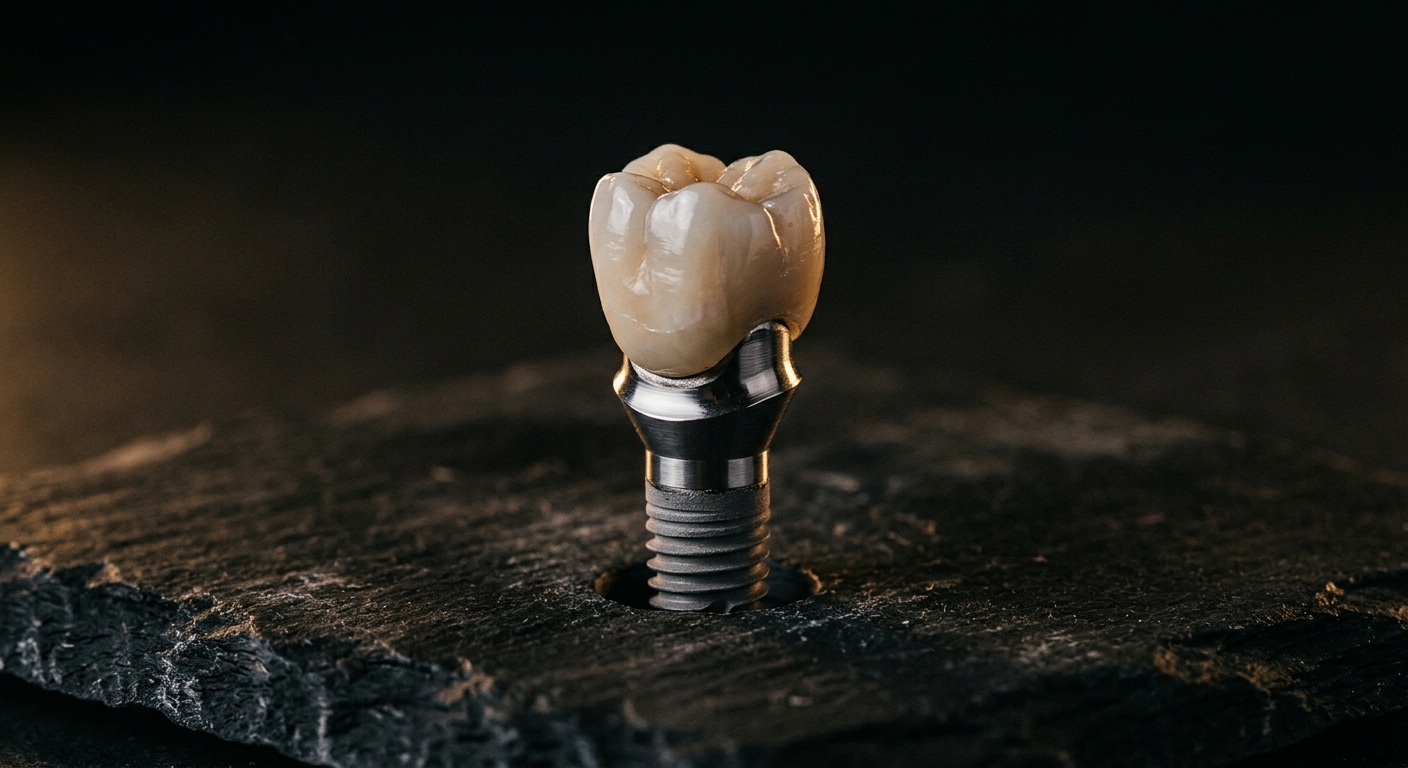
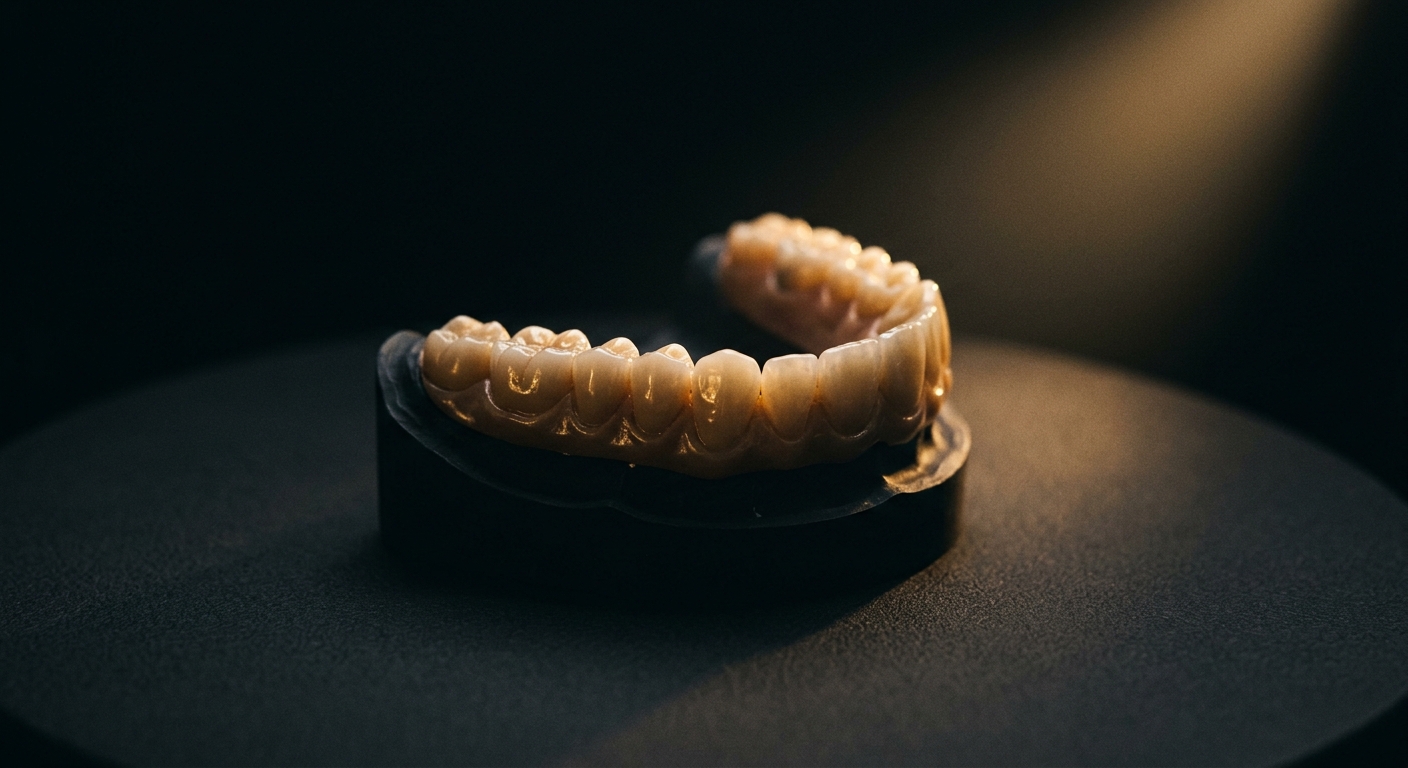
Milling a crown from a solid block takes minutes and, for a molar nobody sees, it is the right answer. A front tooth is a different problem, and it is solved with a brush, a lamp, and several trips through a furnace.
A monolithic crown is one colour
A milled restoration is carved from a block of ceramic that has one shade and one level of translucency all the way through. Modern blocks are graded and they are remarkable for what they are. But a real incisor is not graded in one smooth direction: it has a warm core, a cooler body, a nearly transparent edge, and small internal irregularities that catch light in specific places.
Building a tooth in layers
The work starts with an opaque core that hides whatever is underneath: a dark preparation, an old post, a stained root. Then a dentine layer, brushed on thicker at the neck and thinner toward the edge, which does most of the colour. Then body porcelain, then an incisal layer with the translucency raised, feathered to nothing at the tip.
Between each layer the piece goes into the furnace and comes back smaller, because porcelain shrinks as it sinters. Everything is built slightly oversized, and the amount of oversize is judgement learned by making the same mistake enough times.
Characterisation, the last five percent
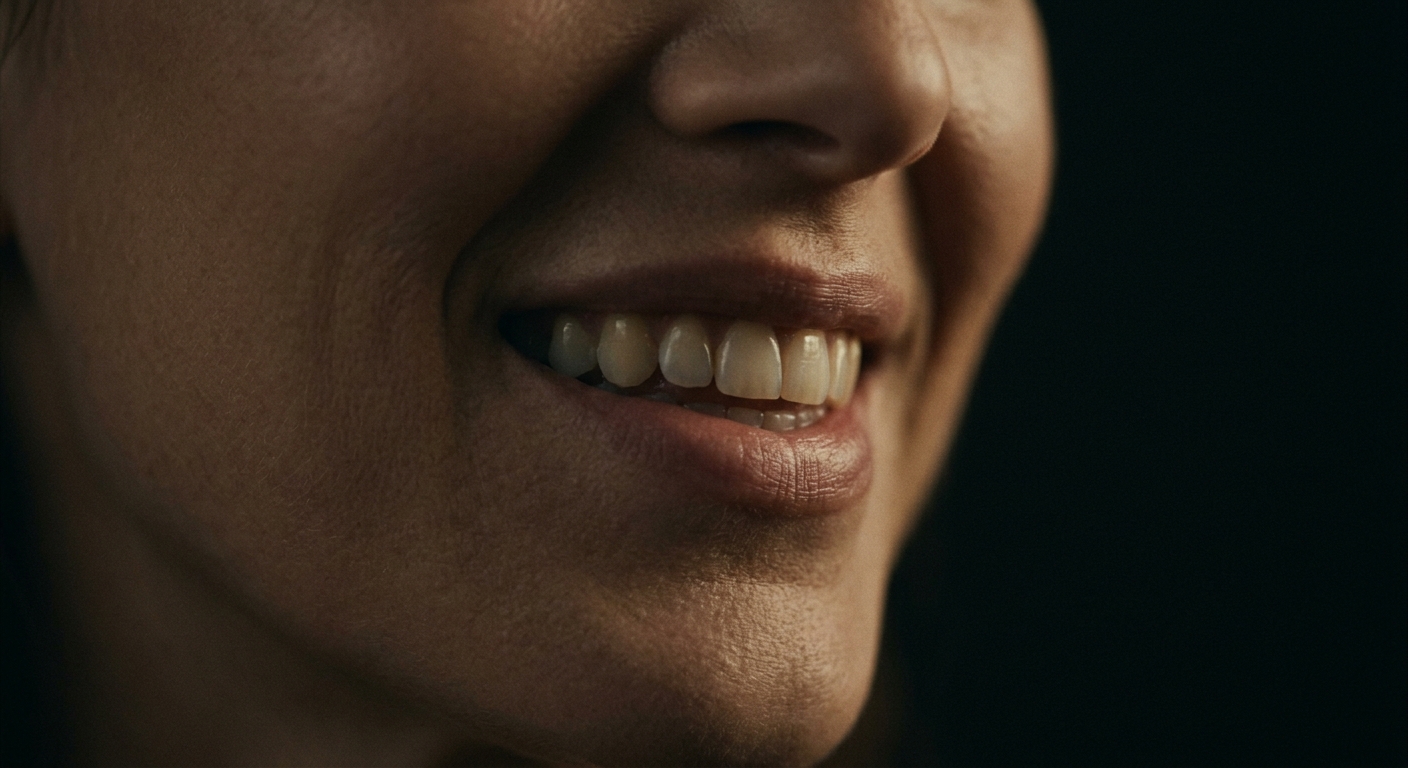
Then the details that make a tooth belong to a specific person: a faint white fleck to echo the tooth next door, a hairline of warmth where a crack shows on the natural neighbour, a slightly rougher surface texture on an older patient so light breaks the way it does on the teeth beside it.
This is the part that cannot be specified in a prescription. It is copied from photographs of your own mouth, held next to the work under a corrected lamp, and it is why the photographic session matters as much to me at the bench as it does to the dentist in the chair.
Why it takes longer
A hand-layered case is roughly a fortnight at the bench rather than an afternoon at a mill, and it costs more because it is hours of a person's attention. That is a fair trade for teeth people will look at when you speak, and a poor trade for a second molar.