
A calm neighborhood with a steady rhythm
The memory care neighborhood at Willowmere is a single-floor wing of twenty-four private suites around an enclosed courtyard garden. It is planned for people whose memory loss makes them most at ease with a predictable routine, familiar surroundings and trained staff close by at every hour.
The neighborhood has its own dining room and kitchen, a sunroom, a quiet room and a looping garden path with no dead ends. A keypad at the entrance means residents can move freely inside the neighborhood and courtyard, while visitors come and go as they please during the day.
Memory care at Willowmere is support, not treatment. Our role is to keep days steady, comfortable and full of familiar things, to help with daily living and to work closely with each resident's own doctor.
Families stay part of daily life in the neighborhood. They join meals and music, bring grandchildren to the garden and share stories that help the staff connect with their person. A short written update goes to each family every month, and the Memory Support Coordinator is available to talk whenever a family has a question.
The neighborhood is staffed by caregivers who work only in memory care, so faces stay familiar from one week to the next. They learn each resident's cues, such as when a walk will help, when quiet is better and which songs bring a smile, and they pass those notes on at every shift change.
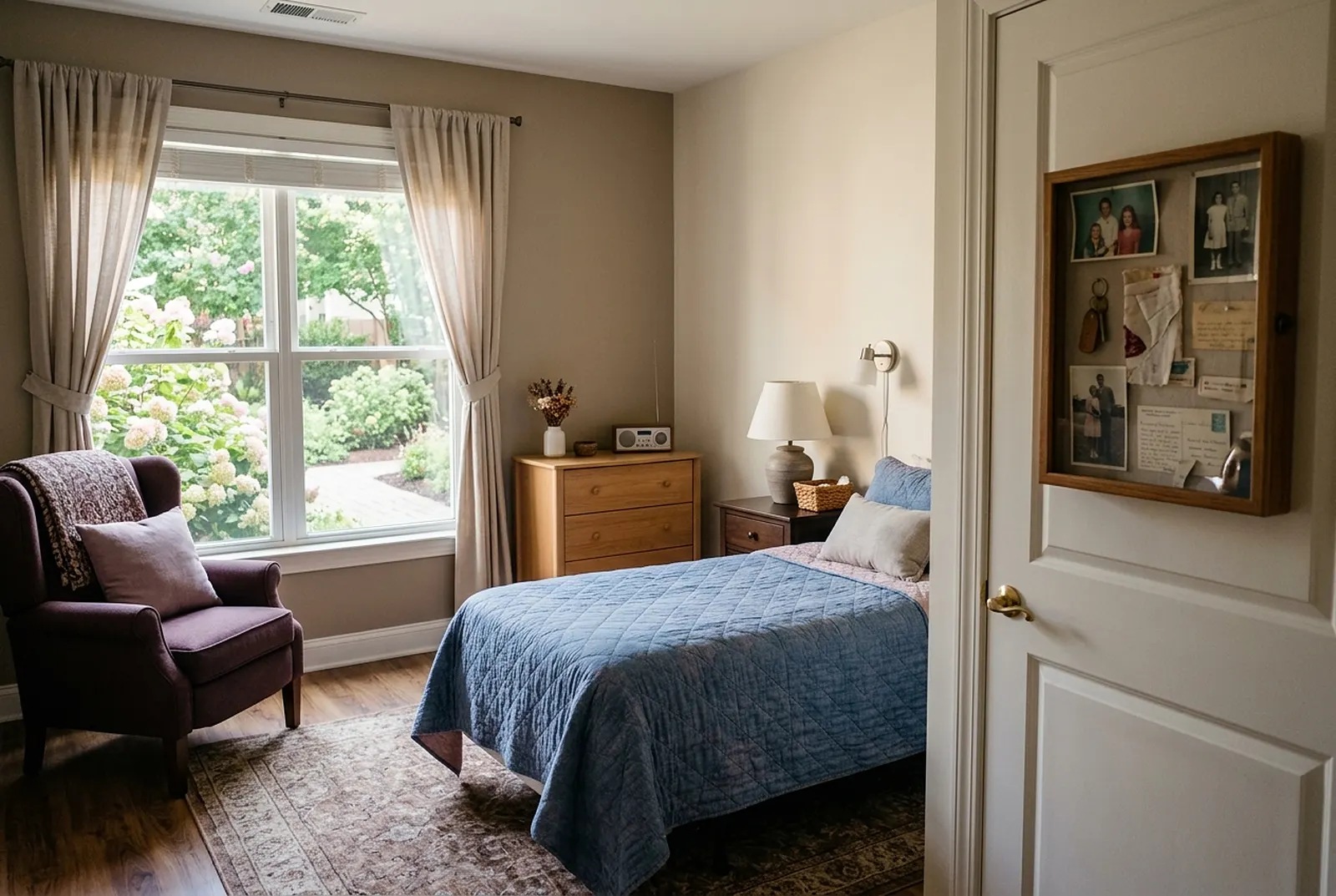
Moving a parent into memory care is rarely an easy decision, and we try to make the first weeks gentler. Before move-in, a caregiver visits the family at home to see how a normal day unfolds. On moving day, familiar furniture and photographs are already in place, the family is invited to lunch, and the care team keeps the first evenings quiet and predictable.
In the weeks that follow, families receive regular calls from the Memory Support Coordinator, and the first care plan review happens after thirty days. Many families tell us that their visits become easier once the stress of daily caregiving is lifted, and that they can simply enjoy time together again.
Life in the neighborhood still has room for the things a resident has always enjoyed. A retired teacher might help sort the library cart, a lifelong gardener might tend a raised bed, and a former church organist might lead the Sunday sing-along. Our role is to notice those threads and keep them going, adjusting the support as needs change, so that each day is still recognisably their own.
Families are welcome to ask for a visit to the neighborhood before deciding. Marisol or a member of her team will show you the suites, the courtyard and the daily rhythm, and answer questions about your own situation honestly and without pressure.
You are also welcome to join a family education evening before any decision is made; they are open to anyone caring for someone with memory loss.
A day in the neighborhood
The daily rhythm stays the same from week to week, with room for each resident's own habits.
Wake-up times follow each resident's lifelong habit. Caregivers help with washing, dressing and breakfast.
A sing-along or chair exercise in the sunroom, then watering, picking herbs or a slow loop of the courtyard path.
Family-style lunch at small tables, with help at meals for those who need it.
Rest, folding laundry, reminiscence boxes, visits and short walks.
An early supper, soft lighting, familiar music and help getting ready for bed.
Planning from a life story
Before move-in, Marisol Vega sits down with the family to learn who a resident has been. The details shape every day here.
- Lifelong wake-up and bedtime habits
- Favourite foods and how meals are taken
- Music, hymns and songs known by heart
- Jobs, places and people they talk about
- What calms them and what unsettles them
- Photographs for the keepsake case
Memory care questions
For families comparing options. See also assisted living and hospice support.