The short answer
Some slowing is normal, but a dog who lags on walks, hesitates at stairs or sits down halfway is often sore rather than simply old. Pain in older dogs is common, quiet and very often treatable.
What is normal aging in a dog?
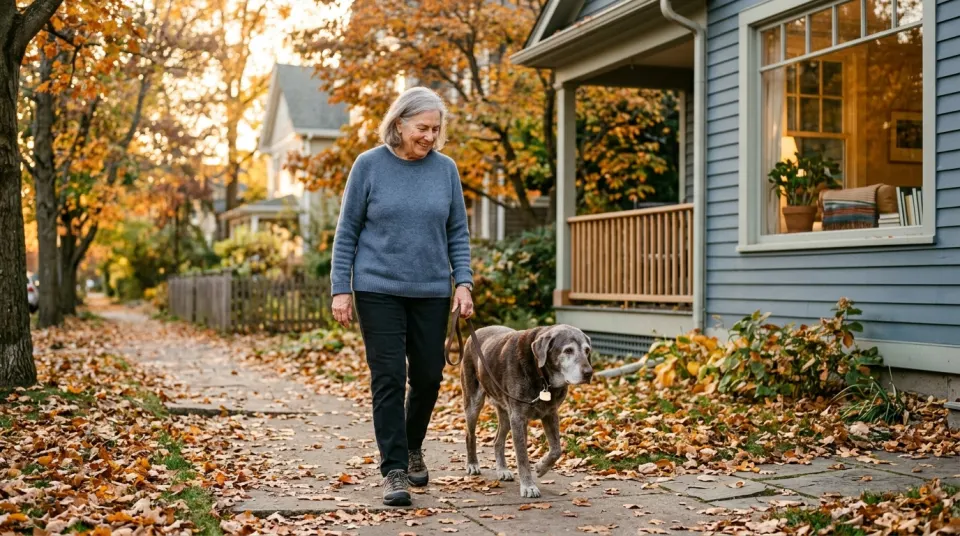
Older dogs sleep more, prefer shorter walks and take a little longer to get going in the morning. That alone is normal. What we look for is change: a walk that has shortened over months, or a dog who used to wait at the door and now does not.
Usually normal
- Sleeping more, waking easily
- Slower to get up after a long nap
- Preferring the same familiar routes
- A grayer muzzle and cloudier eyes
Worth an exam
- Stopping or sitting halfway through walks
- Hesitating at stairs or the car
- Licking one joint over and over
- Restless nights and pacing
What changes in the walk should I notice?
Walks are the best daily test you have. Once a week, watch your dog from behind for a minute and notice how they move.
- The head bobA head that dips as one front leg lands often means the other front leg is sore.
- The short strideBack legs that take quicker, shorter steps can point to hips or knees.
- The leanLeaning away from one side when standing still takes weight off a painful leg.
- The sitSitting down with one back leg stuck out sideways is a common sign of knee or hip pain.
How can I help at home?
| Change | Why it helps | Cost |
|---|---|---|
| Rugs on slick floors | Grip means confidence and fewer falls | Low |
| Shorter, more frequent walks | Keeps muscle without overdoing it | Free |
| A ramp for the car | Saves joints from the jump | Moderate |
| Weight loss, if needed | Every pound off is less load on joints | Free |
| Raised water and food bowls | Less bending for sore necks | Low |
Most old dogs are not lazy. They are sore, and soreness is something we can work on.Dr. Owen Mercer
What will the vet check?
We watch your dog walk, feel each joint and muscle group, check weight and body condition and ask about the changes you have noticed. Bloodwork tells us which pain relief options suit your dog's kidneys and liver.
Illustrative for a fictional practice.
- Pain relief chosen to suit the bloodwork
- Joint supplements, where they fit
- Weight plan, if needed
- Gentle exercise ideas for your dog and your routes