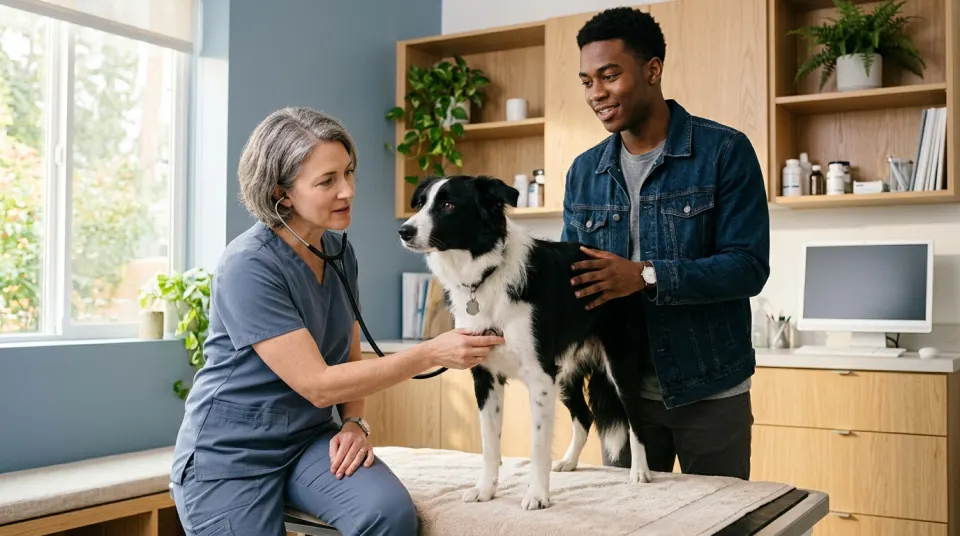
A proper look,once or twicea year.
Forty minutes, nose to tail, with time for the questions you have been saving since the last visit. You leave with a one-page summary of what we found and what, if anything, comes next.
- Visit length
- About 40 minutes
- Exam fee
- $68 illustrative
- You take home
- A written summary
The short answer
What is a wellness exam?
A wellness exam is a full physical for a pet who seems fine, because most problems in dogs and cats show up on the table before they show up at home.
Pets are good at hiding discomfort. A sore tooth, a heart murmur, a little weight creeping on or a lump under the fur can all sit quietly for months. A yearly exam is how we catch those things while they are small, cheap and simple to manage.
It is also how we get to know your pet when nothing is wrong, so that on the day something is, we already know what normal looks like for them.
Figures are illustrative for a fictional practice.
Nose to tail
What we check, in this order.
The order is the same every time, so nothing gets skipped when a visit gets chatty. You stay for all of it, and we say what we see as we go.
- 01
A conversation first
Appetite, thirst, energy, stools, behavior, travel plans. Five minutes of talk often tells us where to look hardest.
- 02
Weight and body condition
We weigh, then feel the ribs and waist to score body condition, which says more than the number on the scale.
- 03
Eyes, ears and nose
Cloudiness, discharge, redness and ear debris, plus a look deep into the ear canal for dogs who swim.
- 04
Mouth and teeth
Tartar, red gums, broken teeth and anything that smells wrong. Dental disease is the most common thing we find.
- 05
Heart and lungs
A slow listen on both sides of the chest for murmurs, rhythm changes and breathing sounds.
- 06
Belly, skin and coat
A gentle press for organ size and tenderness, then a hands-on search for lumps, scabs, fleas and dry patches.
- 07
Joints and gait
We watch your pet walk and turn, then flex each joint. Stiffness shows up here years before it shows up on walks.
- 08
The plan, in writing
What we found, what we suggest, what can wait and what each part costs, on one page you take home.
Who you will see
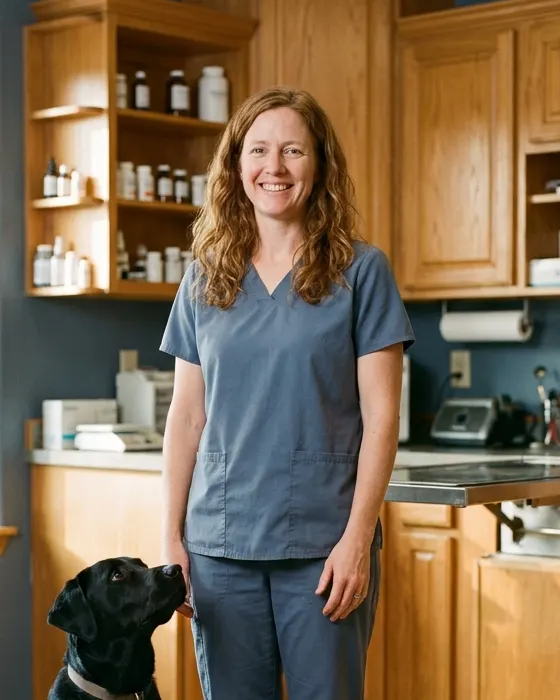
The same doctor, year after year.
We book each pet with one of our three doctors and keep them there. Your doctor remembers last year's weight, the lump we measured and the way your dog hates the scale, so every exam builds on the one before.
- Notes from every visit on one file, read before you arrive
- Measurements of any lump or mark, compared year to year
- A follow-up call if a test result comes back after you leave
How often
One exam a year, until it should be two.
The right rhythm depends on age more than anything. This is where we usually start, and we adjust it to your pet.
| Life stage | How often | What we add | Why |
|---|---|---|---|
| Puppy and kitten | Every 3 to 4 weeks until about 16 weeks | Vaccine series, parasite checks, growth | Their protection is built in steps |
| Adult, 1 to 6 years | Once a year | Dental check, weight trend, lifestyle vaccines | A healthy year is a lot of change for a pet |
| Senior, 7 and up | Twice a year | Screening bloodwork, blood pressure, mobility | Six months is about three of their years |
| Ongoing condition | As planned together | Rechecks and medication reviews | The plan follows the condition, not the calendar |
What it costs
Prices you see before the visit.
Every visit starts with the exam fee. Anything beyond it is suggested, explained and priced on paper before it happens, and you choose.
Client words
What clients say
Dr. Whitfield found a small lump I had never noticed, measured it, and showed me the number again six months later. Same size, and I slept fine.
Forty minutes felt long until I realized nobody had ever answered all of my questions before. I left with a list, not a lecture.
Sample reviews, illustrative for a fictional practice.
Questions
Wellness exam questions
The things owners ask us most at the front desk.
Ask us: (555) 214-0186How long does a wellness exam take?
Plan on about 40 minutes in the room. Senior exams run closer to 50. If you have a long list of questions, tell Tasha when you book and we will add time.
Does my indoor cat really need a yearly exam?
Yes. Indoor cats are the best of all pets at hiding problems, and dental disease, weight change and kidney trouble do not need the outdoors to start. The exam is the main way we catch them early.
Do I have to agree to vaccines or tests at the exam?
No. We suggest, explain and price everything first. You can say yes, no or not today to any part of the plan, and it will not change how we treat you or your pet.
Can I stay in the room the whole time?
Yes, and we prefer it. Most pets are calmer with you there. The only time we may take a pet to the treatment room is for a blood draw, and only if they settle better that way.
What should I bring?
Any medications or supplements your pet takes, a short list of questions and, for the first visit, previous records if you have them. A fresh stool sample is useful if we have suggested a parasite test.
More of our care
Other ways we can help.
 Vaccines and parasite careA schedule built around how your pet actually lives, from the indoor cat to the trail dog.
 Puppy and kitten visitsFirst vaccines, gentle handling practice and the questions every new pet brings home.
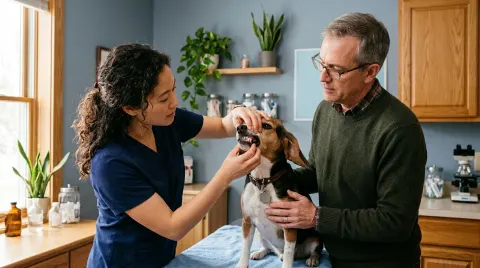 Dental careChecks at every exam, and cleanings under monitored anesthesia when the mouth needs more.
 Same-day sick visitsOff their food, limping or just not right? Call in the morning and we hold time for the day.
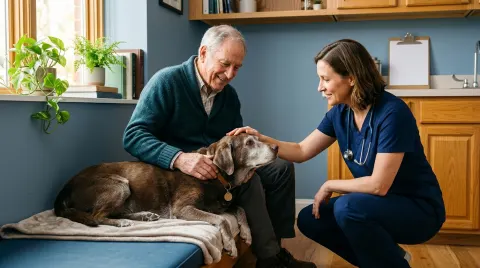 Senior pet careTwice-yearly checks and early screening, so the slow years stay comfortable ones.
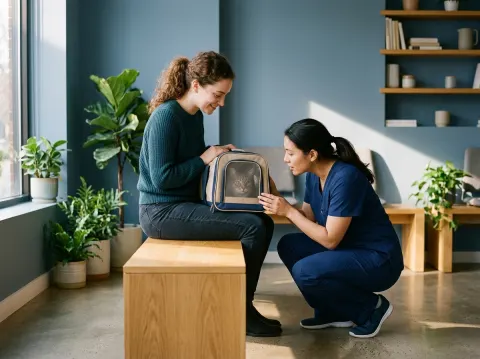 All of our careNot sure which visit fits? Start here.