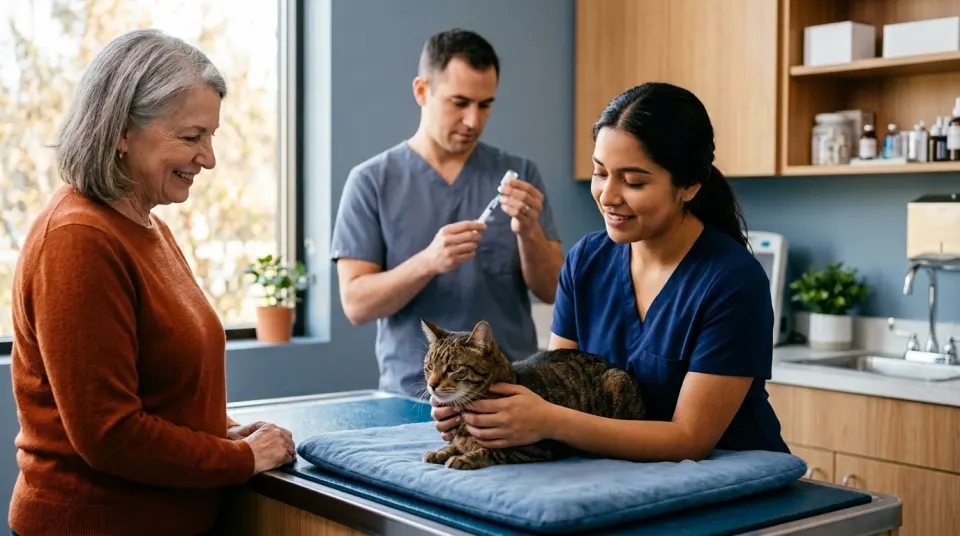
Only the shotsyour petactually needs.
An indoor cat and a trail dog do not need the same protection. We plan vaccines and parasite care around your pet's real life, explain each one before it is given and keep the schedule on one page.
- Core vaccines
- Every pet
- Lifestyle vaccines
- Only if they fit
- Ticks and fleas
- Year-round here
Core and lifestyle
Two kinds of vaccine, one honest list.
Core vaccines protect against diseases that are common, serious or required by law. Lifestyle vaccines depend on where your pet goes and who they meet. We only suggest the second kind when the first question says yes.
| Vaccine | Type | Who it is for | How often |
|---|---|---|---|
| Rabies | Core, required | Every dog and cat, by North Carolina law | Every 1 or 3 years, by vaccine |
| Distemper combination | Core | Every dog | Series as a puppy, then every 3 years |
| Feline distemper combination | Core | Every cat, indoor cats included | Series as a kitten, then every 3 years |
| Leptospirosis | Lifestyle | Dogs who drink from creeks, puddles or ponds | Yearly |
| Kennel cough | Lifestyle | Dogs who board, groom or go to daycare | Yearly, or as the kennel asks |
| Lyme disease | Lifestyle | Dogs who hike, camp or live near woods | Yearly after a two-dose start |
| Feline leukemia | Lifestyle | Kittens, and cats who go outdoors | Kitten series, then by risk |
Parasites by season
In these hills, the bugs never fully leave.
Mild winters mean ticks and fleas stay active for most of the year in Buncombe County. That is why we usually suggest prevention all twelve months, not just summer.
Spring
March to MayTicks wake up first, on trails and in tall grass. This is when we see the most tick-borne disease tests come back positive.
Summer
June to AugustMosquitoes carry heartworm, and fleas breed fast in the humidity. Indoor cats catch fleas from dogs who come and go.
Fall
September to NovemberFallen leaves are tick shelter. Hikers and leaf-pile dogs pick up as many ticks in October as in May.
Winter
December to FebruaryWarm spells wake ticks for days at a time, and fleas live happily indoors. A missed winter dose is the usual way infestations start.
Before the needle
Every shot, explained first.
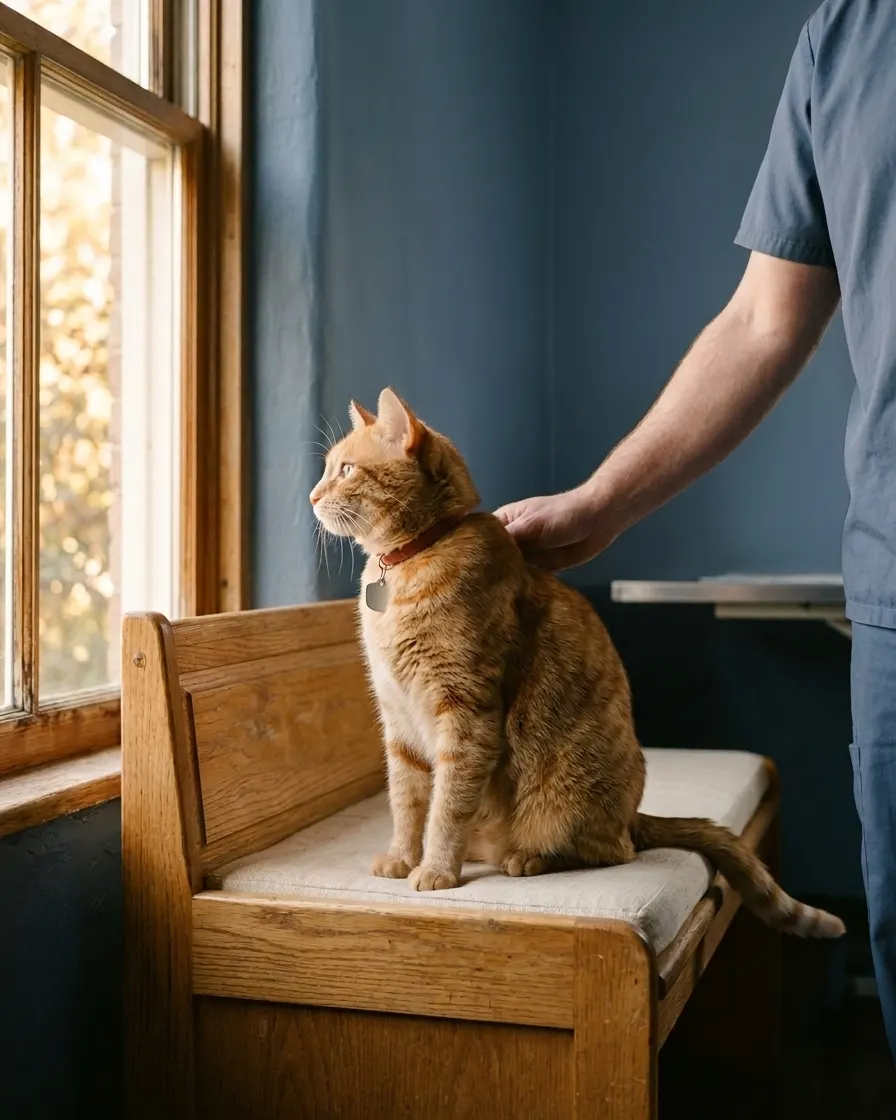
Before any vaccine, we tell you what it protects against, why we suggest it for your pet and what a normal reaction looks like afterward. Most pets feel a little sleepy or sore for a day. We tell you what is not normal and when to call.
Cats get their vaccines in the lower legs, where any lump that forms is simple to watch, and we note the site on their file every time.
- A printed schedule showing what is due and when
- Reminders by text a week before anything is due
- Rabies certificates and tags handed over the same day
The visit
A vaccine visit, step by step.
Vaccines are always given after an exam, never on their own. A pet with a fever or an upset stomach should wait, and only an exam tells us that.
- 01
A quick exam
Temperature, weight, heart and a look over the whole body, so we know your pet is well enough for today.
- 02
The plan
We go through what is due, what is optional and the price of each. You choose.
- 03
A treat and a shot
Small needles, food on hand and a calm hold. Most pets barely notice.
- 04
Twenty minutes
For a first vaccine of any kind, we ask you to wait nearby for a short while, just in case.
Questions
Vaccine and parasite questions
Short answers to the questions we hear most. Ask us anything else at the exam.
Ask us: (555) 214-0186Does my indoor cat need vaccines?
Yes, at least the core ones. Rabies is required by law, and feline distemper travels on shoes and clothing. We usually skip lifestyle vaccines for cats who never go outside.
Can vaccines make my pet sick?
Most pets feel a little tired or sore for a day, which is a normal immune response. Serious reactions are rare. We explain what to watch for and you can reach us by phone if anything seems wrong.
Why do you suggest parasite prevention in winter?
Asheville winters are mild, with warm spells that wake ticks for days at a time, and fleas live comfortably indoors all year. Most of the flea problems we see start after a skipped winter month.
My dog is overdue on vaccines. Do we start over?
Not always. It depends on the vaccine and how late it is. Bring any records you have and we will work out the shortest path back on schedule, often a single booster.
Do you check for heartworm before starting prevention?
Yes. Dogs get a quick blood test first, because starting prevention on a dog who already has heartworm needs a different plan. Results come back during the visit.
Client words
What clients say
I expected a list of ten shots. We got two, a reason for each, and a note that the others did not fit a cat who never leaves the apartment.
They asked where we hike before they suggested anything. Then they showed me where ticks hide on a dog, which I had been doing all wrong.
Sample reviews, illustrative for a fictional practice.
More of our care
Other ways we can help.
 Wellness examsA nose-to-tail check once or twice a year, with time for every question you have been saving up.
 Puppy and kitten visitsFirst vaccines, gentle handling practice and the questions every new pet brings home.
 Dental careChecks at every exam, and cleanings under monitored anesthesia when the mouth needs more.
 Same-day sick visitsOff their food, limping or just not right? Call in the morning and we hold time for the day.
 Senior pet careTwice-yearly checks and early screening, so the slow years stay comfortable ones.
 All of our careNot sure which visit fits? Start here.