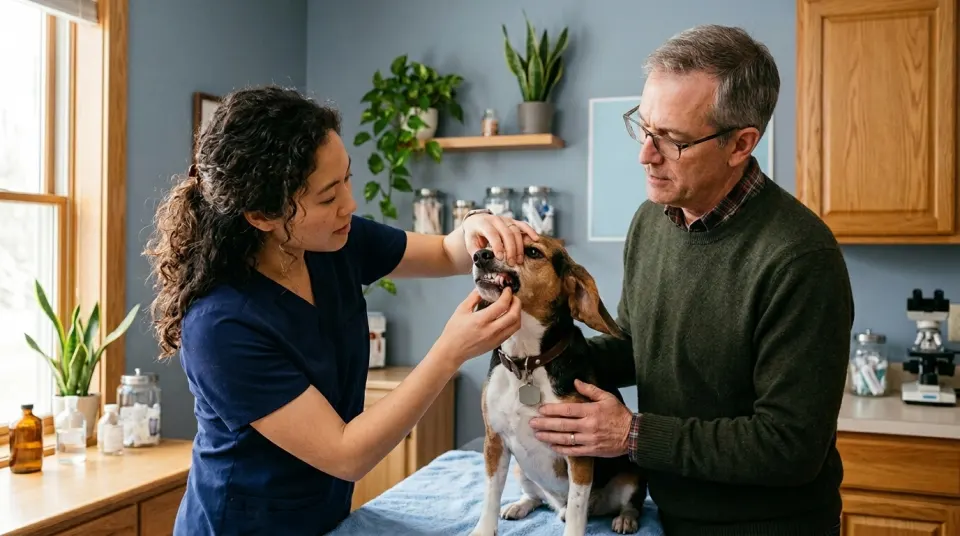
A healthy mouthis a happierpet.
We look at the teeth at every exam. When a mouth needs more, we plan a cleaning under monitored anesthesia with full dental x-rays, and you see what we see before anything is booked.
- Checked at
- Every exam
- Cleanings include
- Full dental x-rays
- Estimate
- Written, before booking
Signs at home
What a sore mouth looks like.
Pets almost never stop eating because of tooth pain. They adapt, so the signs are quieter than you might expect.
Book a dental check if you notice
- Bad breath that is new or getting stronger
- Yellow or brown buildup along the gumline
- Red or puffy gums, or a little blood on chew toys
- Chewing on one side, or dropping food
- Pawing at the face or rubbing it on the floor
Call us the same day if
- A tooth is broken and you can see pink or red in the middle
- The face is swollen under an eye or along the jaw
- Your pet will not eat or cries when they try
- Something is stuck between teeth or across the roof of the mouth
- There is bleeding from the mouth that does not stop
About anesthesia
Why a cleaning needs anesthesia
Most dental disease lives below the gumline, where you cannot see it and an awake pet will not let anyone reach.
Scraping the visible tartar off an awake pet makes teeth look better without treating the part that hurts. A real cleaning means x-rays of every tooth and cleaning under the gums, which needs a pet who is asleep and still.
So we plan anesthesia carefully: bloodwork first, a plan sized to your pet's age and health, a technician whose only job is watching breathing, heart rate, blood pressure and temperature from start to finish, and warm blankets as they wake up. Every anesthetic carries some risk, and we talk through yours before you decide.
Figures are illustrative for a fictional practice.
Dental day
How a cleaning day usually runs.
Most pets go home the same afternoon. You get two phone calls during the day, so you never sit wondering.
- 01
Morning drop-off
Between 7:30 and 8:30, with no breakfast. We check in, answer questions and confirm the estimate.
- 02
Pre-anesthetic check
An exam and bloodwork if it is not recent, so the plan fits your pet today.
- 03
X-rays and cleaning
Monitored anesthesia, full-mouth x-rays, cleaning above and below the gumline, then polishing.
- 04
A call from the doctor
If x-rays show a tooth that needs removing, we call first with what we see and the cost. You decide.
- 05
Home by afternoon
Pick-up with written aftercare, any medication and a photo of the x-rays if you want it.
Between visits
Home care that actually helps.
A cleaning resets the clock. What happens at home decides how long it lasts.
Read our two-week brushing plan- 01
Brushing, even a few times a week
A soft brush and pet toothpaste, a little at a time. Daily is ideal, three times a week still makes a difference.
- 02
Dental chews, chosen carefully
Look for chews that bend when you press a thumbnail into them. Hard bones and antlers break teeth.
- 03
Prescription dental diets
For some pets, a food designed to scrub as they chew helps slow tartar. We will say if yours is a good fit.
- 04
A look every month
Lift the lip once a month and check the back teeth. Catching redness early is the cheapest dental care there is.
What it costs
The estimate comes before the booking.
Dental costs depend on what the x-rays show, so we give a range up front and call before anything outside it.
Client words
What clients say
They called mid-morning with the x-rays on screen and walked me through the two teeth they wanted to take out. No surprise on the bill.
I had been told cats do not need dental work. Our cat started eating dry food again a week after hers.
Sample reviews, illustrative for a fictional practice.
Questions
Dental care questions
The questions we hear before almost every cleaning.
Ask us: (555) 214-0186Is anesthesia risky for an older pet?
Age itself is not a disease, but older pets are more likely to have conditions that change the plan. That is why we run bloodwork first, size the anesthetic plan to your pet and monitor them throughout. We talk through your pet's particular risks before you decide.
Can you clean my pet's teeth without putting them under?
We do not offer it. Cleaning only the visible tartar on an awake pet leaves the disease under the gums untouched and can give a false sense that the mouth is healthy. Full x-rays also need a pet who is asleep.
How often does my pet need a cleaning?
It varies a lot. Some dogs need one every year, some only a few in their life. Small breeds and cats tend to need them more often. We look at every exam and tell you when it is time.
Will you remove teeth without asking?
No. If the x-rays show a tooth that needs to come out, the doctor calls you first with what they see, why and the cost. Nothing outside the estimate happens without your yes.
How will my pet eat after extractions?
Most pets eat soft food the same evening. We send home pain relief and simple instructions, and we check the mouth again at a free recheck about two weeks later.
More of our care
Other ways we can help.
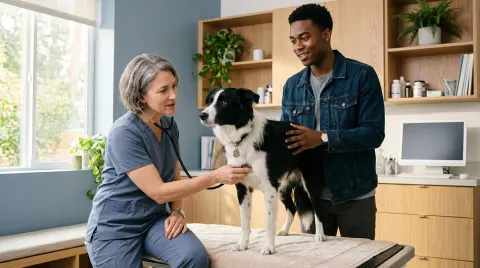 Wellness examsA nose-to-tail check once or twice a year, with time for every question you have been saving up.
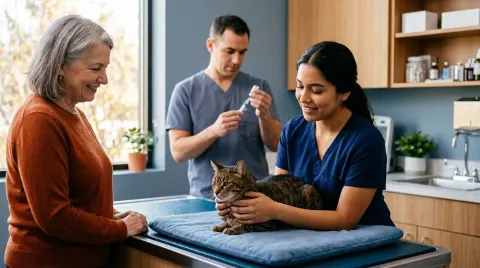 Vaccines and parasite careA schedule built around how your pet actually lives, from the indoor cat to the trail dog.
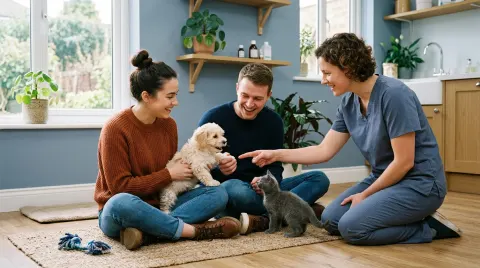 Puppy and kitten visitsFirst vaccines, gentle handling practice and the questions every new pet brings home.
 Same-day sick visitsOff their food, limping or just not right? Call in the morning and we hold time for the day.
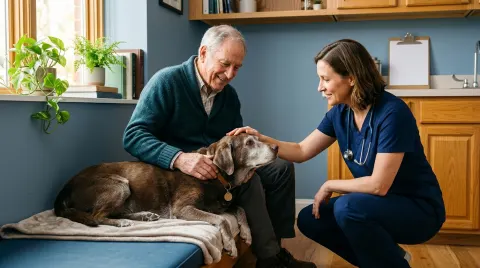 Senior pet careTwice-yearly checks and early screening, so the slow years stay comfortable ones.
 All of our careNot sure which visit fits? Start here.