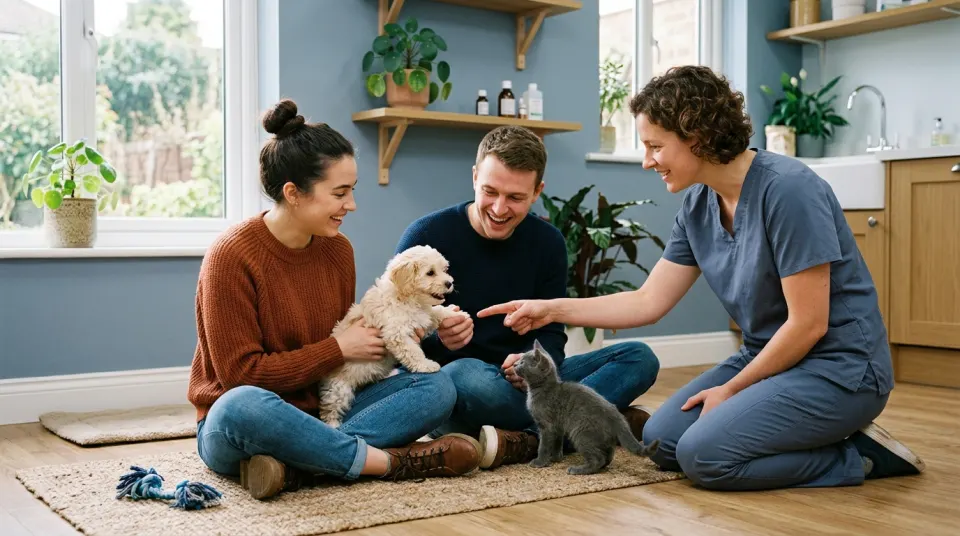
Their first year,planned asone series.
Three or four visits a few weeks apart, each one building on the last. Vaccines, parasite checks, growth, food and the questions that keep you up at night, all on one plan from the first day.
- First visit
- About 50 minutes
- Series
- 3 to 4 visits
- Seen within
- A week, usually
The first year
Four visits that set them up.
Ages are a guide. If your puppy or kitten is older when they arrive, we start where they are and fit the series around them.
- 8 wk
Welcome visit
Full exam, first core vaccine, a stool check for worms and a long talk about food, sleep and house training.
- 12 wk
Building protection
Second vaccine round, a weight check and handling practice for paws, ears and mouths.
- 16 wk
The last booster
Final puppy or kitten vaccines and the first rabies shot. Spay and neuter timing comes up here.
- 6 mo
The half-year check
Adult teeth, growth, weight and a plan for the first adult year, including dental habits.
Why a series
Why not one big visit?
A young animal's immunity builds in steps, so a vaccine given too early simply does not take. Spacing the visits is what makes them work.
Puppies and kittens are born with some protection from their mother, and it fades over their first few months. Until it fades, it can block a vaccine. Giving boosters every three to four weeks until about sixteen weeks makes sure one of them lands at the right moment.
The spacing has a second benefit. Short, happy visits while they are small teach your pet that the clinic is a place with treats and kind hands, and that pays off for the next fifteen years.
Puppy or kitten
Same idea, different first year.
Puppies and kittens follow the same rhythm, with a few differences worth knowing before the first visit.
| Puppies | Kittens | |
|---|---|---|
| Core vaccines | Distemper combination and rabies | Feline distemper combination and rabies |
| Often added | Kennel cough, leptospirosis, Lyme by lifestyle | Feline leukemia, especially if they may go outside |
| Parasite checks | Stool tests at the first two visits, then deworming | Stool tests and a leukemia and immunodeficiency test |
| Spay and neuter | Timing by breed size, often 6 to 12 months | Usually around 5 to 6 months |
| Biggest early worry | Chewing what they should not | Hiding signs of illness |

Handling practice
Small hands-on habits, big calm later.
At every young-pet visit we spend a few minutes touching paws, lifting lips and peeking in ears, with treats at each step. It turns future nail trims, tooth checks and exams into non-events.
- About five minutes of handling at each visit
- Treats at every step, as many as it takes
- A short routine you can repeat at home
The first visit
What to bring, and what to skip.
Bring with you
- Any records from the breeder, shelter or rescue, even handwritten ones
- A fresh stool sample in a sealed bag, from the last 12 hours
- Their usual food or a photo of the bag, so we can talk about portions
- Your questions, written down. Everyone forgets them in the room
Leave at home
- A full meal right before the visit. Hungry pets take treats and stay calmer
- Dog parks and pet stores until the vaccine series is done
- Worry about mess. Accidents in the room are part of the job
- The whole family if the room gets loud. Two people is plenty
The first-year plan
One price list for the whole series.
We price the full series on the first day so there are no surprises later. You can pay visit by visit.
Questions
Puppy and kitten questions
What new owners ask most. Bring the rest to the first visit.
Ask us: (555) 214-0186How soon should I bring a new puppy or kitten in?
Within the first week is ideal, even if they seem perfectly well. Young animals can carry worms or infections from the place they came from, and an early exam also starts the vaccine clock.
Can my puppy meet other dogs before the series is done?
Yes, with care. Healthy, vaccinated dogs you know are fine, and early friendly contact matters a lot. Skip dog parks, pet stores and unknown dogs until a week or two after the last booster.
When should I spay or neuter?
It depends on species and size. Kittens are usually around five to six months. For dogs, especially large breeds, the timing is a real conversation, and we go through the trade-offs with you at the sixteen-week visit.
Is pet insurance worth it for a young pet?
Many owners find it useful, and it is cheapest to start while your pet is young and has no history. We work with most pet insurance plans and are happy to fill in claim forms.
My kitten came from a shelter with some vaccines done. Do we repeat them?
Usually not. Bring the paperwork and we will pick the series up from where it stopped, only repeating anything if the timing means it may not have taken.
More of our care
Other ways we can help.
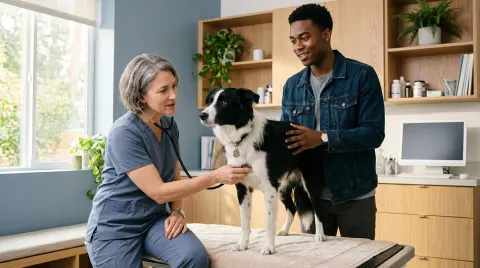 Wellness examsA nose-to-tail check once or twice a year, with time for every question you have been saving up.
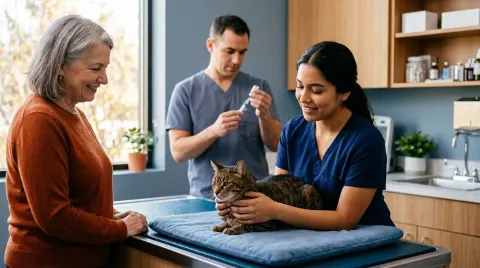 Vaccines and parasite careA schedule built around how your pet actually lives, from the indoor cat to the trail dog.
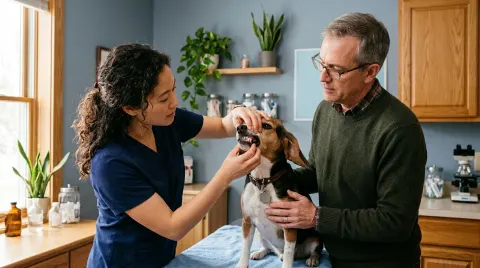 Dental careChecks at every exam, and cleanings under monitored anesthesia when the mouth needs more.
 Same-day sick visitsOff their food, limping or just not right? Call in the morning and we hold time for the day.
 Senior pet careTwice-yearly checks and early screening, so the slow years stay comfortable ones.
 All of our careNot sure which visit fits? Start here.