The short answer
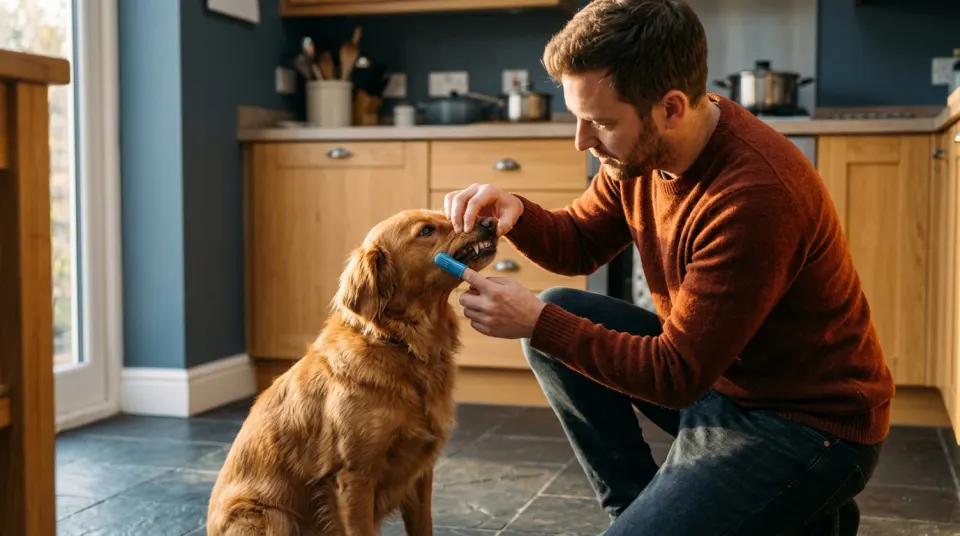
Yes. Most dogs accept brushing if you build up over about two weeks: lip touches first, then toothpaste on a finger, then a few seconds with a brush. Aim for daily; three times a week still helps.
Why bother brushing at all?
Plaque turns into hard tartar within a few days, and tartar under the gumline is where dental disease starts. Brushing removes plaque before it hardens. Nothing else you can do at home comes close.
Rules of thumb, illustrative.
What do I need?
Use
- A soft brush sized for your dog, or a finger brush
- Toothpaste made for pets, in a flavor they like
- Small, tasty treats for after
- Five quiet minutes at the same time each day
Skip
- Human toothpaste, which can contain xylitol
- Baking soda and homemade pastes
- Hard bristles or electric brushes to start
- Holding your dog down
What is the two-week plan?
| Days | What you do | Move on when |
|---|---|---|
| 1 to 3 | Touch the lips and muzzle, then treat | Your dog leans in, not away |
| 4 to 6 | Let them lick paste from your finger, then rub one tooth | They wait for the paste |
| 7 to 9 | Finger along the outside of the teeth, both sides | Thirty calm seconds |
| 10 to 12 | Swap to the brush, front teeth only | No pulling away |
| 13 to 14 | Brush the back teeth too, outside surfaces | It is just part of the day |
Go slower if you need to. A dog who learns that brushing is calm and ends with a treat will let you brush for years. A dog who gets wrestled once may never let you near their mouth again.
Does this work for cats?
Often, yes, with a smaller finger brush and even more patience. Cats tend to prefer meat-flavored paste and very short sessions. Even a few seconds on the large back teeth helps.
The best routine is the one you will still be doing in March.Dr. Mateo Ruiz
Do dental chews replace brushing?
No, but the right ones help. Pick chews that bend when you press a thumbnail into them, and skip antlers, hooves and hard bones, which are a common cause of broken teeth.
- Bendable chews, sized so they cannot be swallowed whole
- Prescription dental diets, if we suggest one
- Water additives help a little; they are not a substitute
- Rope toys can floss, but watch for swallowed threads