The short answer
Keep the first three days small and boring: one quiet room, a crate or pen, short trips outside every two hours, and a first vet visit within the week. Big adventures can wait until the vaccine series is done.
What should be ready before the puppy comes home?
The calmest first days start before pickup. A puppy who arrives to a ready space settles faster, sleeps better and has fewer accidents.
Have ready
- A crate or pen in a quiet corner
- The food they ate before, for at least a week
- Two or three chew toys of different textures
- An enzyme cleaner for accidents
- A collar with a blank tag and your phone number
Hold off on
- Rawhide and hard bones
- A brand-new food on day one
- Visitors lined up for the first weekend
- Free run of the whole house
- Dog parks and pet stores
How should the first day go?
Expect a puppy who is tired, unsure and a little clingy. They have just left the only home and littermates they have known. Your job on day one is to be dull and kind.
- Straight to the potty spotBefore going inside, carry them to the place you want them to use. Praise quietly when they go.
- One room to startLet them explore one safe room with you, not the whole house.
- Food at the usual timesAsk the breeder or rescue for the schedule and stick to it.
- Naps in the cratePuppies sleep up to 18 hours a day. Short crate naps teach that it is a safe place.
- Outside every two hoursAnd after every nap, meal and play session.
General guidance for an 8 to 10 week old puppy. Illustrative.
What about the first night?
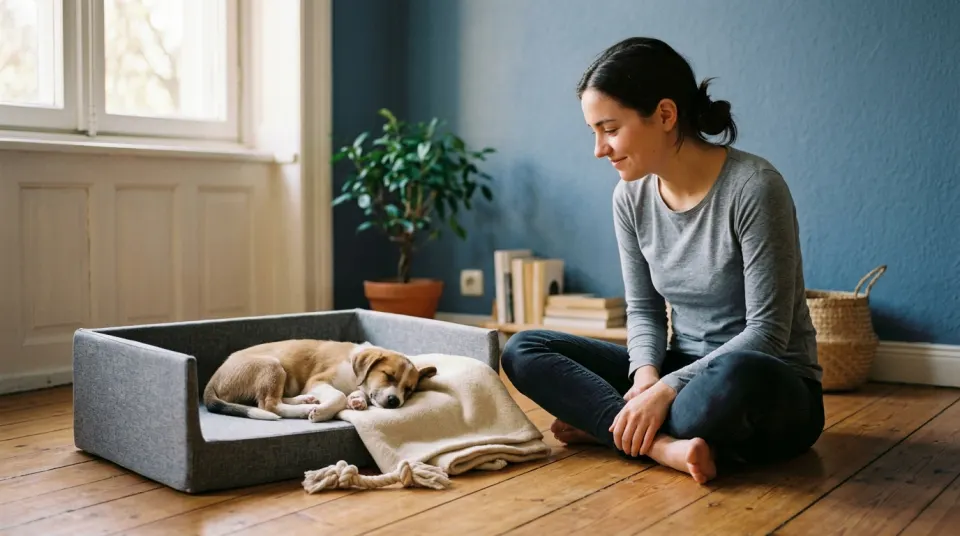
Put the crate next to your bed for the first few nights. A puppy who can hear and smell you cries less, and you will hear when they need to go out. Most puppies need one trip outside overnight at first.
Crying on the first night is normal. A hand near the crate does more than a trip to the couch.Dr. Claire Whitfield
Keep night trips short and quiet: out, potty, back to bed, no play. Within a week or two most puppies sleep longer stretches.
When should the first vet visit happen?
Within the first week, even if your puppy seems perfectly healthy. Puppies can carry worms or infections from where they came from, and the vaccine schedule depends on getting started on time.
| Age | Visit | What usually happens |
|---|---|---|
| 8 weeks | Welcome visit | Exam, first vaccine, stool test |
| 12 weeks | Booster | Vaccines, weight, handling practice |
| 16 weeks | Last booster | Final vaccines, rabies, spay or neuter talk |
| 6 months | Half-year check | Adult teeth, growth, the year ahead |
How can I socialize a puppy before vaccines are done?
Early, gentle experiences matter a great deal, and they do not need dog parks. Carry your puppy around the block, sit on a bench and watch traffic, invite a calm vaccinated dog over and let them hear thunder recordings at low volume while they eat.
- Ten new sounds a week, played softly at mealtimes
- Short car rides that end somewhere boring
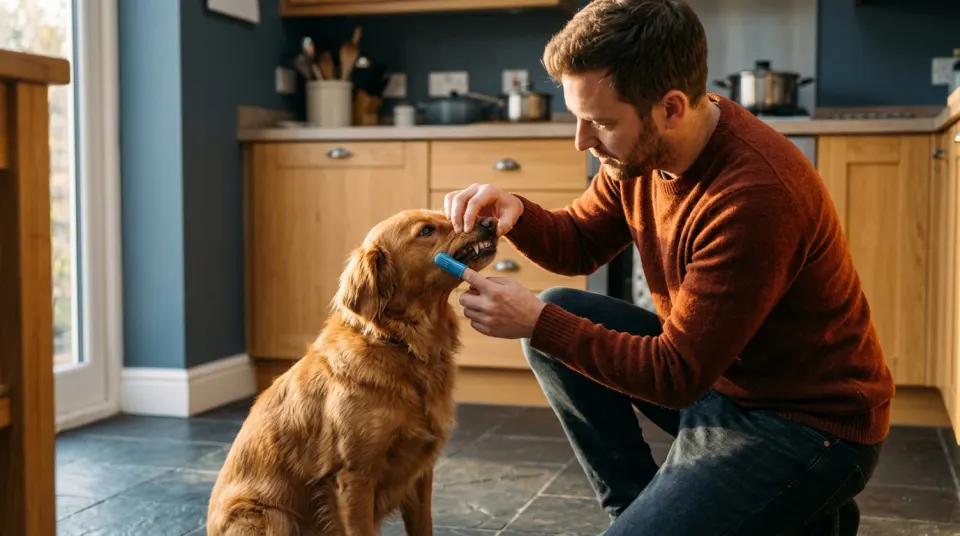
- Gentle touches on paws, ears and mouth, with treats
- Meeting people in hats, beards and sunglasses