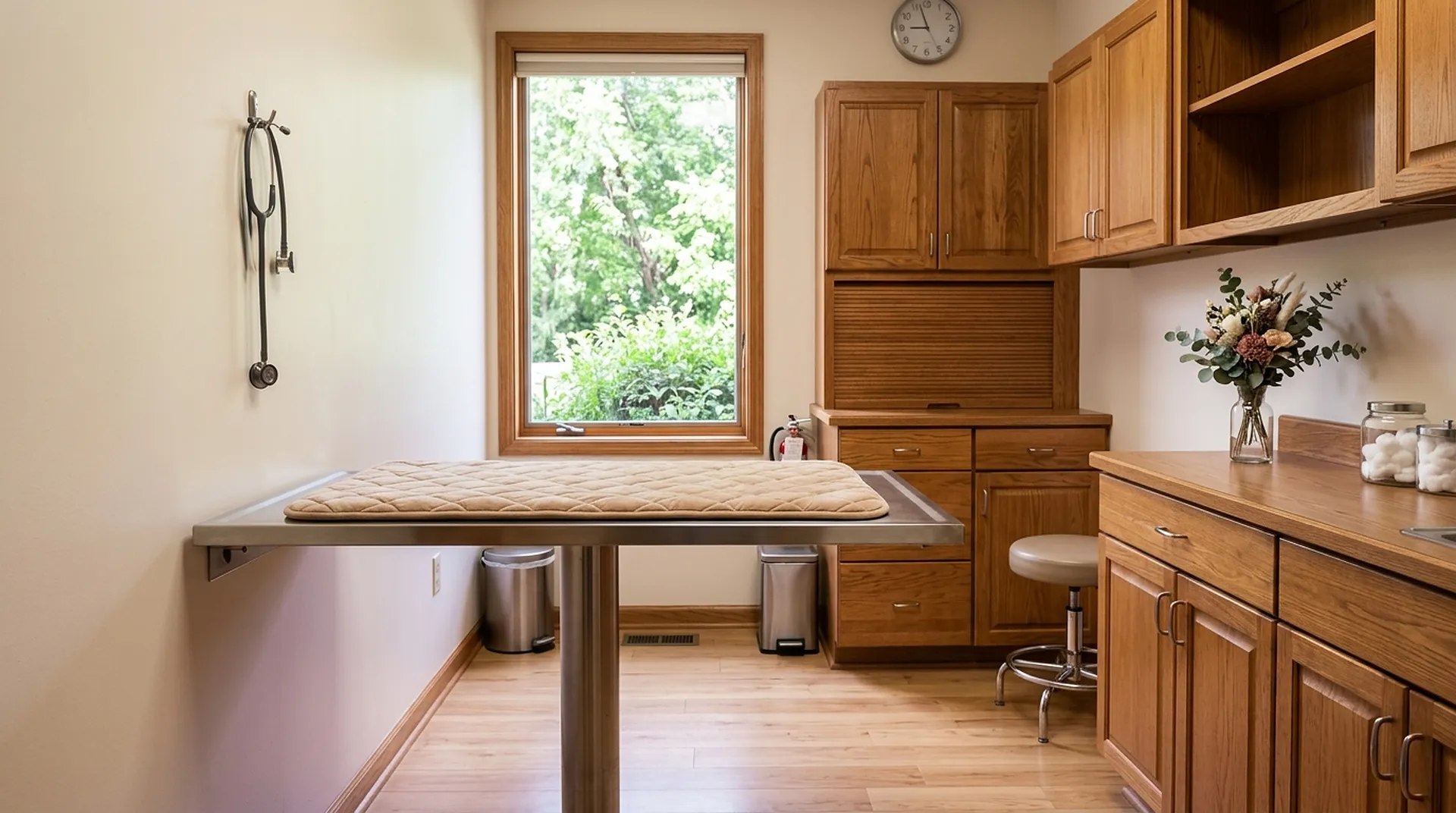
A carrier routine that makes the vet visit calmer
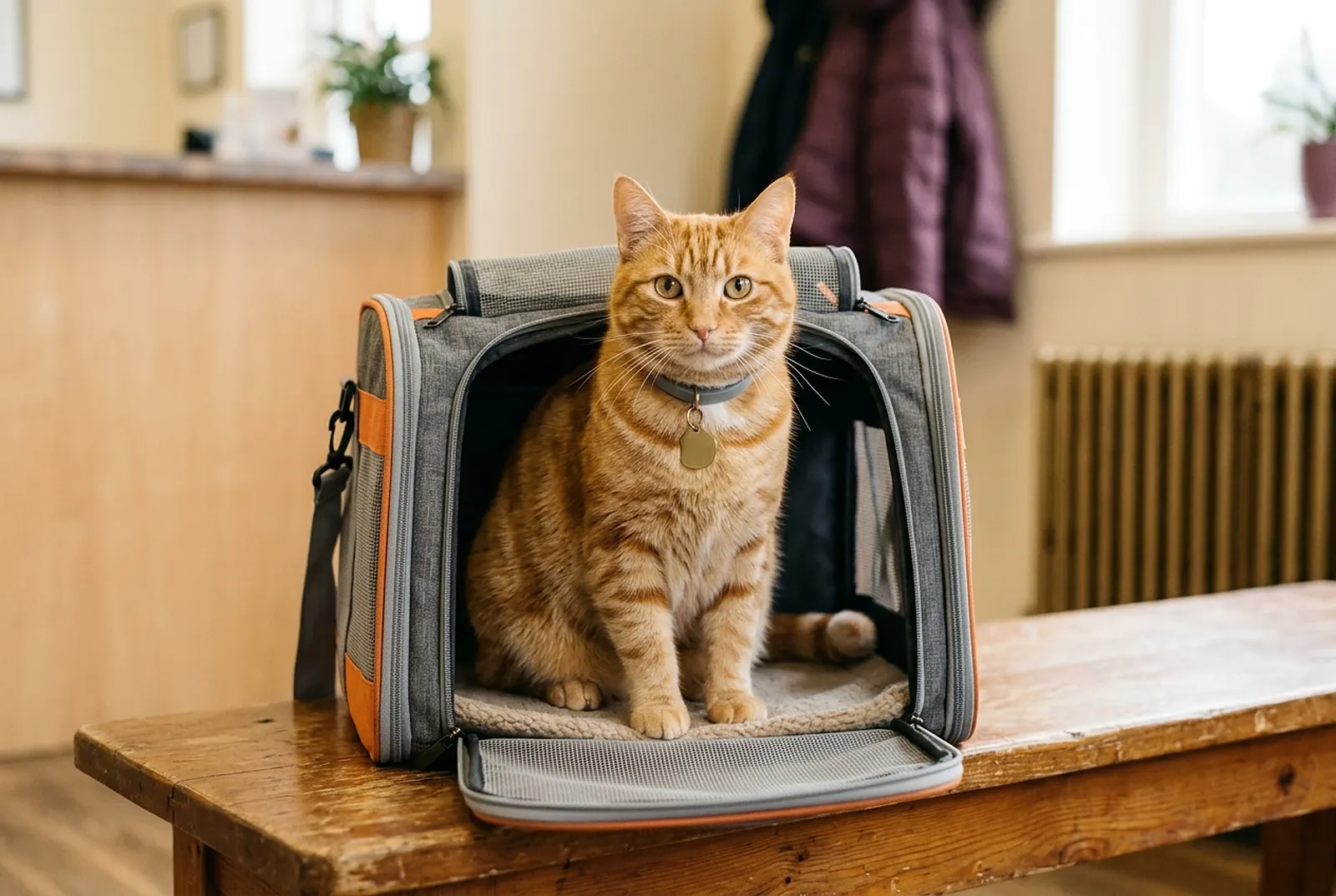
The easiest way to get a cat into a carrier is to make the carrier part of the furniture. Leave it open in a room your cat likes for at least a week before the visit, put a worn T-shirt or familiar blanket inside, and drop treats in it at random times. On the day, cover it with a towel in the car and keep the trip quiet.
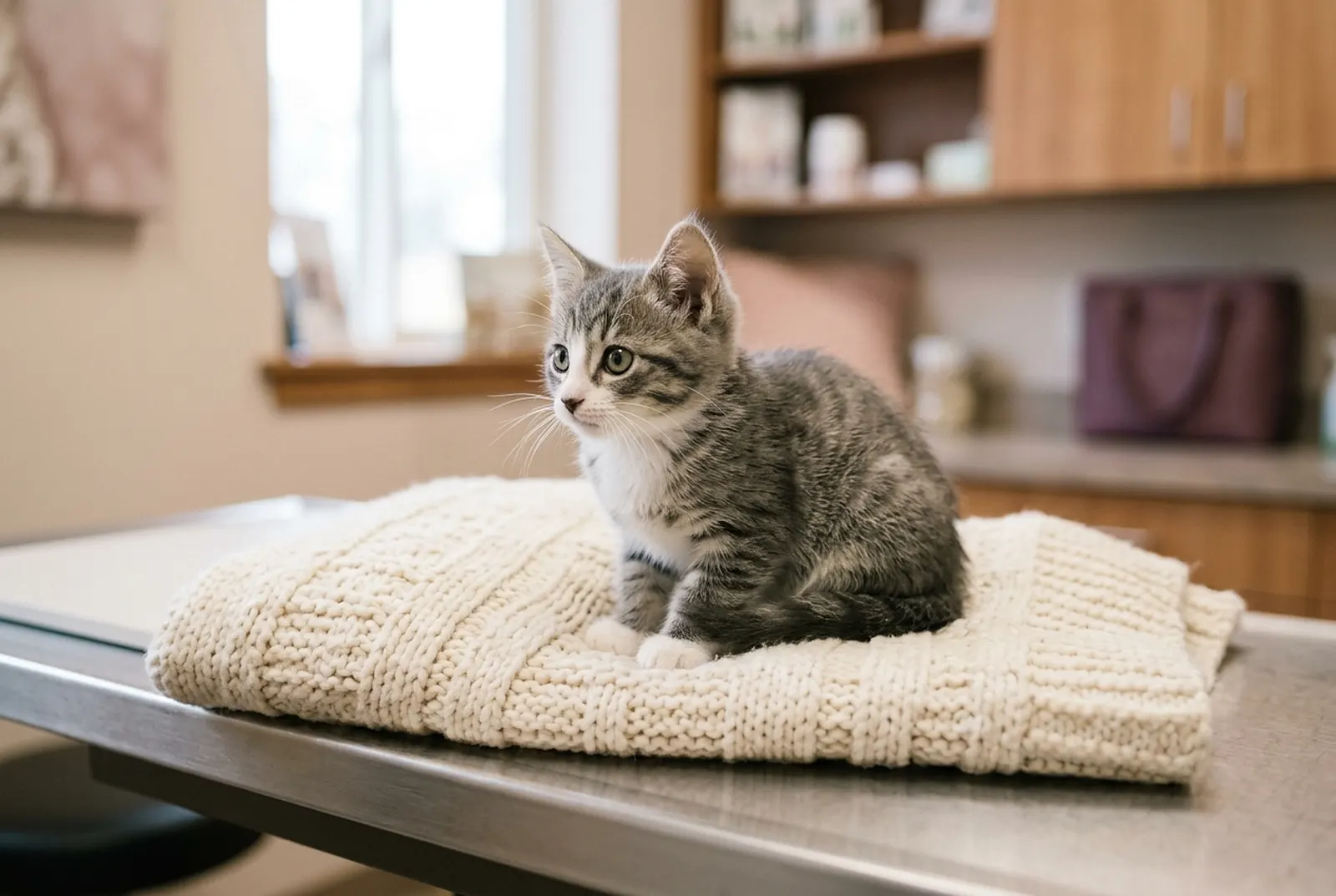
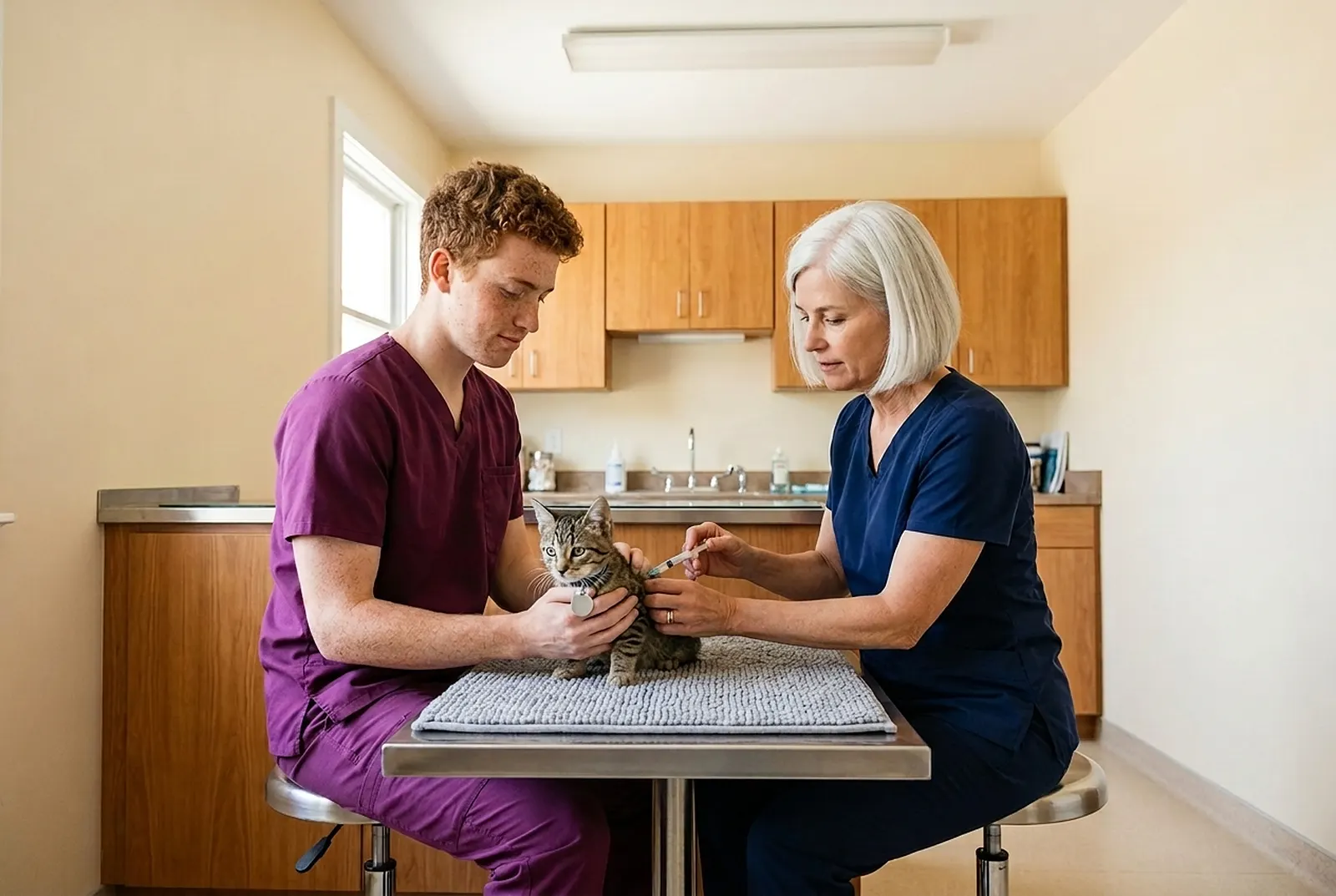
Most cats only see their carrier on the day they go somewhere unpleasant, so they learn quickly that it means trouble. Breaking that link takes a little time, but it is the best preparation you can make before a vet visit.
A one-week plan
Bring the carrier out, door open or removed, in a favorite room.
Add bedding that smells like home and a few treats each evening.
Feed one meal inside the carrier, door still open.
Close the door calmly, cover it with a towel and drive gently.
Choosing a carrier
A hard carrier that opens from the top as well as the front is easiest. The top lets us lift the lid off and examine your cat in the bottom half, which many cats find less stressful than being pulled out through a small door. Soft carriers work for calm cats but can be hard to clean and easy to tip.
Lid lifts off so the exam can happen in place.
Fine for cats that walk out on their own.
Lightweight, but cats can feel cramped and unsteady.
In the car, keep the radio low and the carrier level, ideally on the floor behind a front seat. When you arrive, tell the front desk you have a cat and we will take you straight to the cat-only room if it is free.
The calmest cat visits start a week before the appointment, in your living room.
Questions owners ask
What if my cat still will not go in?
Should I feed my cat before the visit?
Can I bring two cats in one carrier?
Do you have a separate room for cats?
Keep reading
- Seven quiet changes in an older dog that are worth a checkup sooner than the next yearly visit
- Brushing a puppy's teeth in thirty seconds a night
- Which vaccines does an indoor cat need?
General information for pet owners, not a diagnosis. Call your veterinarian about your own pet.