Core vaccines protect every dog and cat
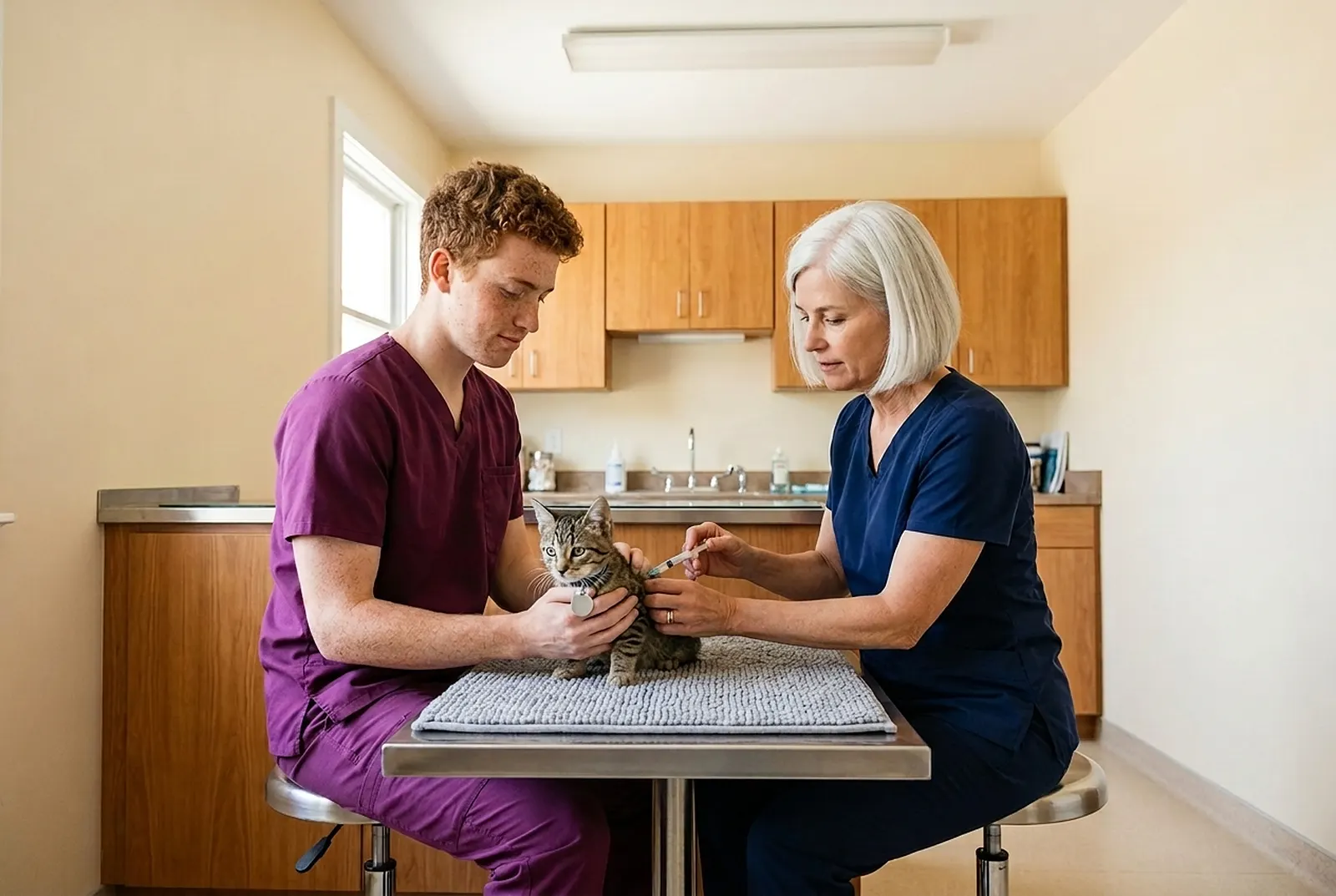
Some diseases are serious enough, and common enough, that every dog and cat should be protected against them. These are called core vaccines. For dogs, that means rabies and a combined vaccine for distemper, parvovirus and adenovirus. For cats, it means rabies and a combined vaccine for feline distemper and two common respiratory viruses.
Rabies vaccination is required for dogs and cats in Virginia, and we provide the certificate and tag you will need for licensing, boarding and travel. The other core vaccines are given as a series in puppies and kittens, boosted at one year and then usually every three years.
Before giving any vaccine, the doctor examines your pet. A vaccine works best in a healthy animal, and an exam lets us spot anything that should be treated first.
Lifestyle vaccines depend on where your pet goes
Beyond the core list, some vaccines only make sense for pets with certain risks. A dog that goes to daycare, boarding or group training may need protection against kennel cough and canine influenza. A dog that hikes, swims in creeks or spends time where wildlife roams may benefit from the leptospirosis and Lyme vaccines. A cat that goes outdoors, or lives with cats that do, may need the feline leukemia vaccine every year.
We ask about your pet's week: where it walks, who it plays with, whether it boards or travels, and whether there are other animals in the house. From those answers we build a short list, and we write the reason beside each vaccine so you can see why it is there. If a vaccine is not needed, we leave it off.
Lifestyles change. A cat that moves outdoors, or a dog that starts daycare, may need a different list, so we review it at every yearly exam.
The puppy and kitten series, and why boosters matter
Young animals get some protection from their mother's milk, but it fades over the first few months and can block a vaccine from working while it lasts. That is why puppies and kittens receive a series of vaccines three to four weeks apart, starting around eight weeks and finishing at sixteen weeks or a little later.
Until the series is complete, keep your puppy away from dog parks, pet stores and places where unknown dogs gather. Short walks on clean sidewalks and visits with healthy, vaccinated friends are fine and help with socialization.
After the series, a booster at one year sets up longer protection. From there, most core vaccines move to a three-year schedule, while some lifestyle vaccines stay yearly. We send a text reminder a week before anything is due.
If you adopt an adult dog or cat with no records, we usually restart the core series with two doses three to four weeks apart. It is simple, inexpensive and avoids guessing about protection.
What to expect at the vaccine visit
Vaccine visits are short, but we still take the time to do them well.
An exam first
The doctor checks your pet before any vaccine is given, every time.
A clear record
You get a printed and emailed record, plus the rabies certificate and tag.
Gentle handling
Treats, a calm room and a technician who takes it slowly.
Watching for reactions
Reactions are uncommon and usually mild. We tell you what to watch for and how to reach us.
Questions owners ask about vaccines
Vaccine questions are some of the most common we get by phone. These answers cover the basics. See also our advice article on indoor cat vaccines.