Seven quiet changes in an older dog that are worth a checkup sooner than the next yearly visit
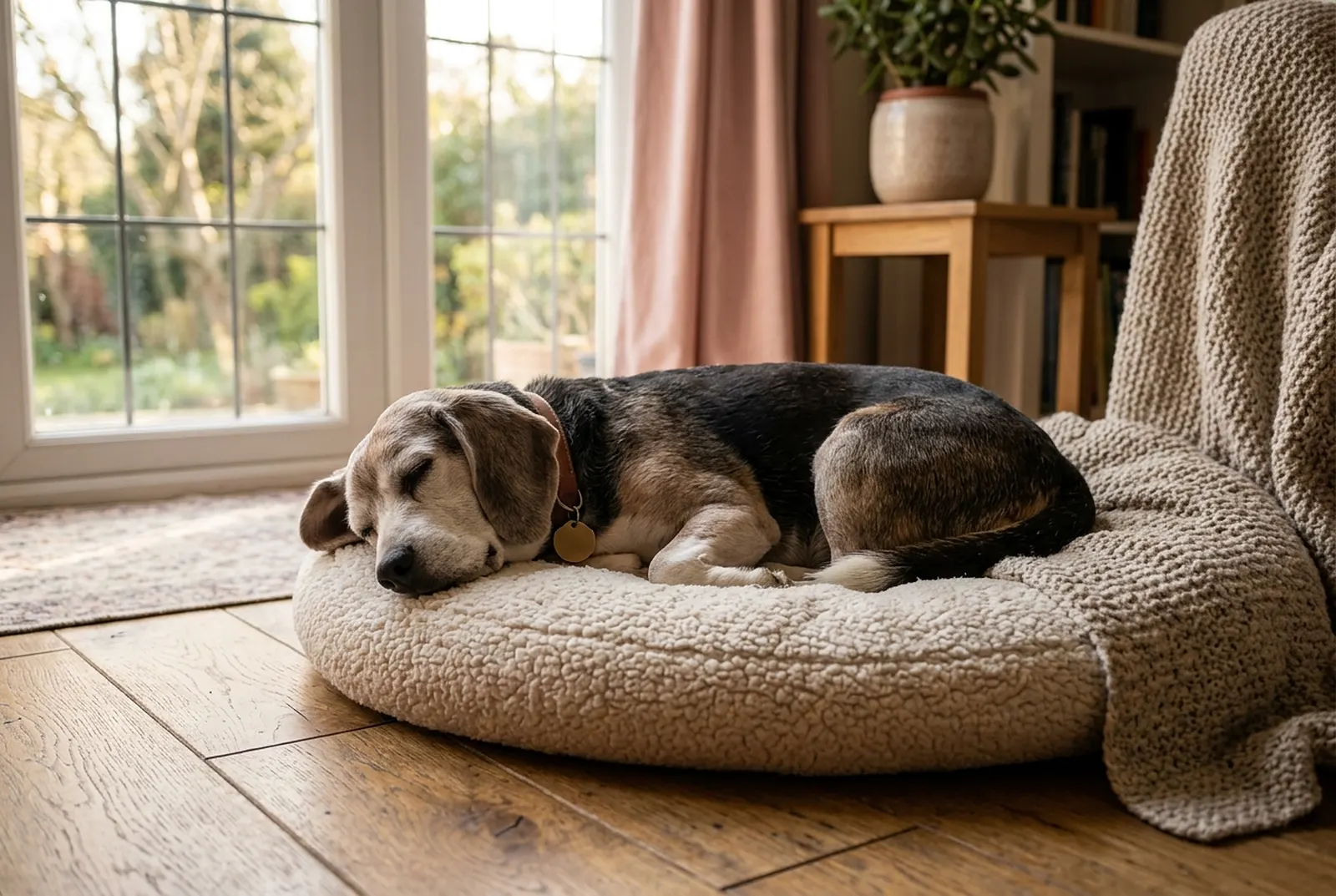
If your dog is eight or older and you notice a change in thirst, appetite, weight, sleep, breathing, mobility or behavior that lasts more than a week, book an exam rather than waiting for the yearly visit. Most of these changes have simple explanations, and the ones that do not are easier to manage when they are found early.
Older dogs rarely announce that something is wrong. They adapt: they skip the second flight of stairs, drink from the shower floor, or move their bed closer to the heater. Because the change is gradual, owners often notice it only when a visiting friend says the dog seems slower.
The seven changes we ask about
Refilling the bowl more often, or finding your dog drinking from new places, can point to kidney, hormone or blood sugar changes.
A few pounds matters on a small dog. Weigh at home monthly or ask for a free weight check.
Seeking out cooler or warmer spots can be a comfort or temperature change.
Hesitation before a jump is one of the earliest signs of joint pain.
Count breaths while your dog sleeps; more than about thirty a minute is worth a call.
Pacing or waking at night can be pain, a bladder issue or a change in thinking.
Dental disease is common after eight and can make eating uncomfortable.
Notes and videos help the doctor
A short written note helps more than you would expect. Write the change, when you first noticed it and whether it is getting better or worse. A phone video of your dog climbing stairs or getting up from a nap shows the doctor what is hard to reproduce in an exam room.
Write the change and the date you first saw it.
Mark the water bowl, count resting breaths or weigh your dog.
A twenty-second video of stairs or standing up helps.
Ask for a senior exam rather than a quick recheck.
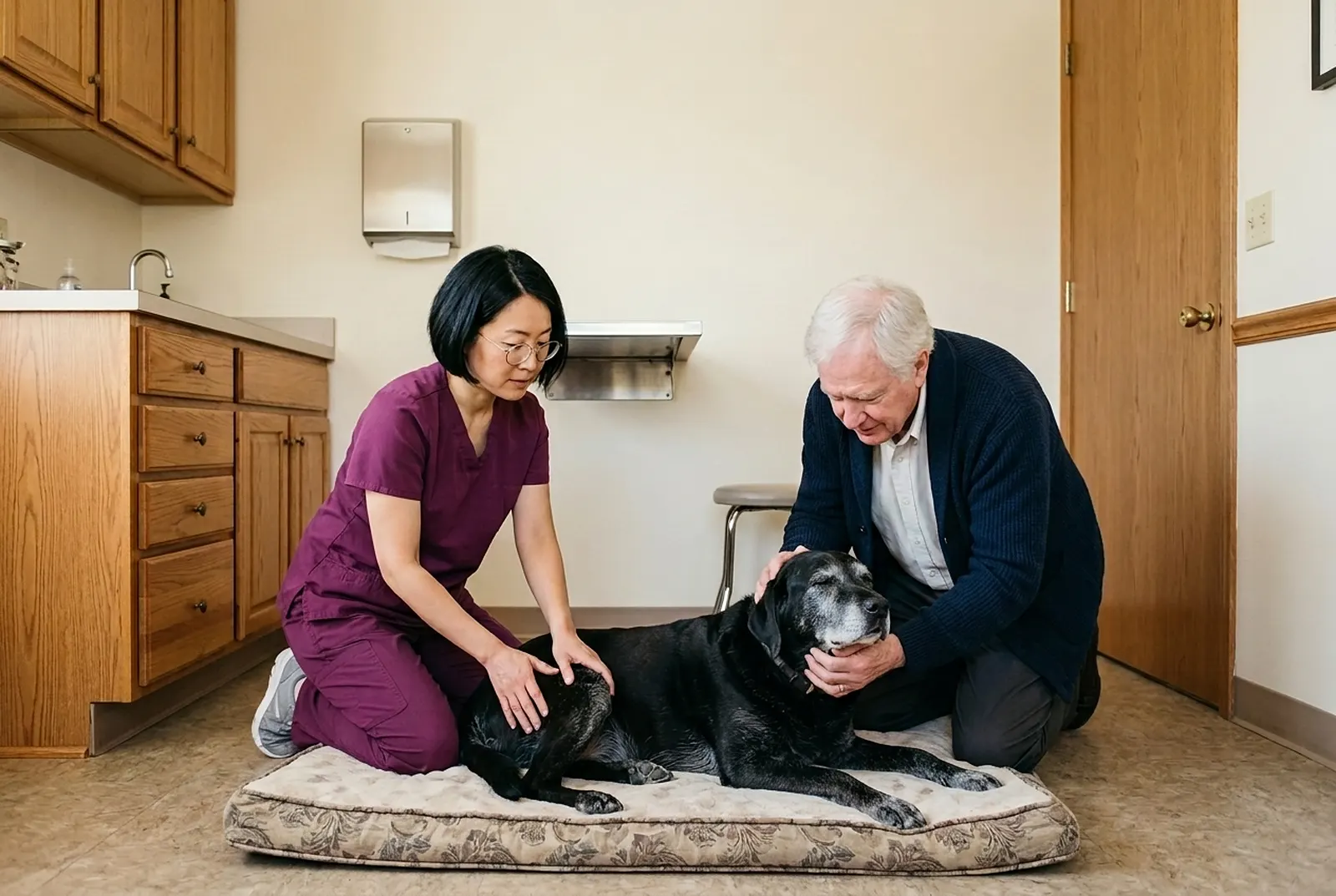
At the exam, the doctor usually suggests a blood panel and urinalysis. Together they explain most thirst and weight changes. Joint and mobility concerns may lead to a short course of pain relief or X-rays, and a dental exam often shows whether a cleaning would help.
The best senior exams start with the owner's notebook. You see your dog every day; we see a snapshot.
Questions owners ask
When does a dog count as a senior?
Is slowing down just normal aging?
How often should an older dog have blood work?
Should I wait for the yearly visit?
Keep reading
- A carrier routine that makes the vet visit calmer
- Brushing a puppy's teeth in thirty seconds a night
- Which vaccines does an indoor cat need?
General information for pet owners, not a diagnosis. Call your veterinarian about your own pet.