Older pets change faster, so we look closer
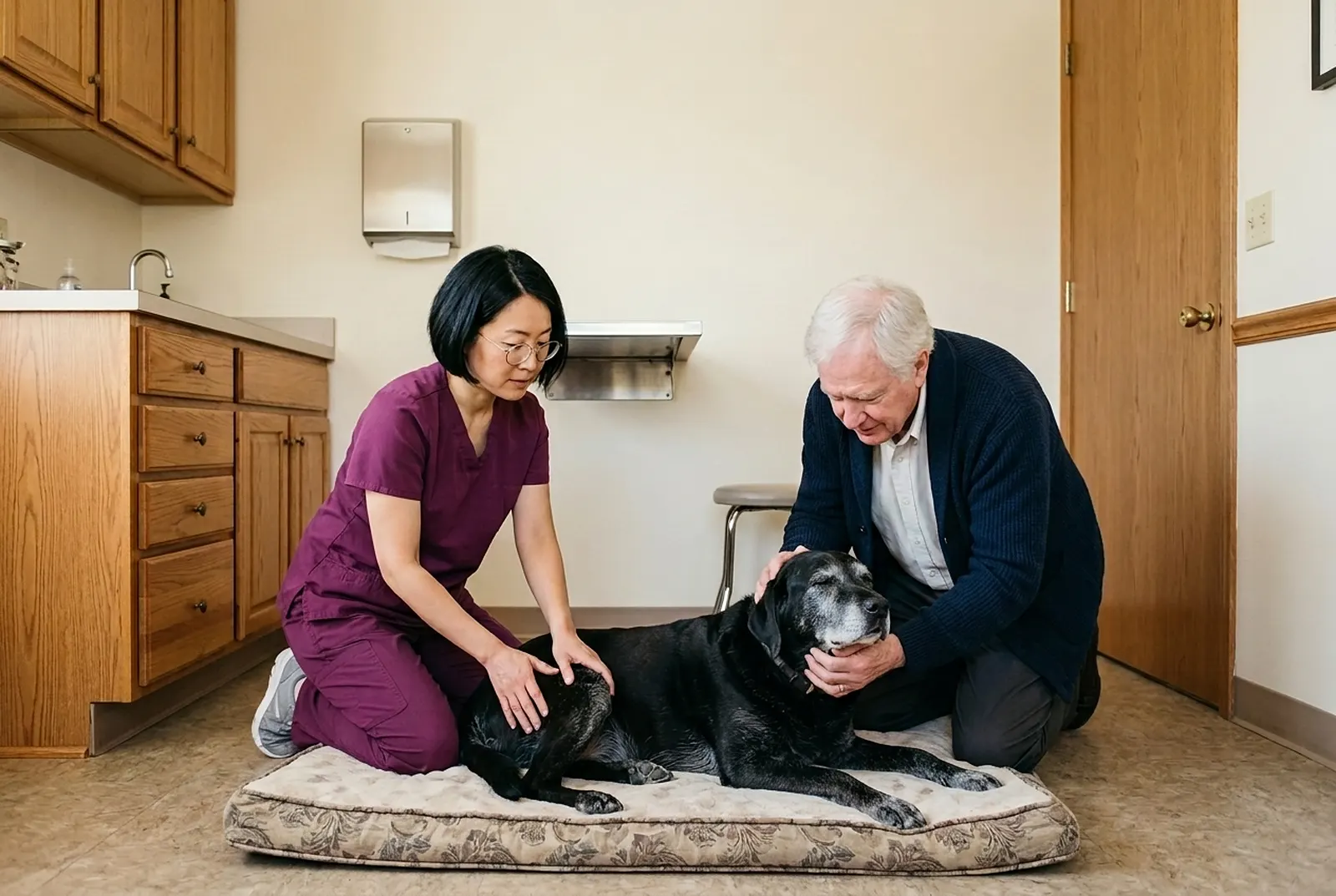
Dogs are usually considered senior at around eight years old, and large breeds sooner. Cats reach their senior years at around ten. From then on, the body changes more quickly than it did in middle age, and many common conditions of later life, such as arthritis, kidney changes, thyroid disease and dental pain, develop slowly enough that they are easy to miss at home.
Senior visits at Wrenfold are booked for forty-five minutes instead of thirty. The doctor watches your pet walk, feels each joint, listens carefully to heart and lungs and asks about sleep, appetite, thirst, bathroom habits and how your pet manages stairs, cars and the furniture it used to jump on.
Our senior pet care clinic runs on Thursday afternoons, led by Dr. Holloway, with longer appointments for pets with several conditions or owners facing hard decisions.
What twice-yearly screening looks for
For most senior pets we suggest an exam and screening tests every six months. A blood panel shows how the kidneys and liver are working and checks red and white blood cells. A urinalysis shows how well the kidneys concentrate urine and can reveal infection. For cats, a thyroid test is added, and for both species, a blood pressure reading.
The value of screening grows over time. One result tells us where your pet is today; a series of results shows which direction it is heading. A creatinine value that is still in the normal range but climbing year after year is worth acting on, and we can often slow the change with diet and simple treatment.
Results are emailed with plain notes beside each value, and the doctor calls if anything needs a closer look.
Blood pressure matters more than many owners expect. High blood pressure is common in older cats, often linked to kidney or thyroid changes, and can affect the eyes, heart and brain if it goes unnoticed.
For pets with a known condition, such as kidney disease or arthritis, we often recheck sooner than six months and adjust the plan between visits by phone.
Screening also guides everyday decisions. Results help us choose pain medication that suits your pet's kidneys and liver, plan anesthesia for dental work and decide whether a change of food would help.
Small changes at home that help an older pet
Many senior pets live more comfortably with a few adjustments around the house. We often suggest:
Better footing
Rugs or runners on slippery floors, and nail trims every few weeks.
Easier access
Ramps or steps to the couch, bed or car, and a litter box with a low side.
Gentle movement
Shorter, more frequent walks and play that keeps joints moving.
A warm, quiet bed
Orthopedic bedding away from drafts and busy hallways.
Planning ahead, and the harder conversations
Part of caring for an older pet is thinking about what comes next. We talk with you about quality of life using simple checklists: is your pet eating, moving, resting comfortably and enjoying the things it loves? Writing the answers down each week can make changes easier to see.
When the time comes, we offer quiet appointments at the end of the day, a private room and as much time as you need. We can also refer you to services that provide end-of-life care at home. Whatever you decide, we will help you plan it.
Some owners like to plan these details long before they are needed. We are always happy to talk it through at a routine visit, when there is no pressure to decide anything.
Questions owners ask about senior pets
These are the questions we hear most at Thursday clinic. See also our senior dog and senior cat wellness plans.