Planned surgery, explained before it happens
Our doctors perform the routine and soft-tissue procedures most dogs and cats need over a lifetime. That includes spays and neuters, removal of skin lumps and masses, repair of cuts and wounds, biopsies, bladder stone removal and some abdominal procedures. When a case calls for advanced orthopedic work or overnight hospital care, we refer you to a hospital that offers it and send the records ahead.
No surgery happens without a plan you understand. Before the day, the doctor examines your pet, reviews pre-anesthetic blood work and walks you through what will be done, how long it should take and what recovery looks like. You receive a written estimate with a low and a high figure, and we call you before going past the high one.
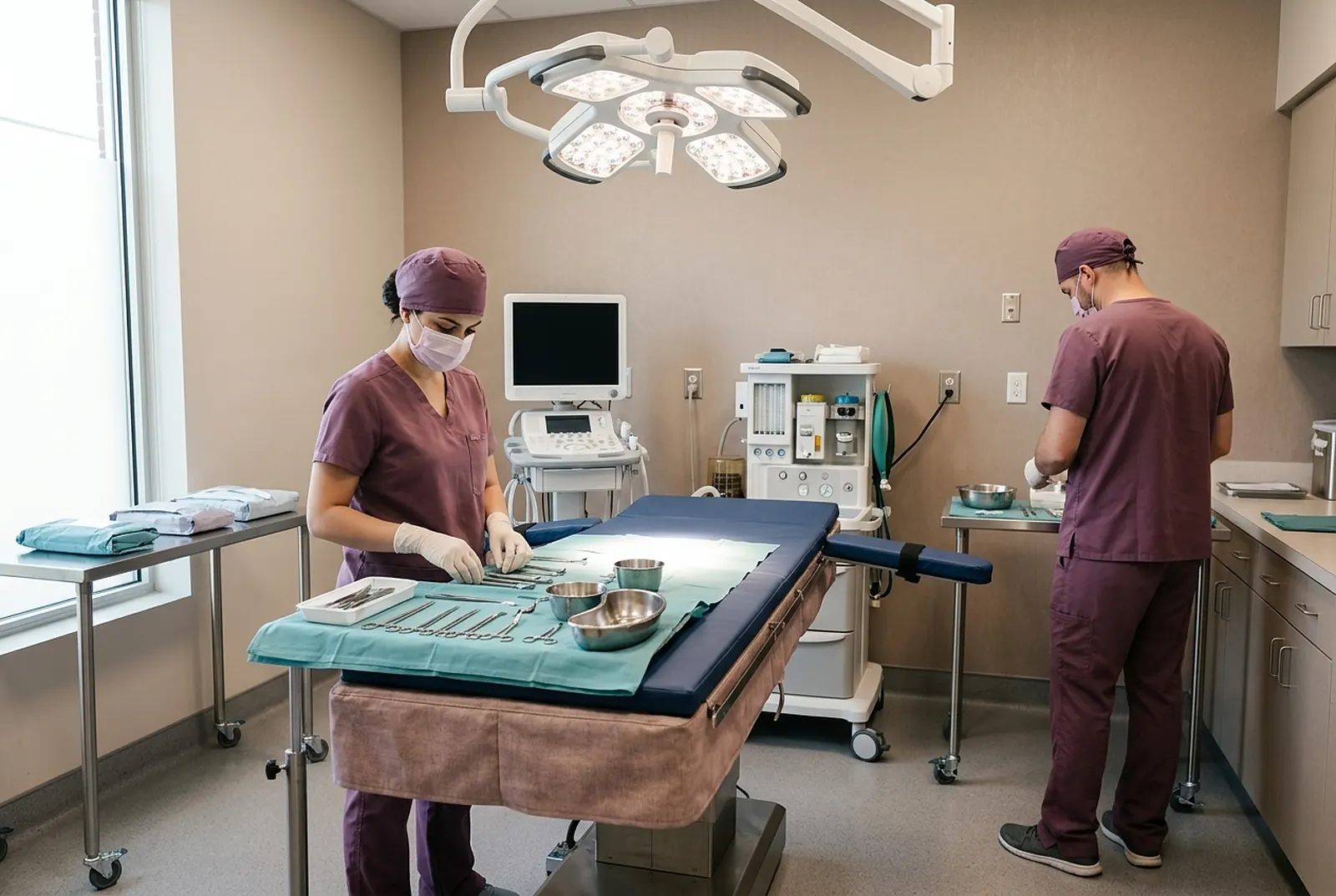
Surgery is a team effort here. One doctor operates while a technician monitors anesthesia from start to finish, and a second technician manages recovery.
We also schedule surgery with your week in mind. Morning drop-off and afternoon pickup keep the day short, and we try to book procedures early in the week so a recheck call falls on a day we are open.
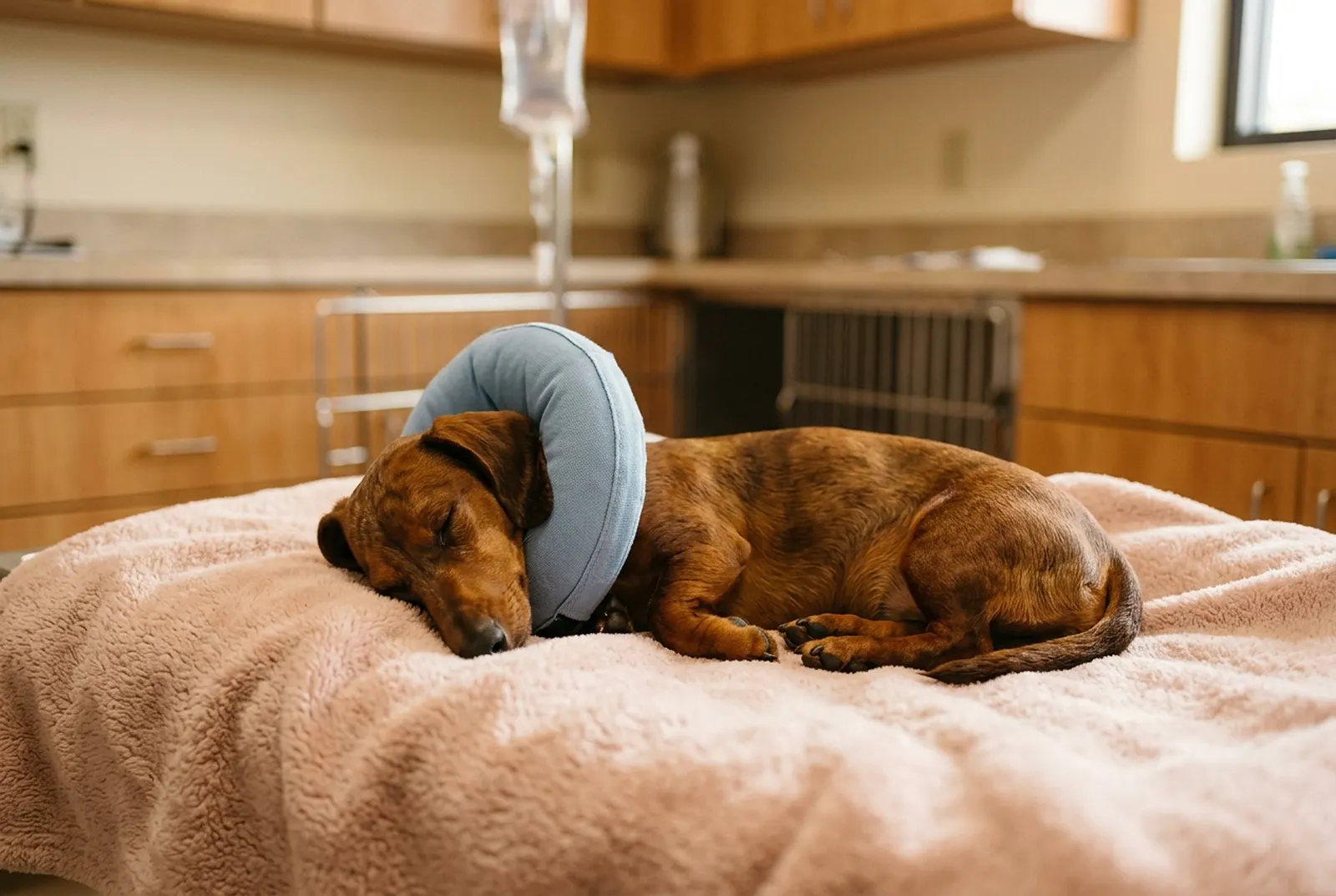
For a spay or neuter, most of the day is spent on preparation and recovery rather than the procedure itself. Your pet is usually ready to go home by mid-afternoon, and the first evening is mostly about rest, a small meal and keeping the cone on.
During anesthesia, the technician records heart rate, oxygen level, blood pressure, temperature and breathing every few minutes and adjusts fluids, warmth and depth of anesthesia as needed. Pain medication goes in before the first incision, not only once the procedure is over.
Recovery continues at home. You leave with written instructions, medications already measured out and a recheck booked for ten to fourteen days later. If anything looks wrong that evening, call us before we close, and after hours the recorded message on our main number names the closest emergency hospital.
Before surgery: what we check and what you do
Good preparation makes surgery day smoother for your pet and for you. This is the checklist we go through with every owner, usually by phone two or three days before the date.
- Exam within 30 days of surgery
- Pre-anesthetic blood work
- Written estimate, low and high
- No food after 10 pm the night before
- Water is fine until morning
- Drop-off from 7:30 to 8:30 am
- A phone number you will answer
- Medications listed on the form
Surgery day, from drop-off to pickup
Most routine procedures follow the same rhythm. We keep you updated along the way and you will always know who to call with a question.
A technician confirms the plan, your contact number and any last questions.
An IV line, pain relief and anesthesia, monitored by a technician the whole time.
The doctor performs the surgery and calls you when it is finished.
Your pet wakes on a warm bed with a technician nearby, then goes home that afternoon.
Questions owners ask about surgery
Questions before surgery are welcome. Call the front desk and a technician will call you back the same day. See also the profile of our lead technician.