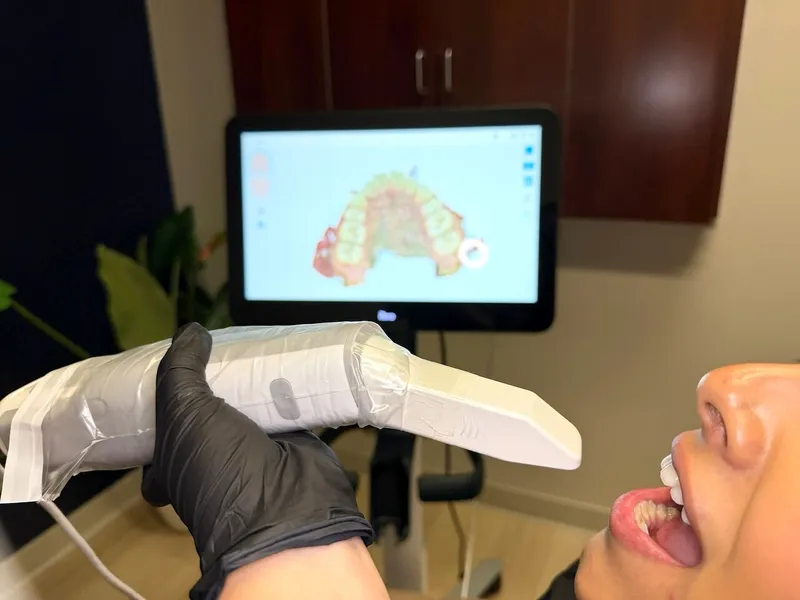
For most adults with mild to moderate crowding, gaps or bite issues, Invisalign straightens teeth with removable clear aligners worn 20 to 22 hours a day, often in 12 to 18 months. Braces stay on full time and can handle more complex movement. The right choice depends on your teeth, your discipline with aligners, and your daily life.
What is the difference between Invisalign and braces?
Invisalign uses a series of removable clear plastic aligners, while braces use brackets bonded to your teeth and connected by a wire.
Both move teeth by applying steady, gentle pressure over time. With Invisalign, you switch to a new set of aligners every one to two weeks, and each set moves your teeth a small step closer to the planned position. With braces, the orthodontist adjusts the wire at regular visits.
For many adults in Plano, the decision comes down to three things: how complex the tooth movement is, how the treatment fits into work and social life, and how consistent you can be about wearing aligners.
How do Invisalign and braces compare for adults?
A side-by-side look at the points adults ask about most. Timelines are typical ranges and vary by case.
| Invisalign | Traditional braces | |
|---|---|---|
| How it looks | Clear aligners, hard to notice | Visible brackets and wire |
| Removable | Yes, for eating and brushing | No |
| Daily wear | 20 to 22 hours a day | Always on |
| Typical adult treatment time | Often 12 to 18 months | Often 18 months to 2 years or more |
| Food limits | None, since aligners come out to eat | Avoid hard, sticky and chewy foods |
| Cleaning your teeth | Brush and floss as usual | Takes extra time around brackets |
| Office visits | Periodic check-ins | Regular wire adjustments |
| Best for | Mild to moderate crowding, gaps and many bite issues | Complex rotations and larger bite corrections |
Not sure which suits your teeth? A digital scan and exam settle it. | ||
Is Invisalign as effective as braces?
For many mild to moderate cases, yes, as long as you wear the aligners as directed.
Invisalign has become more capable over the years, and it now treats crowding, spacing, and many overbite, underbite and crossbite cases. Small tooth-colored bumps called attachments are often bonded to certain teeth to help the aligners grip and move them more precisely.
Braces still have the edge for some complex movements, such as severe rotations or large bite corrections. If your case falls into that group, Dr. Tam will tell you so at the consult rather than start a treatment that is unlikely to finish well.
How long does Invisalign take compared with braces?
Invisalign often takes 12 to 18 months for adults, while braces often take 18 months to two years or longer.
Those are general ranges. Simple cases can finish sooner, and complex cases take longer with either method. With Invisalign, the biggest factor you control is wear time: aligners left out for hours at a time slow the plan down, and sometimes extra aligners are needed to get back on track.
What is daily life like with each option?
Invisalign asks for discipline, while braces ask for patience with food and cleaning.
With Invisalign, you take the aligners out to eat or drink anything other than water, brush before putting them back in, and keep them in for 20 to 22 hours a day. That suits adults who want no food restrictions and a low-profile look for meetings and photos.
With braces, nothing comes out, so there is no wear time to track. The tradeoff is avoiding foods like popcorn, hard candy and chewy snacks, and spending more time brushing and flossing around brackets.
Does Invisalign hurt more or less than braces?
Both cause some pressure, usually for a day or two after each change, and many adults find aligners more comfortable.
Each new aligner set feels snug at first. Braces can cause pressure after wire adjustments, and brackets sometimes rub the inside of the cheeks until you get used to them. Over-the-counter pain relievers and soft foods for a day typically handle the soreness with either option.
How much does Invisalign cost in Plano?
Invisalign cost depends on how complex your case is and how long treatment takes, so the reliable number comes from a written quote after a scan.
Simple cases that need fewer aligners generally cost less than complex cases that need more aligners and refinements. A complete quote should also cover your scans, attachments, check-in visits and retainers after treatment, since retainers are part of keeping the result.
For braces or Invisalign, the same factors apply: complexity, length of treatment and what the quote includes. Compare quotes line by line, not total to total.
Does insurance cover Invisalign?
Some dental plans include orthodontic benefits that can apply to Invisalign, often with a lifetime maximum rather than an annual one.
Many plans limit or exclude orthodontic coverage for adults, so it is worth checking before you decide. We file PPO claims for you and can check your orthodontic benefits. Flexible spending and health savings accounts can often be used as well, and CareCredit lets you pay over time, subject to credit approval. More on our insurance and financing page.
How does Invisalign treatment start?
It starts with an exam and a digital scan, and the scan is where most of the planning happens.
What are the steps in Invisalign treatment?
Four stages, from first scan to retainer.
- 01Exam and iTero scan
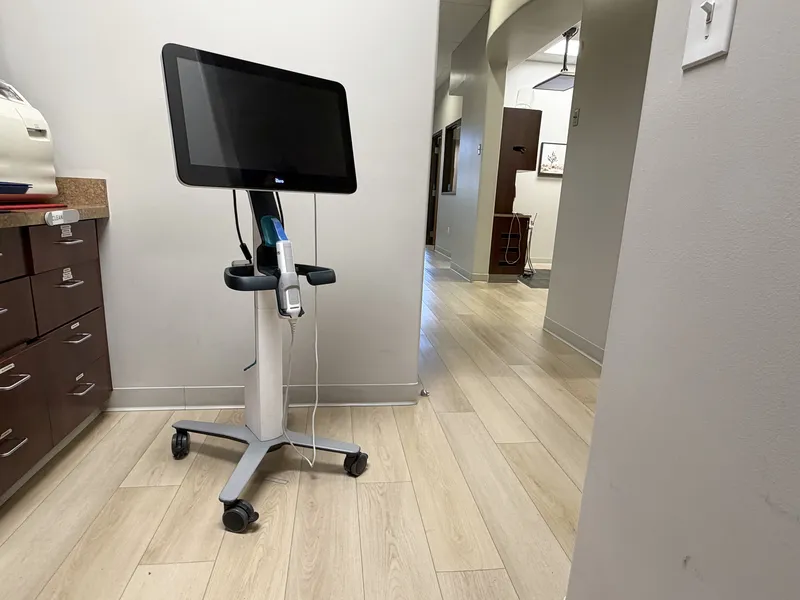
We check your teeth and gums, then scan with iTero instead of putty impressions. You see the 3D model on the chairside screen.
- 02Your plan and quote
Dr. Tam reviews how your teeth would move, how long it may take, and gives you a written quote.
- 03Aligners and check-ins
You wear each set for one to two weeks and visit periodically so we can check progress.
- 04Retainers
Once teeth reach their new position, a retainer holds them there. Teeth tend to shift without one.
Before any aligners are made, cavities or gum problems are treated first, since aligners work best on a healthy mouth. Our cleanings and preventive care visits cover that ground.
Which is right for you?
If your case is mild to moderate and you can commit to 20 to 22 hours of wear a day, Invisalign is often the more convenient choice for adults. If your case is complex, or you know you would leave aligners in a drawer, braces may serve you better.
Results vary with your case and how consistently you follow the plan. If you are weighing the two, the next step is a scan at our office on Custer Road in Plano, where you can see your own teeth on screen and get a written quote. Patients come to us from Plano, Allen, Murphy and Richardson. Call Custerpoint Family Dental at 972-265-9033 or book online.