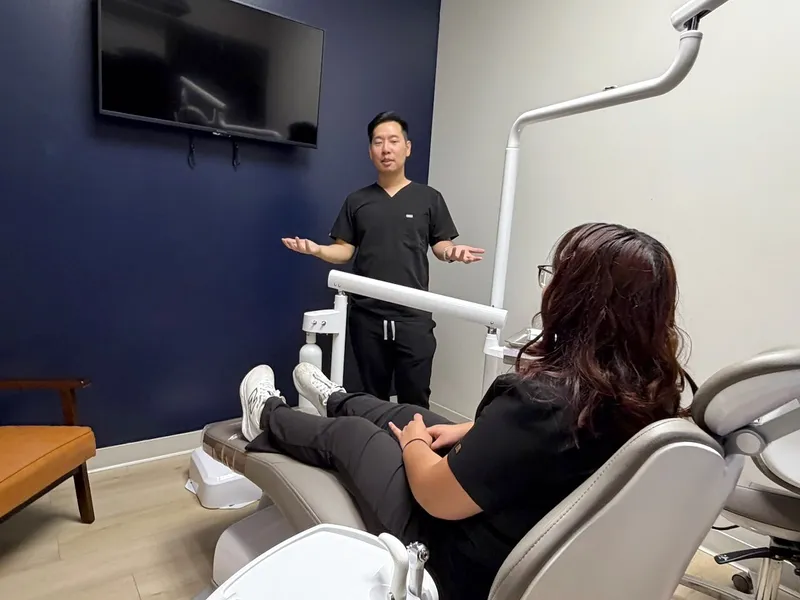
Dentures in Plano: full, partial or implant-supported, chosen for how you live
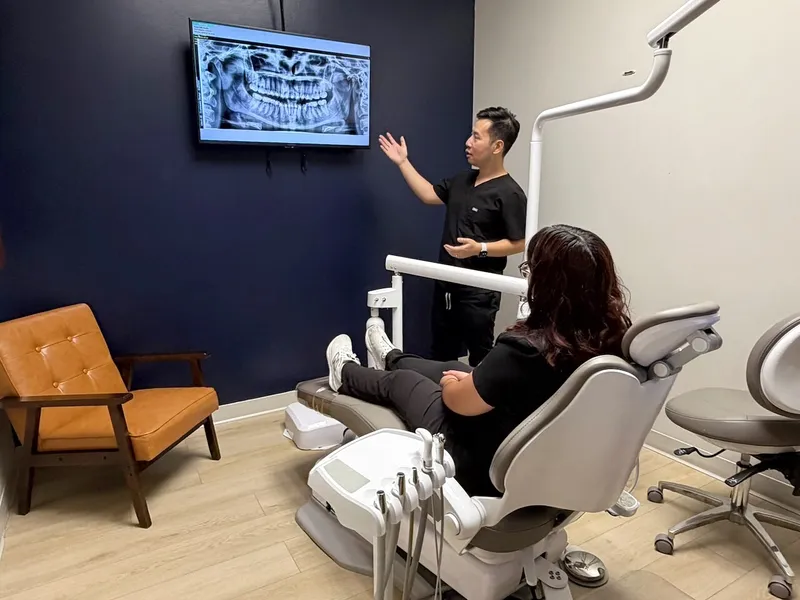
If your denture shifts when you laugh, or you are facing the loss of several teeth and dreading what comes next, you do not have to choose anything today. Your first visit is an exam, a scan and a straight conversation about the three kinds of denture, so you can see which ones fit your mouth. You leave with a written, itemized quote for each option that suits you. Nothing is booked until you feel ready.
Does your denture move, or is soft food all you trust?
Many people wear a denture that stopped fitting years ago. It clicks when you talk and food gets underneath. Or several of your own teeth are failing at once, and you are dreading the day they come out.
It helps to know why a denture loosens. The bone under the gums slowly shrinks once teeth are gone, so a plate that fit once ends up resting on a different shape. That is not your fault.
You do not need to decide anything on the day. A first visit shows you the options on your own scan, and then you can go home and think about it.
- “I only order soft food when we eat out”A better fit, or a few implants, often changes that.
- “I cover my mouth when I laugh”Gaps, failing teeth or a plate that slips make people self-conscious. You are not the only one.
- “Honestly, I am nervous about the whole thing”Tell us when you call. We explain each step first and go at your pace.
What is a denture, and which type is best?
A denture is a removable set of replacement teeth on a gum-colored base. A partial fills gaps around the teeth you keep, a full denture replaces a whole upper or lower arch, and an implant-supported denture snaps or locks onto a few implants for the most stability. The best one depends on how many healthy teeth you have left and how much stability you want. Conventional dentures usually take several weeks. Implant-supported ones take several months, because the implants heal first.
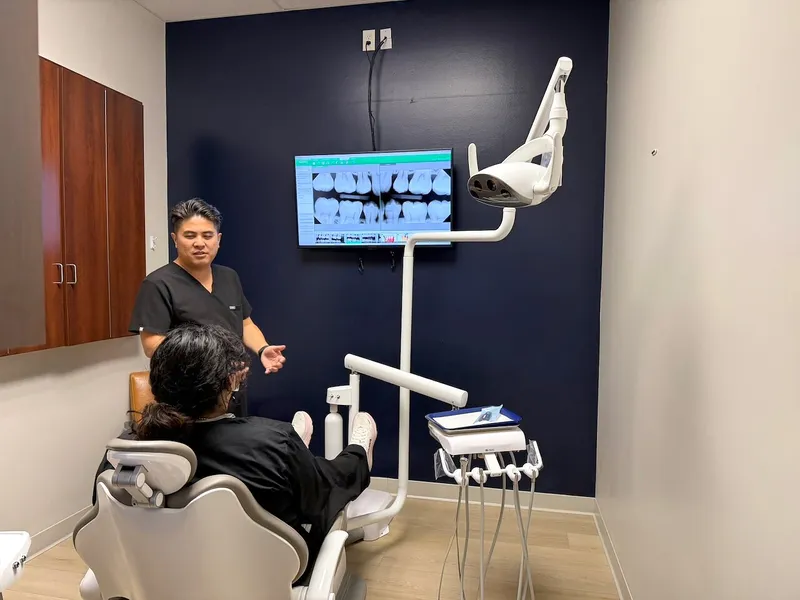
Your first visitYou see all three options on your own scan before anything is decided.
Are dentures the right choice for you?
Dentures become the sensible move when repairing tooth by tooth no longer adds up. The honest answer comes from an exam and a scan.
You may be a good fit if
- Several teeth are failing at once, and saving each one would mean a long run of crowns and root canals.
- You already wear a denture, and it has loosened, cracked or started rubbing sore spots as the bone underneath changed.
- You want something that stays put but not an implant for every tooth, or your health makes a series of surgeries a poor fit.
What happens at your first visit
- An exam, X‑rays and, when implants are on the table, a low-radiation 3D scan
- All three types explained on your own scan
- A plan for the day any teeth come out, not only for the months after
- A written, itemized quote for each option that fits you
What changes with a denture that fits properly?
Results vary from person to person, and a new denture takes a few weeks to settle. These are the differences most people notice once it does.
-
01
Eat with less planning
A well-fitted denture, or one held by implants, lets most people take on foods they had given up.
-
02
Speak without thinking about it
When the plate stays put, you stop choosing words around it.
-
03
Smile without covering your mouth
Teeth chosen for your face, in a shade you pick with us.
-
04
Support for your face
Missing teeth let the cheeks and lips fall in. A denture puts the support back.
-
05
Keep the teeth you still have
A partial fills the gaps around your natural teeth without shaping or removing them.
-
06
An upgrade path if you want it
A few implants added later can turn a conventional denture into one that snaps in and stays put.
Full, partial or implant-supported: which denture fits you?
Three main types, plus immediate dentures that cover the healing gap after extractions. The right one depends on how many healthy teeth you have, how much stability you want and how long you can give it.
| At a glance | Option 1Full denture | Option 2Partial denture | Most asked aboutImplant-supported denture |
|---|---|---|---|
| Replaces | Every tooth in an upper or lower arch | Some teeth, fitting around the ones you keep | A full arch, anchored on implants in the jaw |
| Held in by | Suction and fit against the gums, sometimes adhesive | Clasps or attachments on your remaining teeth | Two or more implants it snaps or locks onto |
| Stability when eating | Fair; lower dentures tend to move more | Good, braced by your natural teeth | Very good; it stays put when you chew |
| Comes out | Yes, nightly | Yes, nightly | Snap-in versions yes; fixed versions only at the office |
| Palate and taste | An upper covers the roof of the mouth, which can feel bulky at first | Often leaves most of the palate open | An upper can often be made with less palate coverage |
| Cleaning | Take it out and brush it daily, soak overnight | Take it out and brush it daily, and brush the teeth it clips to | Snap-in: take it out and brush; fixed: brush and water-floss under it |
| The jawbone | Bone under the gums keeps shrinking slowly | Bone shrinks where teeth are missing | Implants help slow bone loss where they sit |
| Time to finish | Usually several weeks across a few visits | Usually a few weeks | Usually several months, because the implants heal first |
| Typical lifespan | Often 5 to 10 years, with relines along the way | Often 5 to 10 years | Implants often last decades; the denture teeth wear and get replaced |
| Up-front cost | Usually the lowest for a full arch | Usually lower than replacing each tooth | Usually the highest, reflecting the implants |
Read our guide to dentures: types, costs and timelines, or see the implants themselves on our dental implants page. | |||
Reviewed by our own patients
Custerpoint Family Dental averages 4.8 stars across 234 public Google reviews, as of September 8, 2026, so you can read them yourself before you call. Results vary from person to person, so your consult covers what is realistic for your mouth.
Read the reviews on GoogleHow long does it take to get dentures?
A conventional denture runs in five stages over several weeks. Implant-supported dentures add a healing stage of a few months.
- 01
Consultation, exam and scans, the first visit
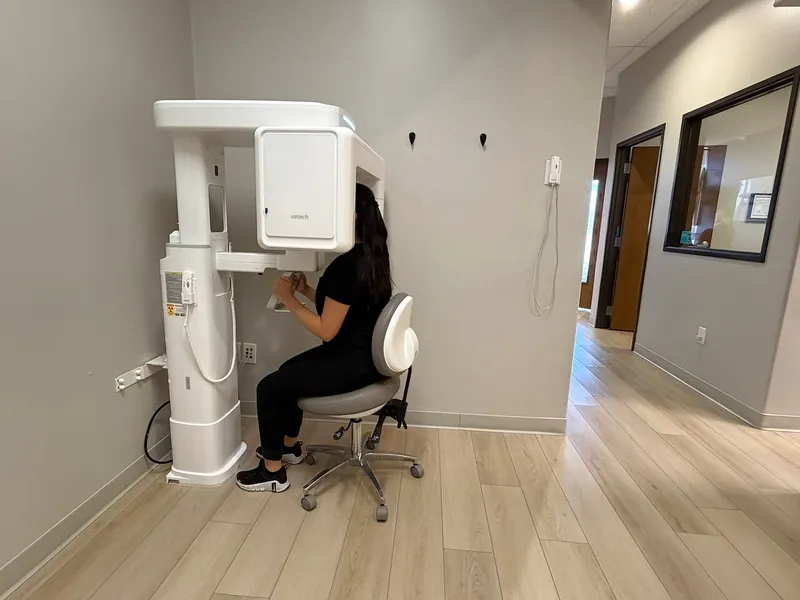
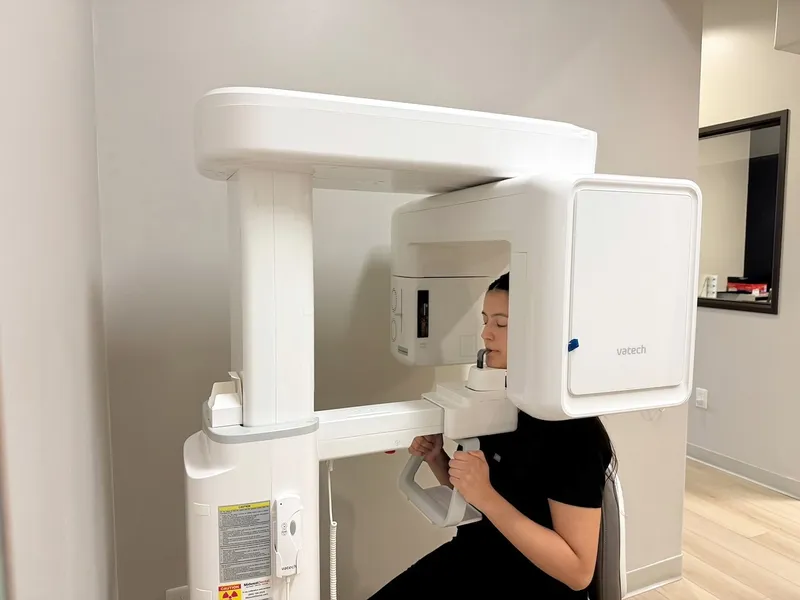
Dr. Tam or Dr. Chiem examines your mouth, takes X‑rays and, when implants are on the table, a low-radiation cone-beam CT. You talk through the three types and leave with a written plan and quote. If you would rather discuss it in Chinese, see our Chinese-speaking dentist page.
- 02
Extractions and healing, only if needed
Teeth that cannot be saved are removed under local anesthetic, so most people feel pressure rather than pain. If you choose an immediate denture, it goes in the same day. It then needs relining as the gums settle over the following months.
- 03
Records and bite, about one to two weeks later
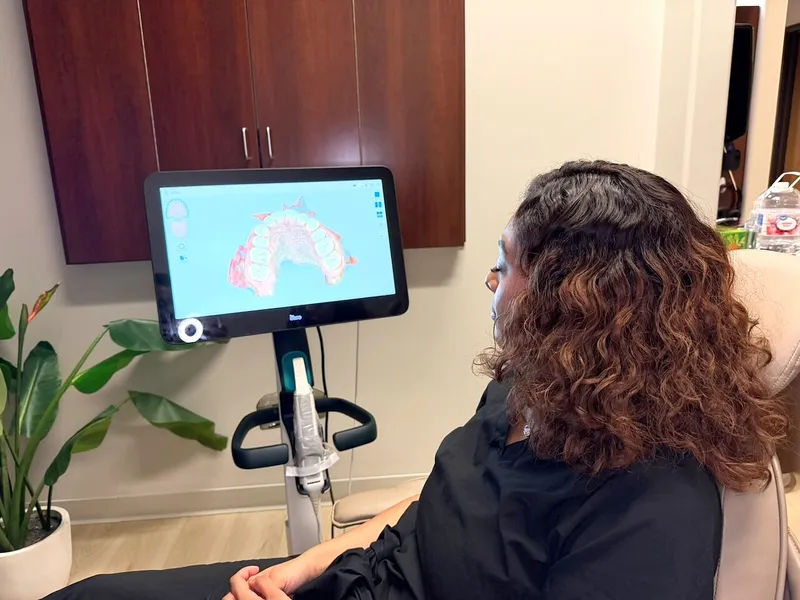
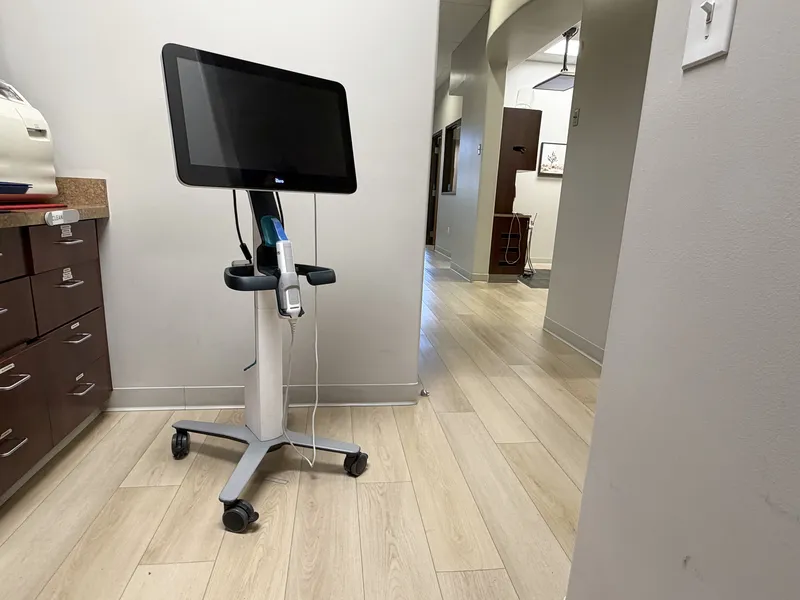
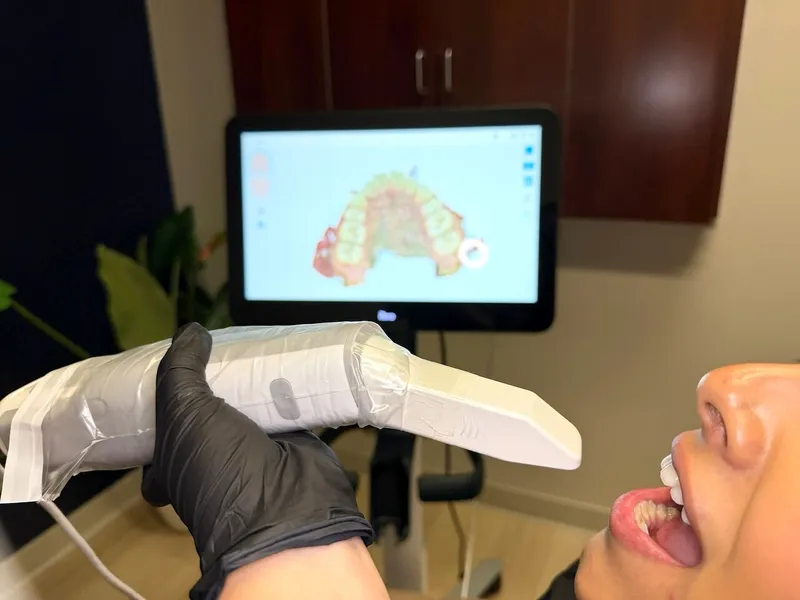
We record the shape of your gums and how your jaws meet, digitally with the iTero scanner where the case allows. You choose the tooth shape and shade with us, with your face in view rather than a chart.
- 04
Try-in, usually a week or two later
You wear a preview version to check the fit, the bite, your speech and the look before the final is made. Changes are easy now, so say everything you notice.
- 05
Delivery and adjustments, the following weeks
Your final denture is fitted and adjusted in the chair. Expect one or more short follow-ups over the next few weeks to relieve sore spots as your mouth adapts. That is normal. If a sore spot does not ease in a day or two, call 972-265-9033.

No surprisesNothing is booked until you have a written quote for each option and you feel ready.
How much do dentures cost in Plano?
It depends mostly on which type you choose and what your mouth needs first. A low advertised price often covers a basic denture only, without the extractions, relines or the materials that make it look natural. It is always fair to ask what a quote includes.
What moves the number
- The type: full, partial, immediate or implant-supported
- Whether teeth need removing first, and how many
- How many implants anchor the denture, if any, and whether grafting is needed
- The materials for the base and teeth, which affect looks, strength and lifespan
Good to knowRelines in the first months are part of the process, so ask whether a quote includes them. Many PPO plans pay part of a denture, with limits on how often it can be replaced.
You get a written, itemized quote for each option that fits you, so you can compare the types on real numbers. If anything changes, we update the quote first.
The details are on our insurance and financing page.
Who makes your denture, and how is it made here?
Dentures are an old treatment. The way they are made here is not. Dr. Tam and Dr. Chiem see every case through from the first scan to the final adjustment.
 Dr. Larry TamGeneral dentist and ownerA Plano native and Texas A&M Baylor College of Dentistry graduate, caring for Dallas-area patients for more than ten years.
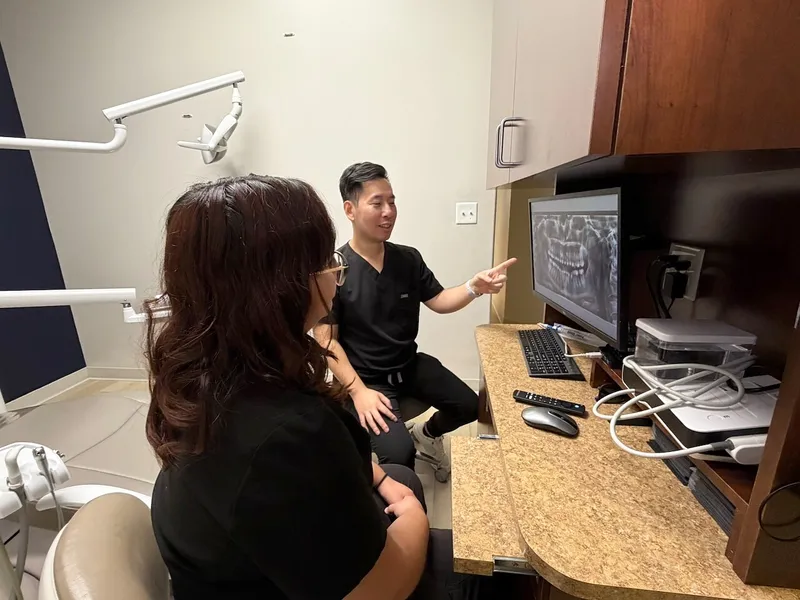
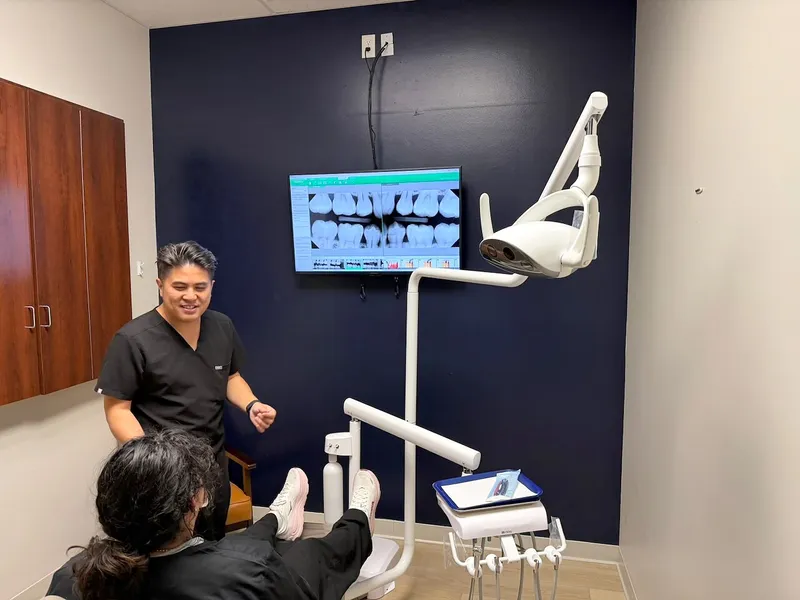
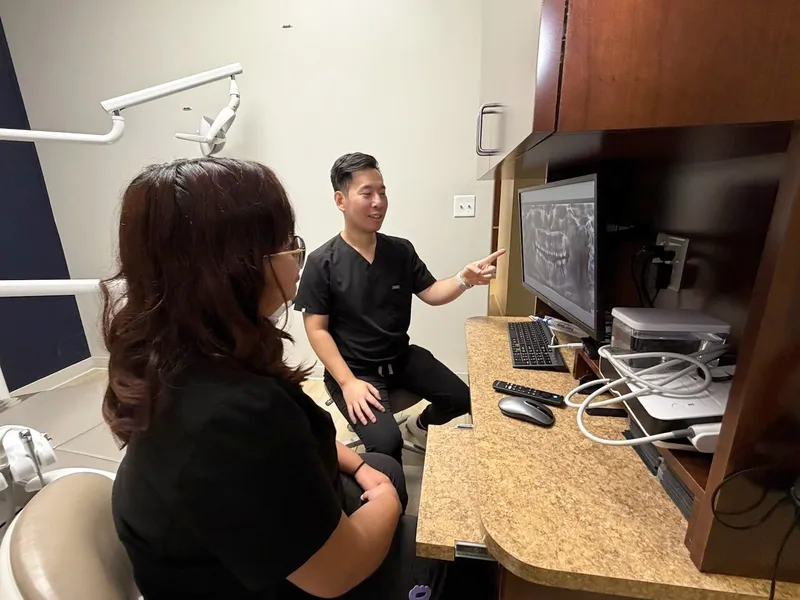
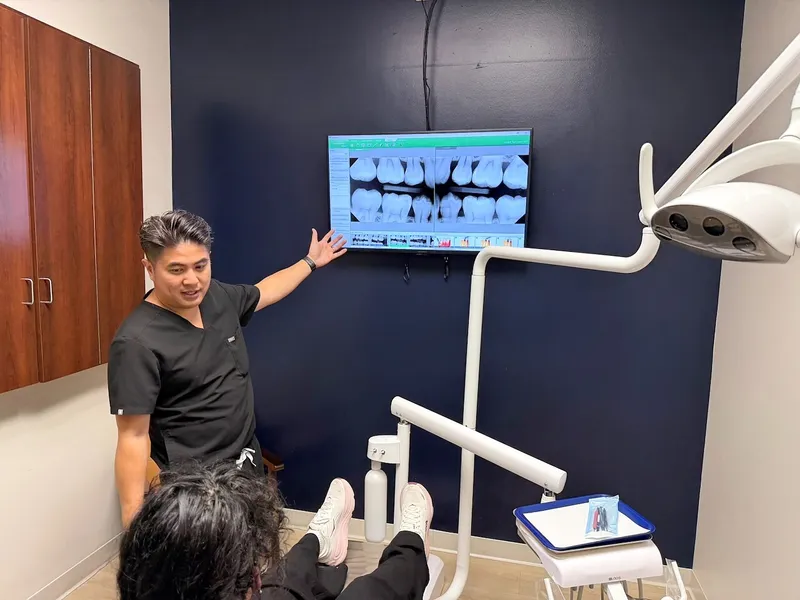
 Dr. Johnny ChiemGeneral dentistYears of clinical experience and a gentle, compassionate approach; he walks you through your X‑rays on the screen before anything is decided.
Nothing is rushed. Any extractions are done under local anesthetic, so most people feel pressure rather than pain, and at the try-in you approve the fit and the look before the final is made. If you need a break, say so and we stop.
- 01
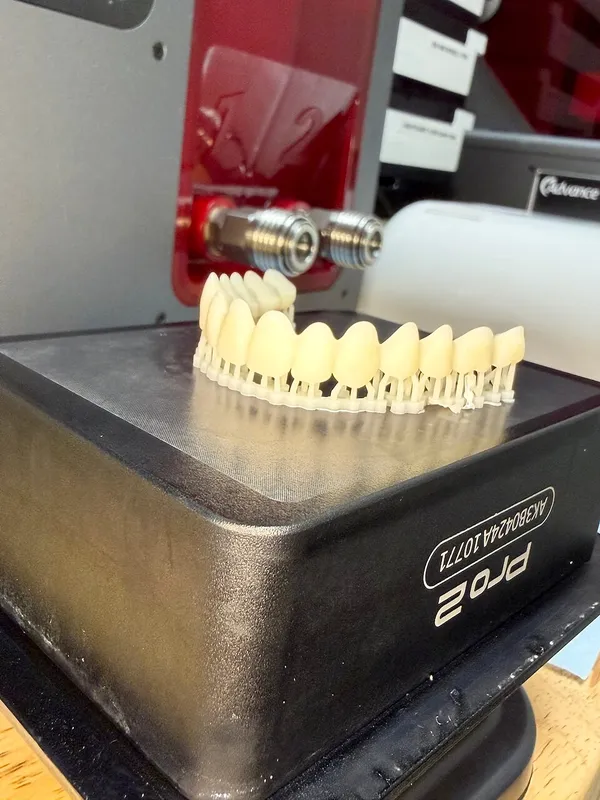
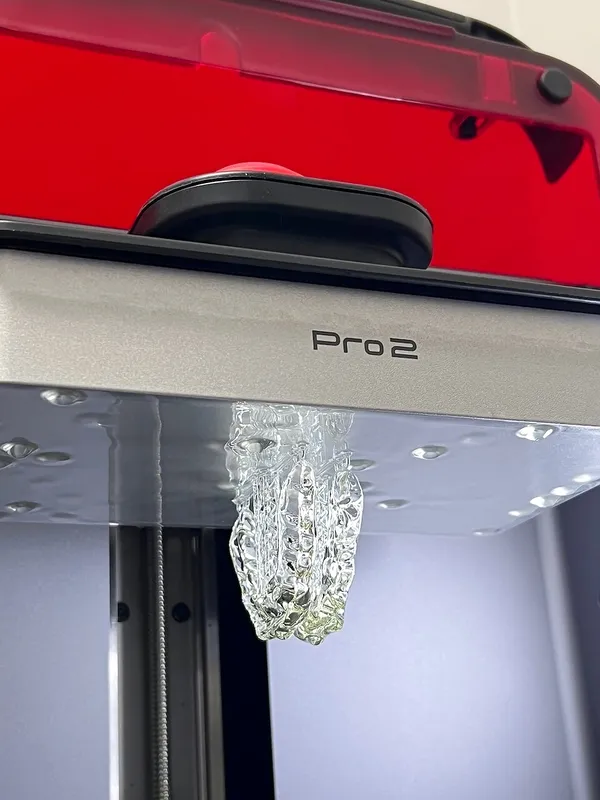
In-office 3D printer
Prints models, try-ins and provisional teeth here rather than waiting on an outside lab, which shortens the gap between visits.
- 02
iTero digital scanner
Scans your gums and remaining teeth with no putty trays, which many longtime denture wearers remember as the worst part.
- 03
Low-radiation cone-beam CT
When implants will anchor a denture, a 3D scan shows where the bone can hold them.
Denture questions Plano patients ask us
Have one we have not covered? Call 972-265-9033 during office hours and you will reach the front desk.
 Dental ImplantsConsider it when you want each missing tooth replaced with a fixed tooth of its own.
 Crowns & BridgesConsider it when only one or two teeth are missing and the neighbors can carry a bridge.
 Full Mouth RestorationOne phased plan to rebuild worn, broken or missing teeth.
 Tooth ExtractionsGentle removals, with a plan for what fills the space.