Wisdom teeth removal in Plano, planned from a 3D scan
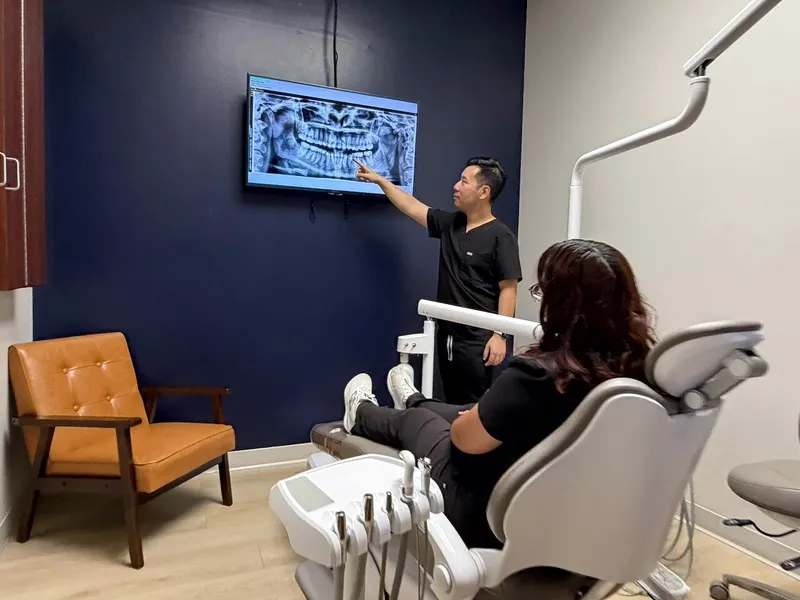
If the back of your jaw keeps flaring up, or you were told years ago that your wisdom teeth should come out, you do not have to decide anything today. Your first visit is a conversation and a quick, low-radiation 3D scan. You see how each tooth sits in the bone, hear whether it should come out now, later or not at all, and leave with a written, itemized quote. Nothing is booked until you feel ready.
Does the back of your jaw ache, swell and settle, then do it again?
Wisdom teeth usually arrive between about 17 and 21, but plenty of adults still have theirs years later. The ones that cause trouble announce themselves the same way: pressure at the back of the jaw, a swollen gum around a half-erupted tooth, and a flare-up that fades just long enough to forget.
Not every wisdom tooth needs to go. The American Dental Association notes that healthy, fully grown-in, correctly positioned wisdom teeth that are easy to clean may not need removal at all. If that is you, we say so.
The honest answer comes from a 3D scan, not a guess. A first visit shows you where each tooth sits, and then you can go home and think about it.
- “It swells up every few months, then calms down”Gum that keeps getting infected over a partly erupted tooth is the most common reason to act.
- “My teeth feel more crowded than they used to”The scan shows whether a wisdom tooth is pushing on the molar in front.
- “I am worried about the nerve, and about being awake”The scan shows exactly where the nerve is, and comfort is settled before anything is booked.
What is wisdom teeth removal?
Wisdom teeth removal is the extraction of one or more third molars, the last teeth at the back of each jaw. A fully erupted wisdom tooth comes out much like any other tooth. An impacted one, still under gum or bone, needs a small surgical opening. Removal is planned from a low-radiation 3D scan of the roots and the nearby nerve, and most people feel ready for normal routines within three to five days.
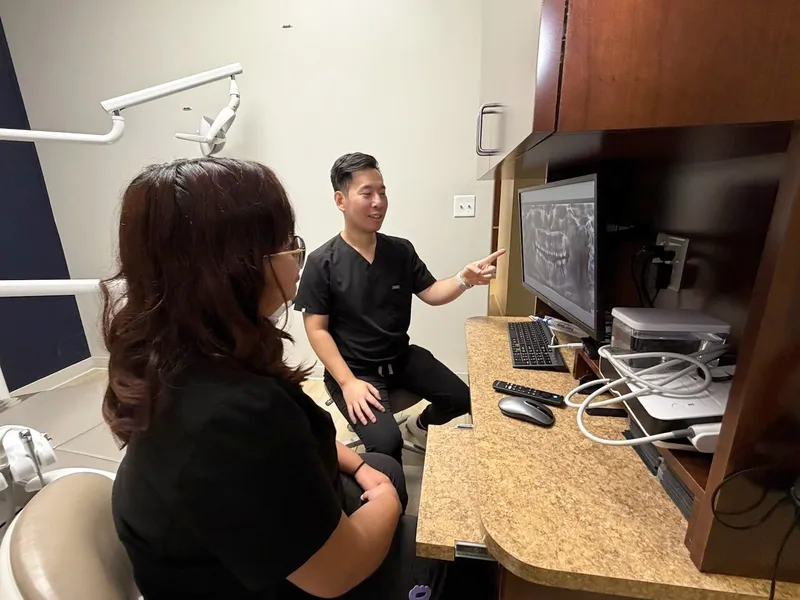
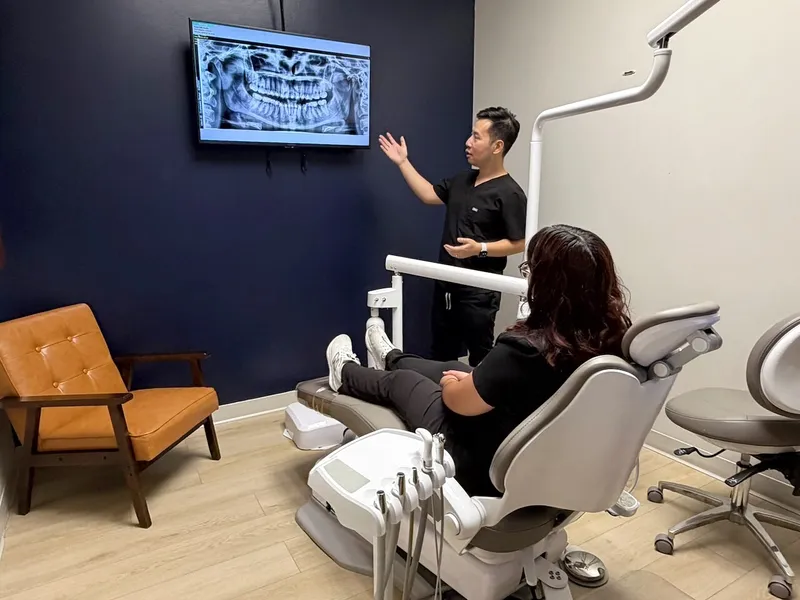
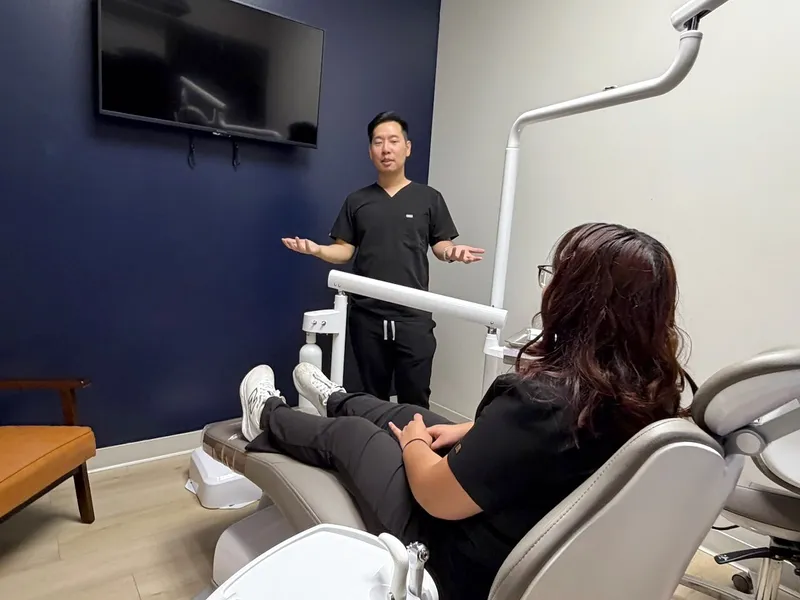
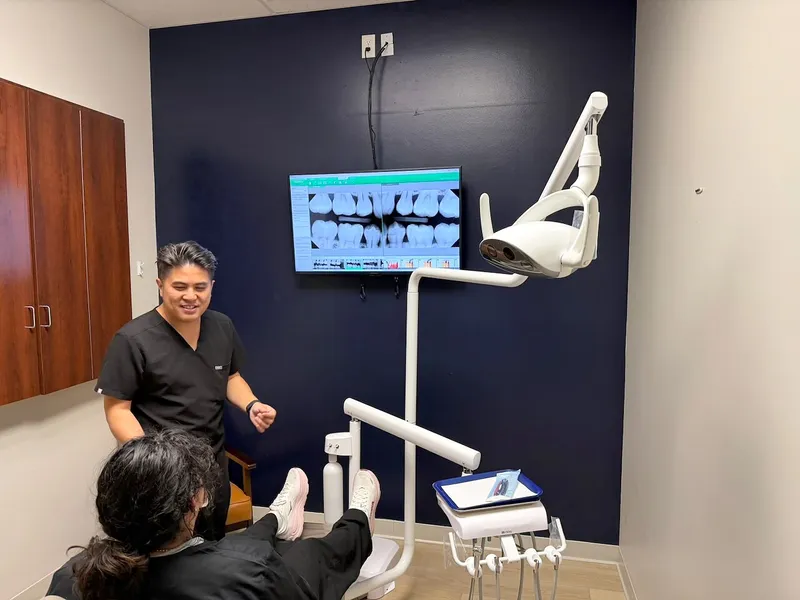
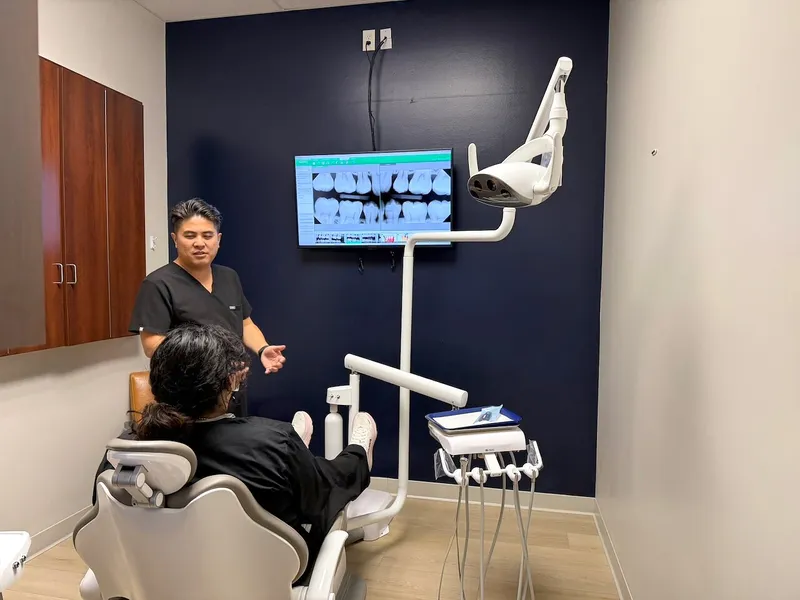
Your first visitWe rotate your own scan on the screen with you before anything is decided.
Do your wisdom teeth need to come out?
Only an exam and a scan can say for sure, but these are the signs that most often bring adults in.
Removal is often recommended if
- The gum over a partly erupted tooth keeps swelling, sometimes with a bad taste, or food gets trapped behind your back molars.
- A dentist has told you a wisdom tooth is impacted or angled into the molar in front, or it is decaying where a brush cannot reach.
- You have pain, pressure or stiffness at the back of the jaw, or your teeth feel more crowded than they did.
What happens at your first visit
- A quick, low-radiation 3D scan of both jaws
- A plain answer for each tooth: now, later or not at all
- Numbing and comfort options explained
- A written, itemized quote per tooth to take home
Keep them, remove them here, or see an oral surgeon: which is right for you?
There is no single right age and no single right answer. The scan sorts each tooth into one of three paths, and we go through the reasoning with you.
| At a glance | Option 1Leave and watch | Most asked aboutRemove in our office | Option 3Refer to an oral surgeon |
|---|---|---|---|
| Fits when | Healthy, fully in, well positioned and easy to clean | Erupted or partly erupted, a safe distance from the nerve | Very deep, unusually close to the nerve, or otherwise complex |
| What happens | Periodic X‑rays at your regular exams | Numbing, removal and stitches when needed, in one visit | We send your 3D scan along so nothing is repeated |
| Numbing | None needed | Local anesthetic; comfort options talked through when you book | Set by the surgeon, often with sedation |
| Recovery | None | Usually three to five days, longer for impacted lower teeth | Similar, set by the surgeon |
| Change your mind later | Yes, removal stays an option | Not needed | Not needed |
| Cost | Only the exam and imaging | Quoted per tooth after the scan | Set by the surgeon |
Not sure which path is yours? A consult and a scan settle it, and waiting is a real option. A single erupted wisdom tooth comes out like any other; see tooth extractions. | |||
Reviewed by our own patients
Custerpoint Family Dental averages 4.8 stars across 234 public Google reviews, as of September 8, 2026, so you can read them yourself before you call. Results vary from person to person, so your consult covers what is realistic for your teeth.
Read the reviews on GoogleWhat happens on the day your wisdom teeth come out?
Most removals follow the same five stages, whether it is one tooth or all four. We explain each one before it starts.
- 01
Consult and 3D scan
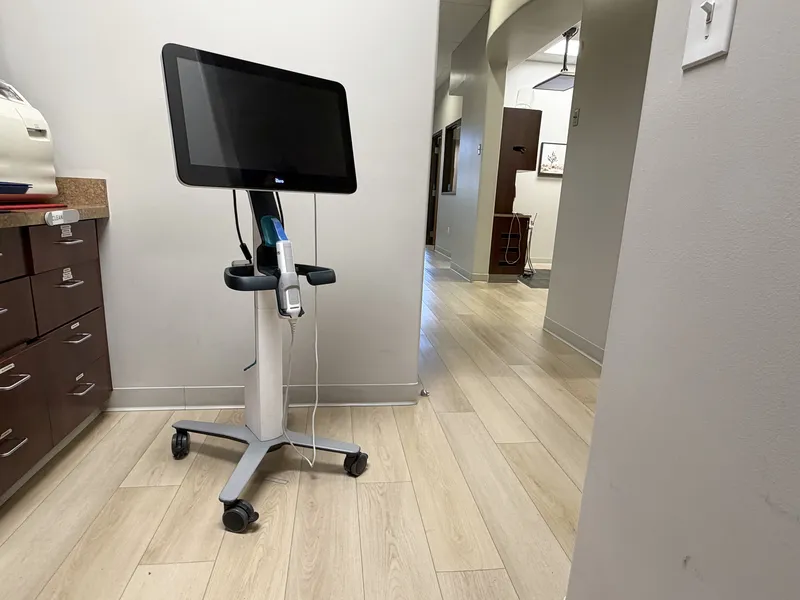
Dr. Tam or Dr. Chiem examines your mouth, takes a cone-beam CT scan and walks through the images with you, and you get a plan and a written quote before anything is booked.
- 02
Numbing and comfort
The area is numbed with local anesthetic, so you feel pressure rather than pain. Tell us when you book and we will talk through your comfort options.
- 03
Removal
Erupted teeth are gently loosened and lifted out; impacted teeth are reached through a small opening in the gum, sometimes in sections so they come out with less force.
- 04
Closing the site
Gauze goes in to help a clot form, and dissolving stitches close the site when needed.
- 05
Home the same day
You leave with gauze, written instructions and our number, and most people take two or three days off.
How do you recover from wisdom teeth removal?
Recovery is mostly rest, cold packs and soft food. Here is what to expect, and we go over it with you before you leave.
- The first 48 hours
Rest and keep it cold
Keep gentle pressure on the gauze for the time we give you, use cold packs 20 minutes on and 20 off, and sleep with your head raised. Start pain medication before the numbness wears off. No straws, smoking, vaping or hard rinsing.
- Days three to seven
Soft food and salt water
Swelling usually peaks around day two or three, then eases. Rinse gently with warm salt water after meals and stick to soft foods such as eggs, pasta and mashed potatoes. Skip crunchy, seedy or very hot foods and heavy exercise until the sites close.
- The following weeks
Let the bone fill in
Most people feel ready for normal routines in three to five days, while the bone keeps healing for several weeks. Call us about a fever, swelling that grows after day three, or numbness that lingers.
If anything feels wrong at any point, call 972-265-9033. You will reach the front desk during office hours.

No surprisesNothing is booked until you have a written quote and you feel ready.
How much does wisdom teeth removal cost in Plano?
Your number depends on how many teeth come out and how each one sits in the bone. An erupted wisdom tooth generally costs less to remove than one that is fully impacted, which is why we quote after the scan rather than over the phone.
What moves the number
- How many wisdom teeth are being removed
- Whether each tooth is erupted, partly covered by gum, or fully impacted in bone
- Comfort options, if you ask for them when you book
- Whether a very deep tooth is referred to an oral surgeon
Good to knowThe cone-beam scan is part of the quote, and many PPO plans cover part of wisdom tooth extraction.
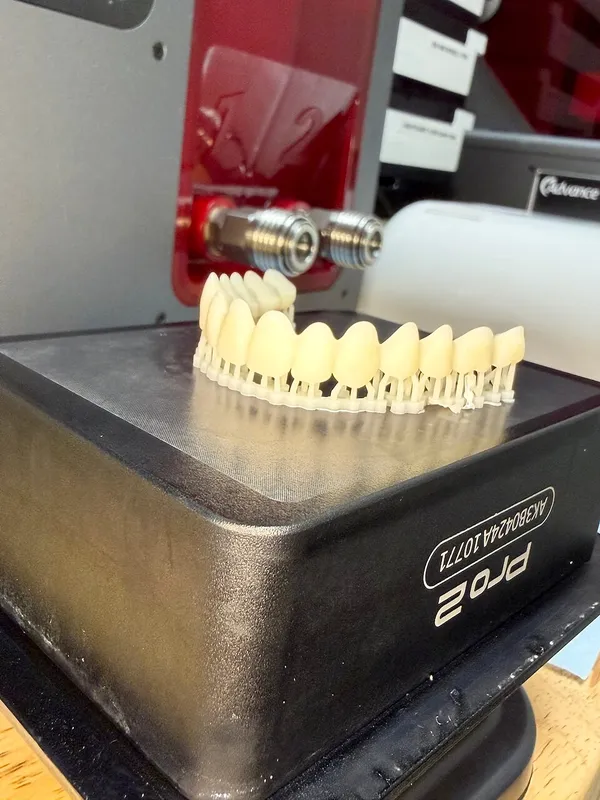
You get a written, itemized quote per tooth before anything is booked, including what your insurance is expected to pay.
Questions about coverage first? See insurance and financing.
Who removes your wisdom teeth, and why does a 3D scan matter?
Lower wisdom teeth often sit close to the nerve that gives feeling to your lip and chin. Dr. Tam and Dr. Chiem see that in three dimensions before anyone picks up an instrument.
 Dr. Larry TamGeneral dentist and ownerA Plano native and Texas A&M Baylor College of Dentistry graduate, caring for Dallas-area patients for more than ten years.
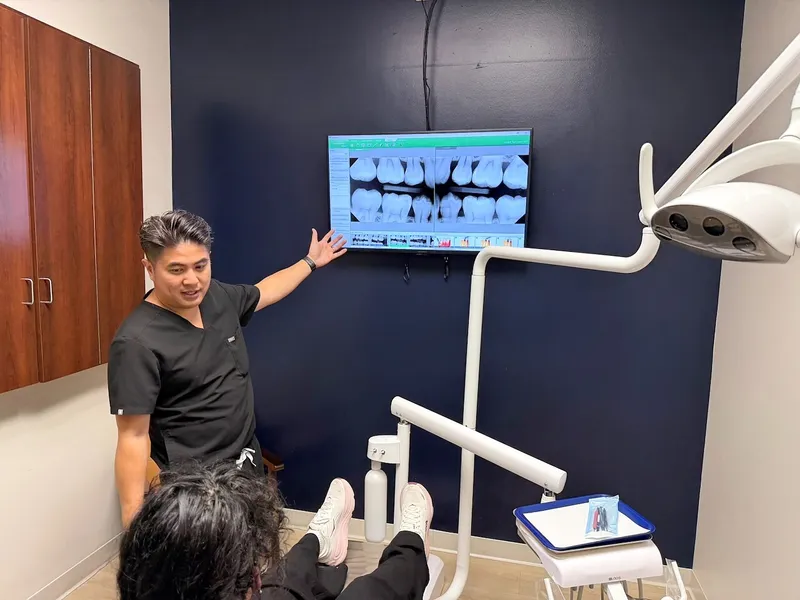
 Dr. Johnny ChiemGeneral dentistYears of clinical experience and a gentle, compassionate approach; he walks you through your X‑rays on the screen before anything is decided.
You are numb the whole time, so most people feel pressure rather than pain. We explain each step first, go at your pace and stop if you raise a hand. Tell us when you book and we will talk through your comfort options.
- 01
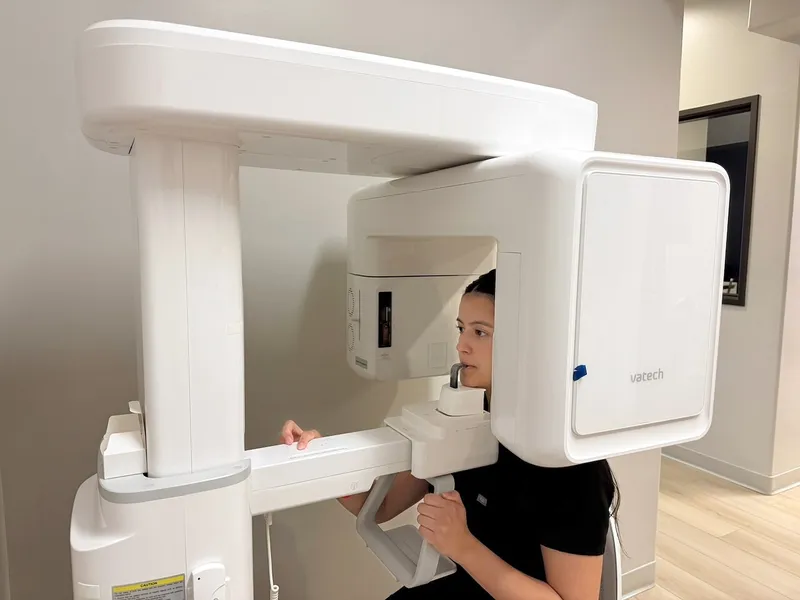
Low-radiation cone-beam CT
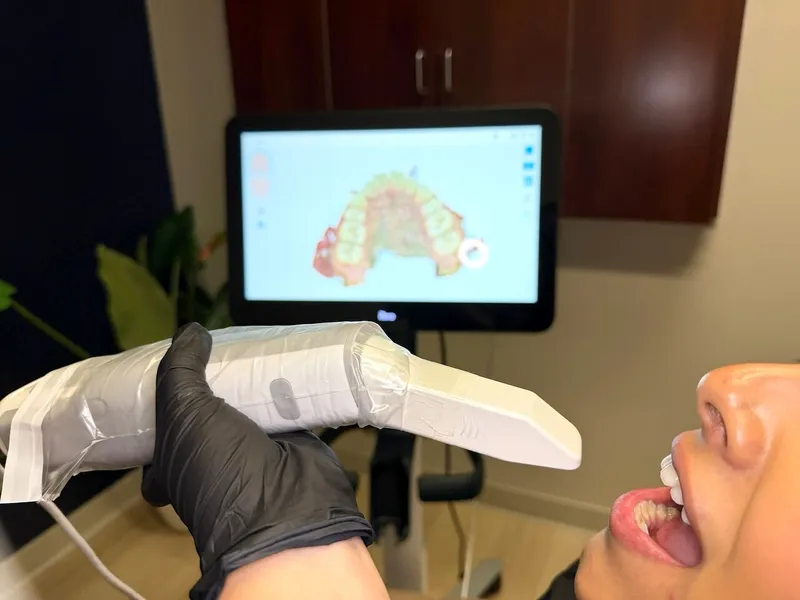
A 3D scan shows each root, its angle and how far it sits from the nerve and the sinus, which a flat X‑ray can overlap. The scan takes under a minute, with nothing placed in your mouth.
- 02
Chairside screens
Your scan goes up on the screen beside your chair, and we rotate it with you so you can see how your teeth sit and why we recommend what we do.
Wisdom teeth questions Plano patients ask us
Have one we have not covered? Call 972-265-9033 during office hours and you will reach the front desk.