
Drill Free Dentistry in Plano for small cavities and nervous patients
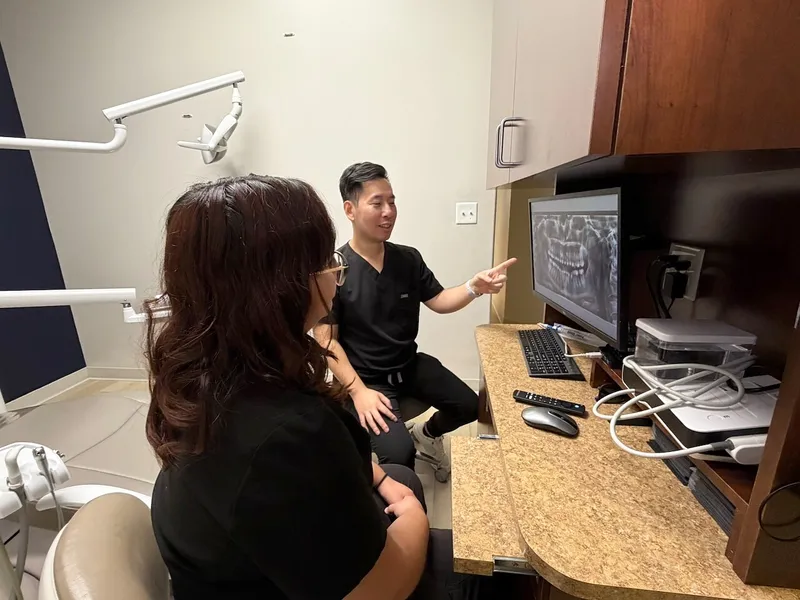
If the sound of the drill is why you have put off a filling, you are far from alone. Many small, early cavities can be treated or stopped without a high-speed drill, and often without a numbing shot. An exam and a close-up X‑ray tell you which kind you have, and you get a written, itemized quote before any tooth is treated.
Is the whine of the drill the reason you have not booked?
For many adults the hardest part of a filling is the whine of the handpiece and the numb lip afterward, not the filling itself.
Small areas of decay can often be treated with quieter methods that need little vibration and often no injection. It is not the answer for every tooth.
The earlier a cavity is caught, the more likely a drill-free option fits. You see yours on the screen, then go home and think about it.
- “The noise goes right through me”A quieter visit, without the high-speed drill.
- “I hate the numb lip afterward”Many small repairs need no injection at all.
- “Honestly, I have avoided fillings for years”Tell us when you book, and raise a hand to pause at any point.
What is drill-free dentistry?
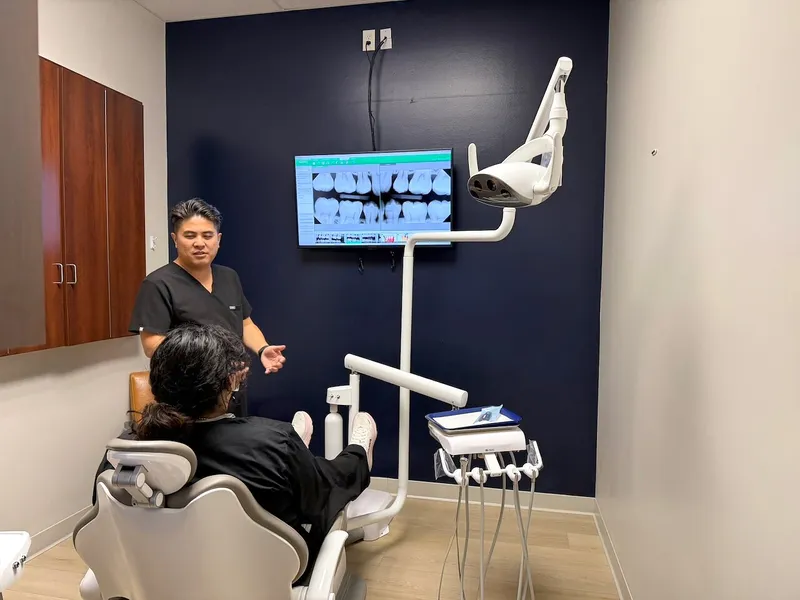
Drill-free dentistry removes or stops small cavities without a high-speed drill. The method depends on the tooth; Dr. Tam chooses from the options the office uses, then places a tooth-colored filling where one is needed. It suits early, shallow decay and usually fits one visit. Deeper cavities, broken teeth and failing old fillings still need a conventional filling, done with the same patience.
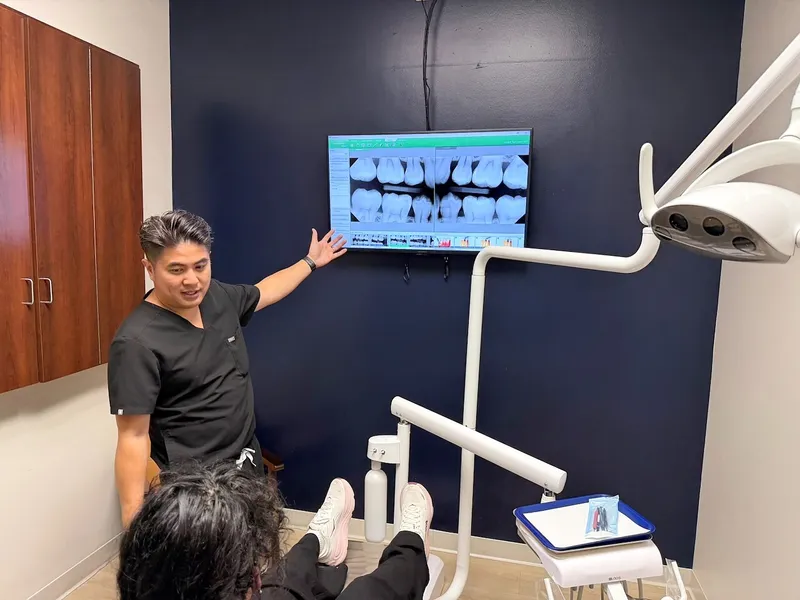
Before anything startsYou see the spot on the screen before any tooth is touched.
Is drill-free treatment right for your tooth?
You may be a good fit if these sound familiar.
You may be a good fit if
- A recent exam found a small or early cavity, not a deep one.
- You have stained or sticky grooves on back teeth that need a small repair.
- You have avoided treatment because of the drill or the needle.
What happens at your first visit
- A close-up X‑ray and an exam
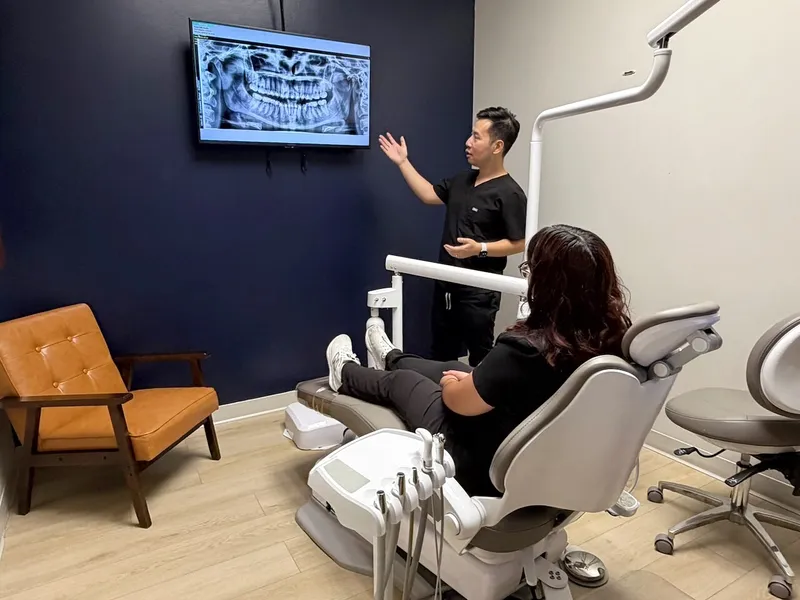
- The image on the chairside screen, in plain words
- A plain answer on whether a drill-free option fits
- A written, itemized quote before any tooth is treated
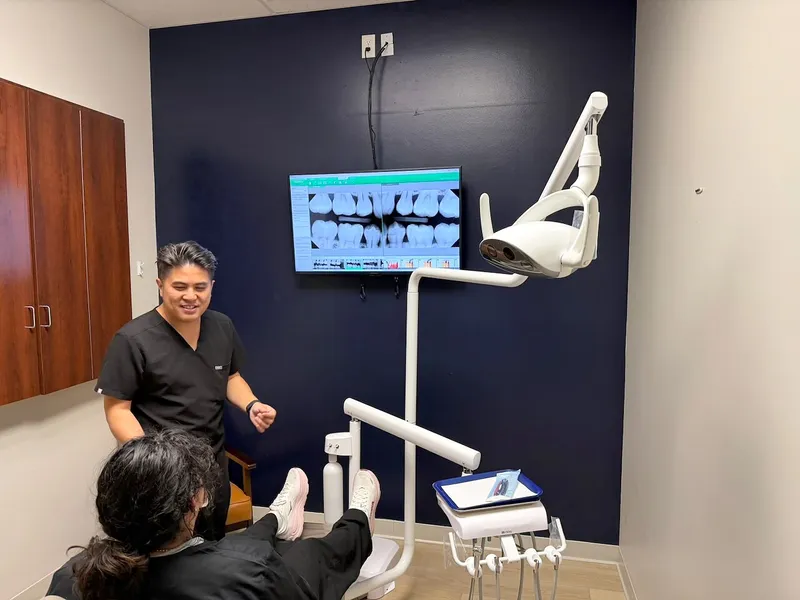
What is different about a drill-free visit?
The filling is usually the same. What changes is how the decay comes out, and how the visit feels. Results vary.
-
01
No whine
A soft hiss or a quiet popping, with none of the high-pitched whine.
-
02
Little or no vibration
Nothing grinds against the tooth, so the buzzing through your jaw is mostly gone.
-
03
Often no injection
Small, shallow repairs frequently need no numbing shot, though numbing is always available.
-
04
More of your own tooth kept
Less healthy structure is removed around the decay, so the tooth keeps more of its strength.
Which drill-free option fits which problem?
Each method suits a different stage of decay. The method depends on the tooth; Dr. Tam chooses from the options the office uses and tells you which at your exam.
| At a glance | Most asked aboutAir abrasion | Option 2Dental laser | Option 3Silver diamine fluoride | Option 4Conventional drill |
|---|---|---|---|---|
| How it works | A fine stream of particles wears decay away | Laser energy removes decayed tooth | A liquid painted on stops decay spreading | A handpiece removes decay and shapes the tooth |
| Best for | Small, shallow cavities and stained grooves | Small to moderate cavities | Stopping decay when a filling is not possible yet | Deep decay, large fillings, crowns |
| Numbing shot | Often not needed | Often not needed | Not needed | Usually needed |
| Noise and vibration | A soft hiss, little vibration | A quiet popping, little vibration | None | The familiar whine and vibration |
| Result | A tooth-colored filling, same visit | A tooth-colored filling, same visit | Decay stopped, but the spot turns black | A filling, or a crown |
| Limits | Not for deep decay or old metal fillings | Not for every tooth | Permanent dark stain; no rebuild | Removes more healthy tooth |
Not sure which applies? One exam and X‑ray settle it. | ||||
Reviewed by our own patients
Custerpoint Family Dental averages 4.8 stars across 234 public Google reviews, as of September 8, 2026, so you can read them yourself before you call. Results vary from tooth to tooth, so your exam covers what is realistic for yours.
Read the reviews on GoogleHow does a drill-free filling appointment work?
Most drill-free visits run in four steps, often in a single appointment.
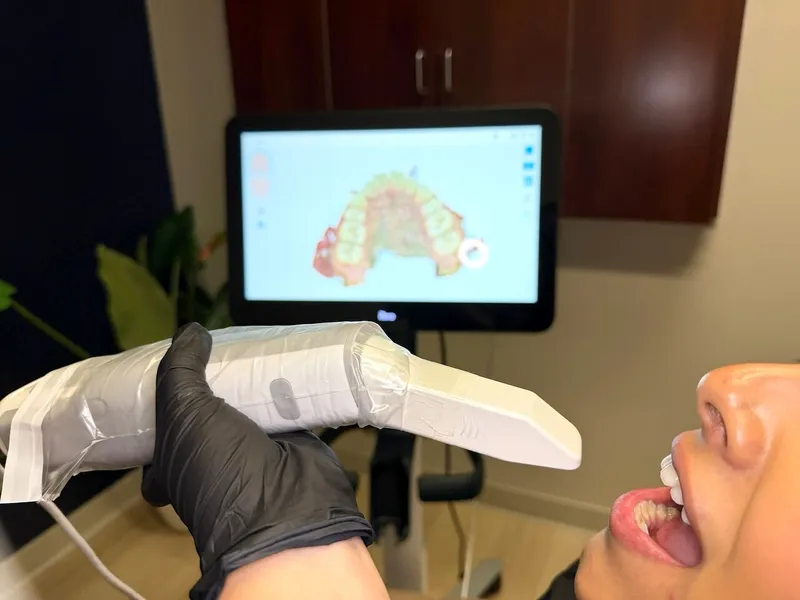
- 01
Find it early
A close-up X‑ray and an exam show how deep the decay goes, and you see the image on the screen.
- 02
Choose the method
If the decay is small and shallow, the dentist explains the option that fits. If it is deeper, we say so and plan a comfortable conventional filling.
- 03
Treat the tooth
Numbing goes in first if you want it. The decay is then removed or sealed without a high-speed drill; most people describe a hiss or light tapping, not pain.
- 04
Fill and finish
The tooth is rebuilt with a tooth-colored filling, shaped to your bite and polished. A medicated liquid needs no filling.
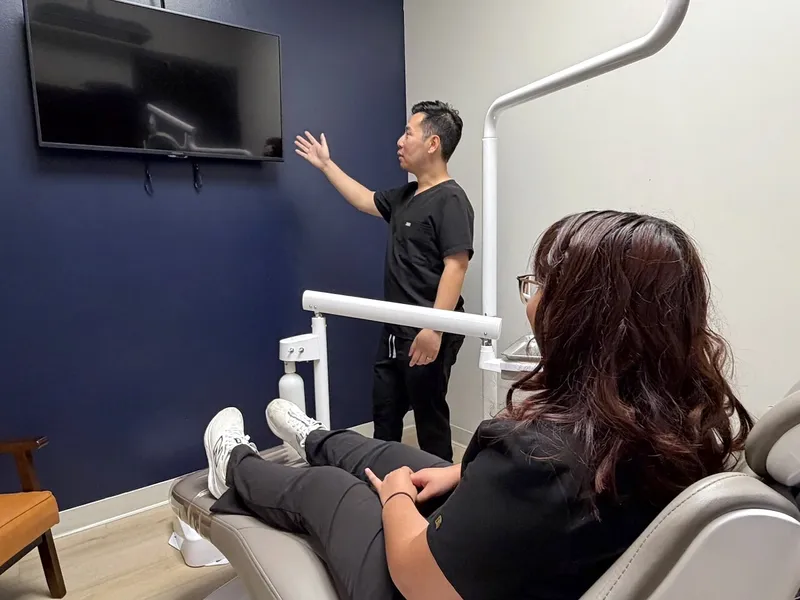
No surprisesNothing is booked until you have a written quote and you feel ready.
What does a drill-free filling cost?
It depends on the size of the decay and the method your tooth needs, so the honest number comes after the X‑ray. Many plans cover small fillings in part.
What moves the number
- How many surfaces of the tooth are involved
- Which method fits your tooth
- Which tooth it is, front or back
- How your plan covers basic restorative care
Good to knowA filling after drill-free treatment is typically billed like any other filling.
You get a written, itemized quote before any tooth is treated, with what your plan is expected to pay.
Questions about a plan? See insurance and financing.
Who treats the tooth, and what do they use?
Dr. Tam or Dr. Chiem does the work.
 Dr. Larry TamGeneral dentist and ownerA Plano native and Texas A&M Baylor College of Dentistry graduate, caring for Dallas-area patients for more than ten years.
 Dr. Johnny ChiemGeneral dentistYears of clinical experience and a gentle, compassionate approach; he walks you through your X‑rays on the screen before anything is decided.
Most drill-free repairs are short and need no injection, and numbing is there the moment you want it. We go at your pace and stop when you raise a hand.
- 01
How small cavities are treated here
The method depends on the tooth; Dr. Tam chooses from the options the office uses, and healthy tooth is left in place.
- 02
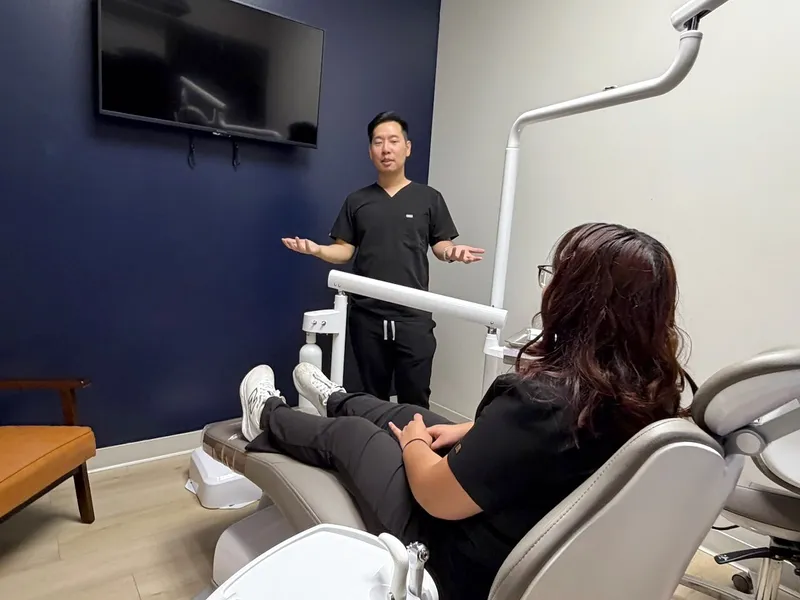
Chairside screens
X‑rays go up beside the chair before you agree to anything.
Drill-free questions Plano patients ask us
Have one we have not covered? Call 972-265-9033 during office hours and you will reach the front desk.
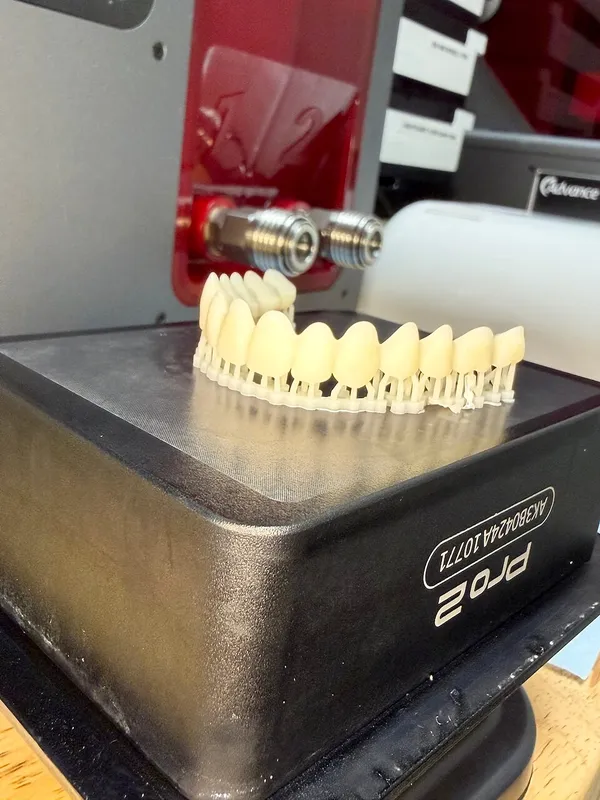 Crowns & BridgesConsider it when a cavity is too large for a filling and the tooth needs full coverage.
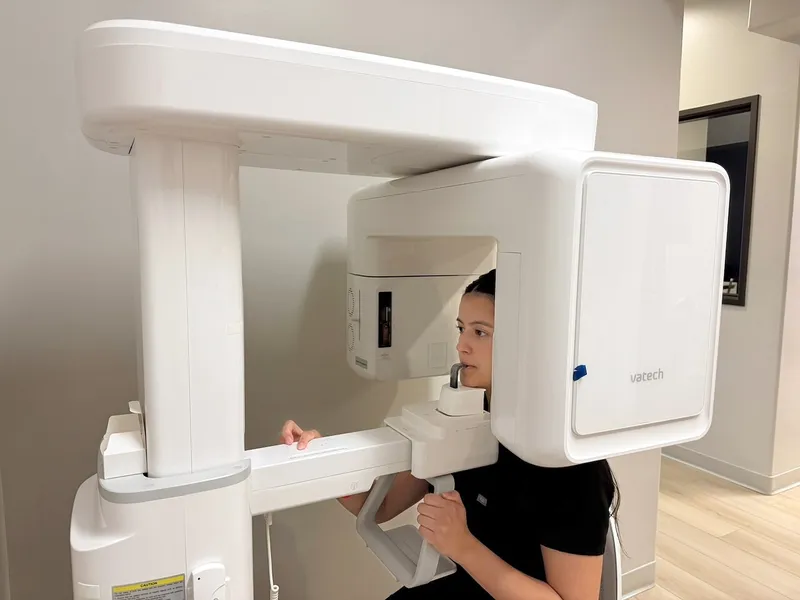 Root CanalsConsider it when decay has reached the nerve inside the tooth.
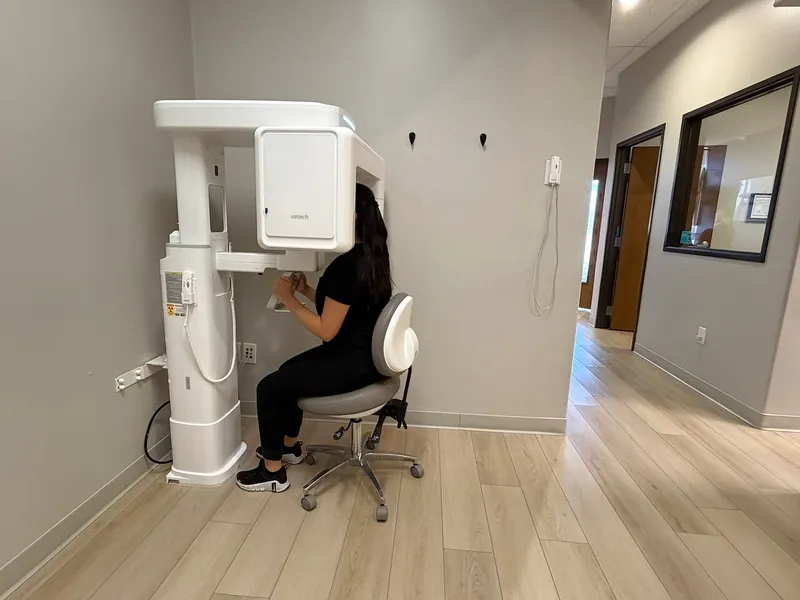 Cleanings & Preventive CareCleanings, checkups and X-rays that catch small problems early.
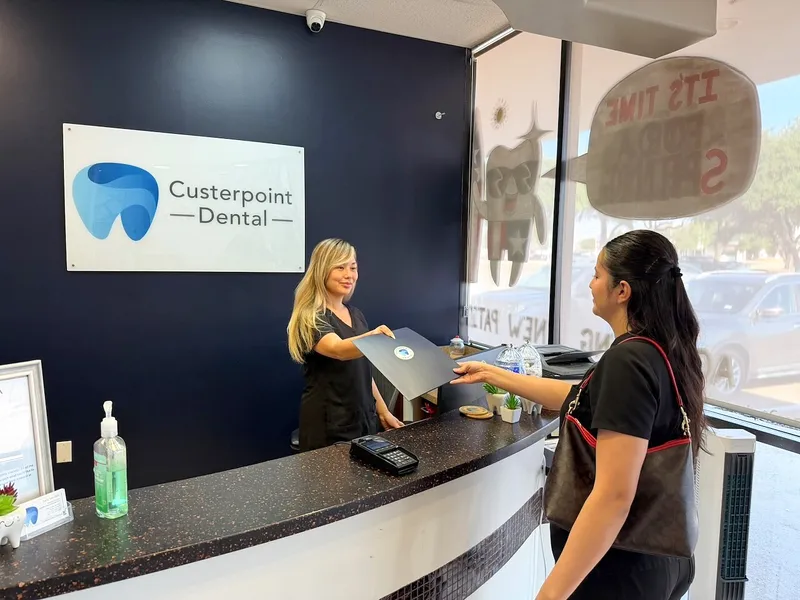 New Patient ExamsAn exam, scans on the screen and a written plan on your first visit.