
Teeth cleanings in Plano that keep small problems small
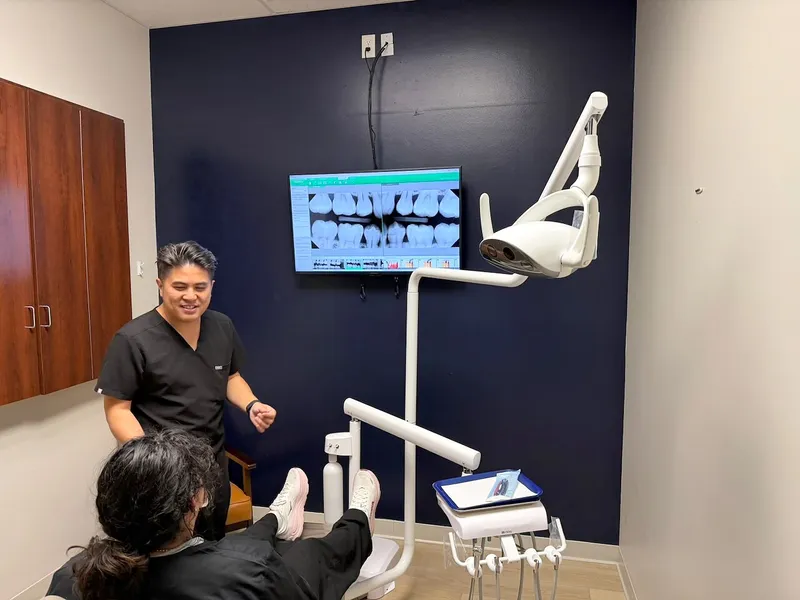
If your last cleaning was more than six months ago, or you honestly cannot remember it, this is the visit to book. It covers the cleaning itself, a check of your gums, the dentist's exam and any X‑rays you are due for, usually in about an hour. Most PPO plans cover it, and we check yours first. If the exam finds anything beyond routine care, you get a written, itemized quote before anything else is scheduled.
Has it been longer than six months? You are not the only one
Most adults let cleanings slide at some point. Life gets busy, nothing hurts, and the reminder card ends up under a magnet. Nobody here will lecture you about the gap.
It helps to know what quiet time does. Tartar hardens where a brush cannot reach, gums start to bleed a little, and a small soft spot on a molar keeps growing. That is how a filling becomes a crown.
None of this is an emergency. A cleaning visit simply shows you where you stand, and you leave with clean teeth and a short list of anything worth watching.
- “My gums bleed when I floss, so I stopped flossing”Bleeding usually means inflammation, and it tends to settle within a few weeks of a thorough cleaning and daily flossing.
- “I wake up with a sore jaw”A custom night guard takes the force of night grinding instead of your teeth.
- “Honestly, I am embarrassed about how long it has been”Tell us when you call; the first visit starts from today, not from how you got here.
What is a teeth cleaning, and what does the visit include?
A professional cleaning removes the plaque and tartar that brushing leaves behind, above and just below the gum line, then polishes the teeth. At Custerpoint Family Dental in Plano the visit also includes gum measurements, any X‑rays you are due for and an exam by the dentist, usually in about an hour. Most adults come back every six months. People with a history of gum disease usually come every three to four months instead.
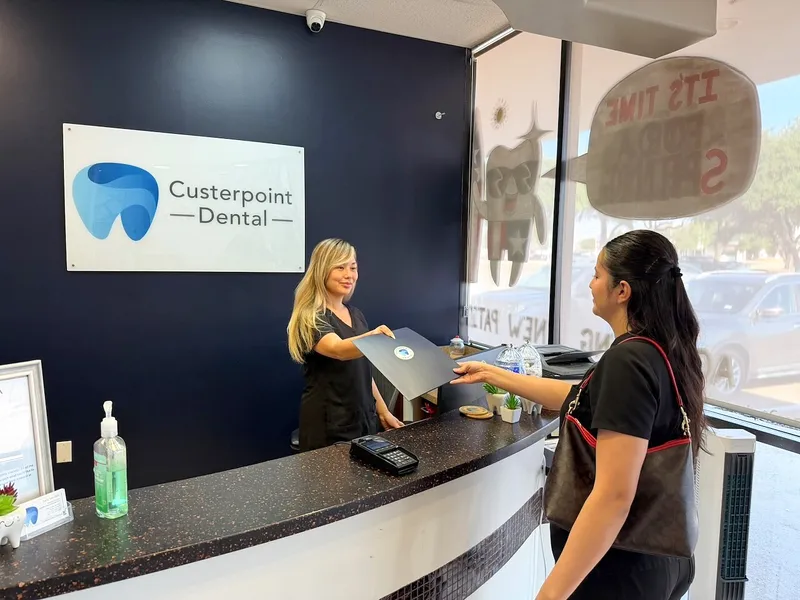
Your visitYou are told what is happening before it happens, and you can ask us to slow down at any point.
What does a preventive visit include?
Everyone is due for this visit sooner or later, so there is no candidacy test. Here is what one covers.
Every visit includes
- A cleaning above and just below the gum line, then polishing and flossing.
- Gum measurements around every tooth, so early changes are caught while they are small.
- The dentist's exam, including a short oral cancer screening and a look at any old fillings or crowns.
Also part of your visit
- Any X‑rays you are due for, based on your history rather than a fixed calendar
- Your PPO benefits checked before you come in
- A check for wear from grinding, and a night guard if you need one
- A written, itemized quote for anything found beyond the routine visit

What does regular preventive care actually protect?
A cleaning is one of the shortest visits in dentistry and does more quiet work than any other. Results vary from person to person.
-
01
Your gums
Early gum disease is usually silent, and measuring the pockets at every visit catches it while a cleaning and better flossing can still turn it around.
-
02
The dental work you already have
Fillings, crowns and implants fail at the edges first, and regular checks catch a leaking margin while the fix is still small.
-
03
Your enamel at night
If you grind or clench, a custom night guard made from a digital scan takes the wear instead of your teeth.
-
04
Your budget over time
For many patients with PPO coverage a cleaning costs little or nothing out of pocket, while skipped cleanings are how a small filling becomes a crown.
-
05
The rest of your health
The American Academy of Periodontology notes links between gum disease and conditions such as diabetes and heart disease, and healthy gums are one factor you can control.
-
06
Your own peace of mind
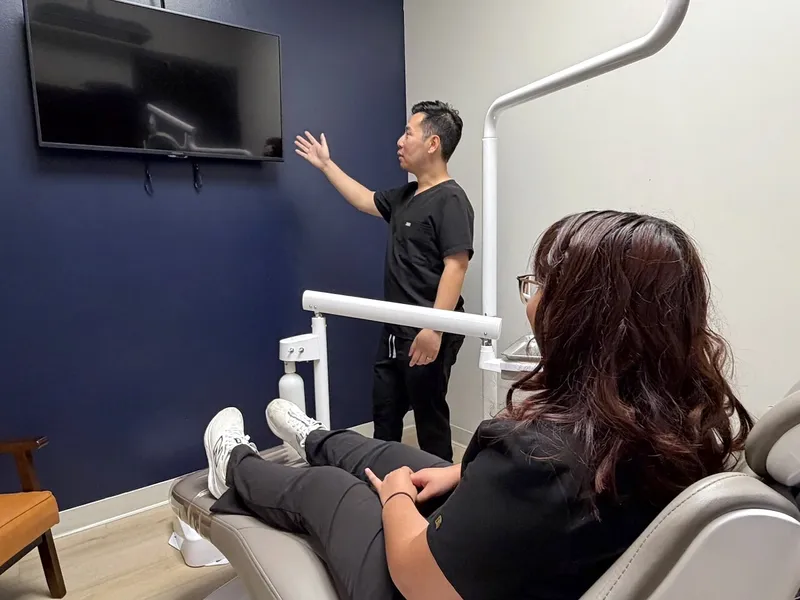
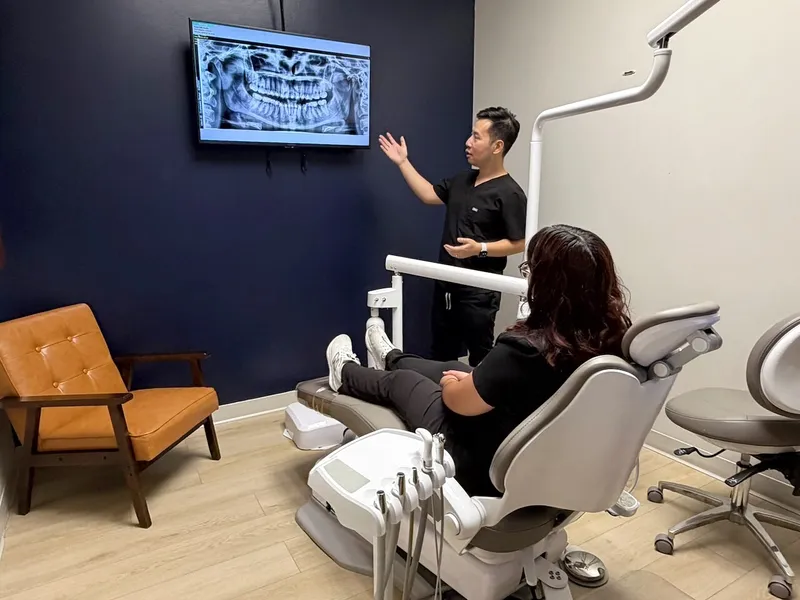
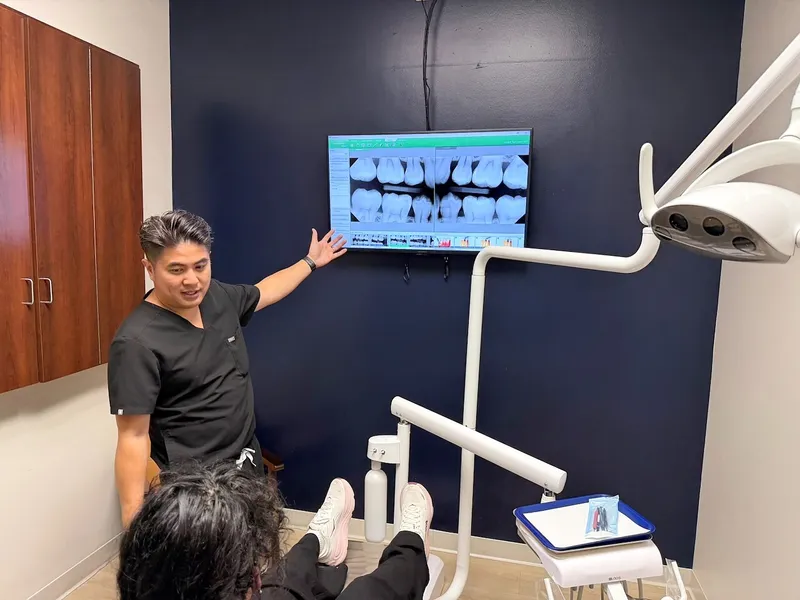
You see your X‑rays on the screen beside the chair and hear what a shadow means in plain words.
Every six months or every three to four: which rhythm do you need?
The difference comes down to where the tartar sits. Above the gum line, a routine cleaning twice a year handles it. Below the gum line, in pockets that have started to deepen, it takes a deep cleaning first and then a closer rhythm.
| At a glance | Most asked aboutRoutine cleaning, every six months | Option 2Deep cleaning, then every three to four months |
|---|---|---|
| Who it is for | Healthy gums, with pockets generally 1 to 3 mm | Gum disease, with pockets of about 4 mm or more |
| Where it cleans | Tooth surfaces and just at the gum line | Below the gum line, down along the roots |
| Numbing | Usually not needed | Local anesthetic, often one side of the mouth at a time |
| Visits | One visit | Often two visits, then a follow-up check |
| How often afterward | Typically every six months | Often every three to four months, known as periodontal maintenance |
| Insurance | Usually billed as preventive care | Usually billed as a basic procedure, so coverage differs |
Your gum measurements decide it, not a guess, and we show you the numbers. More on deep cleaning and gum care. | ||
Reviewed by our own patients
Custerpoint Family Dental averages 4.8 stars across 234 public Google reviews, as of September 8, 2026, so you can read them yourself before you call. Results vary from person to person, so your visit covers what is realistic for your gums and teeth.
Read the reviews on GoogleWhat happens at a cleaning visit, start to finish?
A routine preventive visit runs in five steps and usually takes about an hour. Nothing is done without telling you first.
- 01
Check-in and a quick history
We update your medical history and medications first, since some prescriptions, such as many blood pressure medicines and antihistamines, cause dry mouth and raise cavity risk.
- 02
Gum measurements and any X‑rays
Your hygienist, Maria or Azalea, measures the pocket around each tooth and takes any X‑rays you are due for. Adults at low risk commonly need bitewing X‑rays only every one to three years.
- 03
The cleaning itself
Plaque and tartar come off with an ultrasonic scaler and fine hand instruments, then your teeth are polished and flossed. Most people feel scraping and pressure rather than pain.
- 04
The dentist's exam
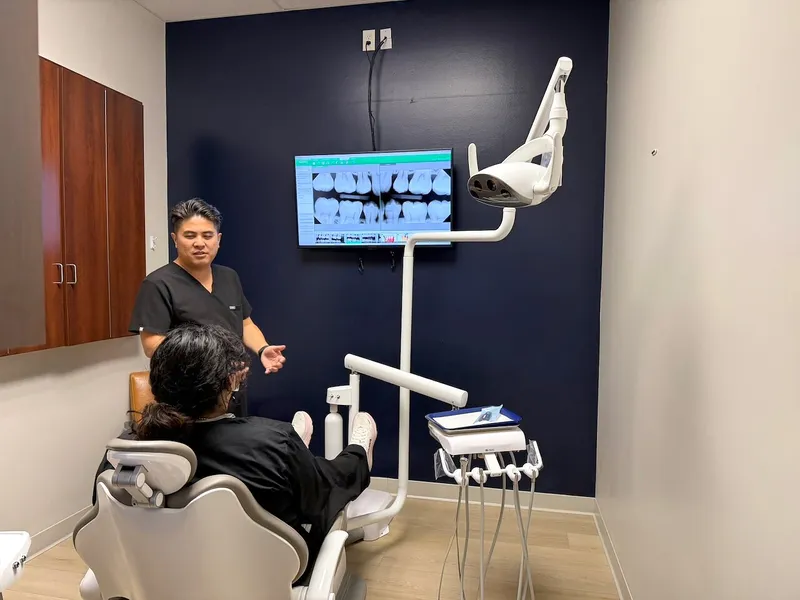
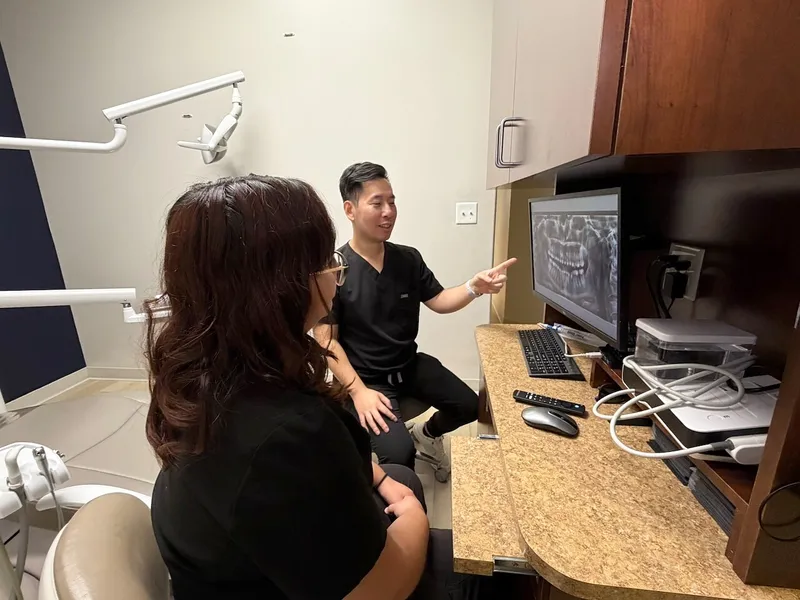
Dr. Tam or Dr. Chiem checks each tooth, reviews your X‑rays with you on the chairside screen and screens for oral cancer. Old fillings and crowns are checked edge by edge.
- 05
Your next visit, and anything worth watching
You leave with your next cleaning booked and a note on anything to watch. If treatment is recommended, it comes with a written, itemized quote you can take home.
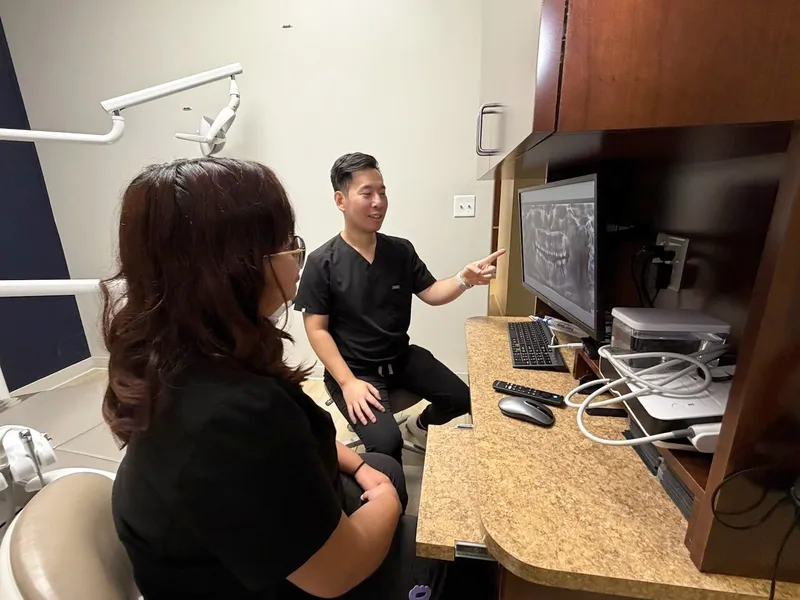
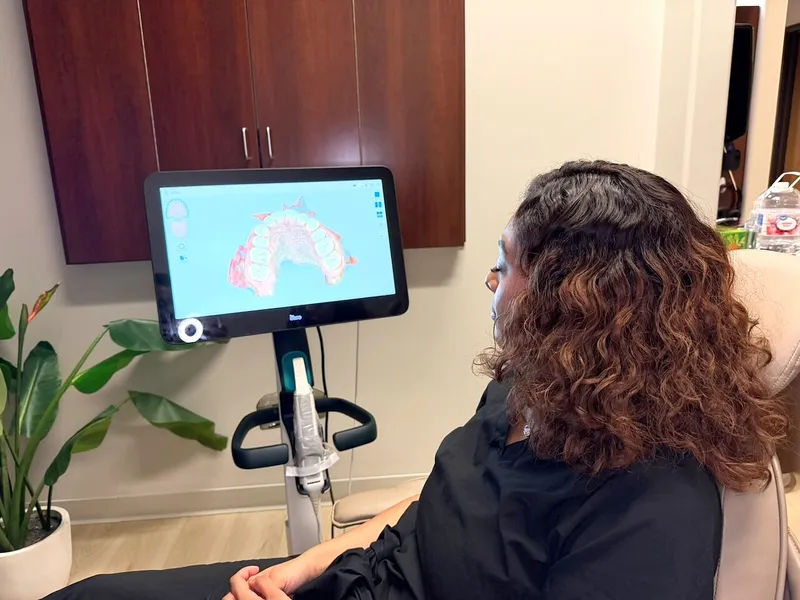
No surprisesNothing beyond the routine visit is booked until you have a written quote and you feel ready.
Is a teeth cleaning covered by insurance?
For most people with a PPO plan, yes. Many plans cover two preventive visits a year, often in full, and routine X‑rays on a set schedule. Every plan writes its own rules on frequency, so we check yours before you come in.
What moves the number
- Routine cleaning or deep cleaning, which your gum measurements decide
- Which X‑rays you are due for at this visit
- How many preventive visits your plan covers each year, and how many you have used
- Whether you add a custom night guard
Good to knowAny treatment found at the exam is always quoted separately, in writing, before it is scheduled.
If anything beyond the routine visit is recommended, you get a written, itemized quote showing what your plan is expected to pay and what is left for you.
Questions about a specific plan? Call 972-265-9033 with your plan name, or see insurance and financing.
Who looks after your cleaning, and what do they use?
Two hygienists, Maria and Azalea, do the cleaning, and Dr. Tam or Dr. Chiem does the exam at the same visit.
 Dr. Larry TamGeneral dentist and ownerA Plano native and Texas A&M Baylor College of Dentistry graduate, caring for Dallas-area patients for more than ten years.
 Dr. Johnny ChiemGeneral dentistYears of clinical experience and a gentle, compassionate approach; he walks you through your X‑rays on the screen before anything is decided.
Most people feel scraping and pressure rather than pain. We go at your pace, explain each step first, and can use a numbing gel or numb a small area if a spot is sensitive. Raise a hand and we stop.
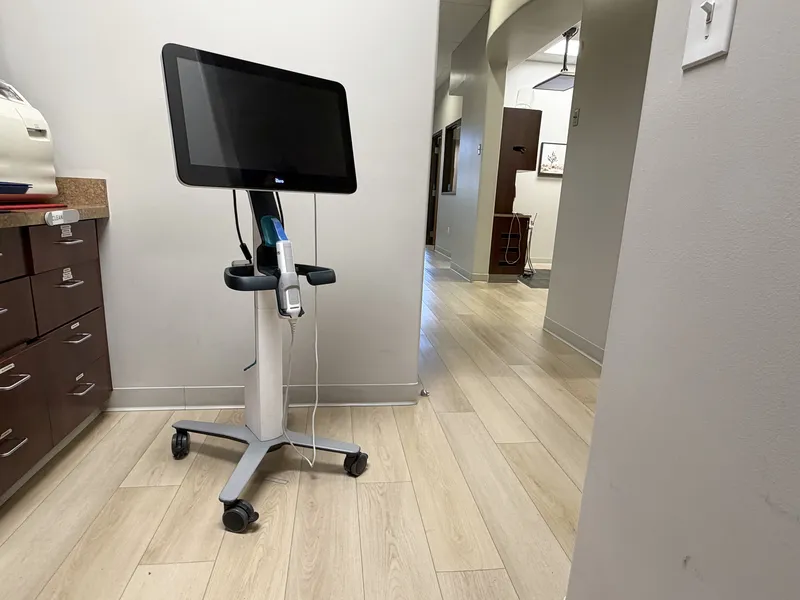
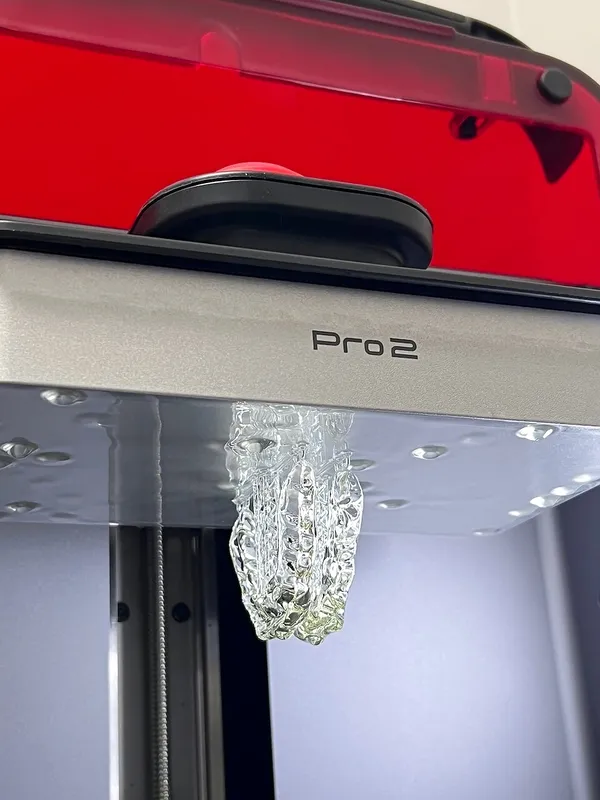
- 01
iTero digital scanner
A 3D scan of your teeth, with no impression putty, can show wear, shifting or gum recession over time earlier than the eye alone.
- 02
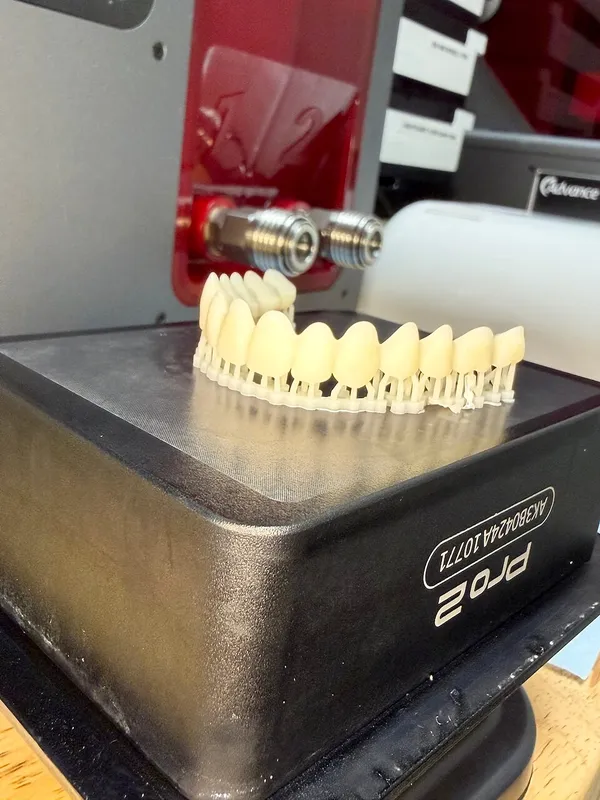
In-office 3D printer
Night guards and other appliances can be printed in our office from your scan, which improves turnaround and lets us be specific about the fit.
- 03
X‑rays on the chairside screen
Your X‑rays go up on the screen beside the chair, so the dentist can show you what a shadow means instead of describing it.
Teeth cleaning questions Plano patients ask us
Have one we have not covered? Call 972-265-9033 during office hours and you will reach the front desk.
 Periodontal CareConsider it when gum pockets are deeper than a routine cleaning can reach.
 Teeth WhiteningConsider it when your teeth are clean and healthy but you want them brighter.
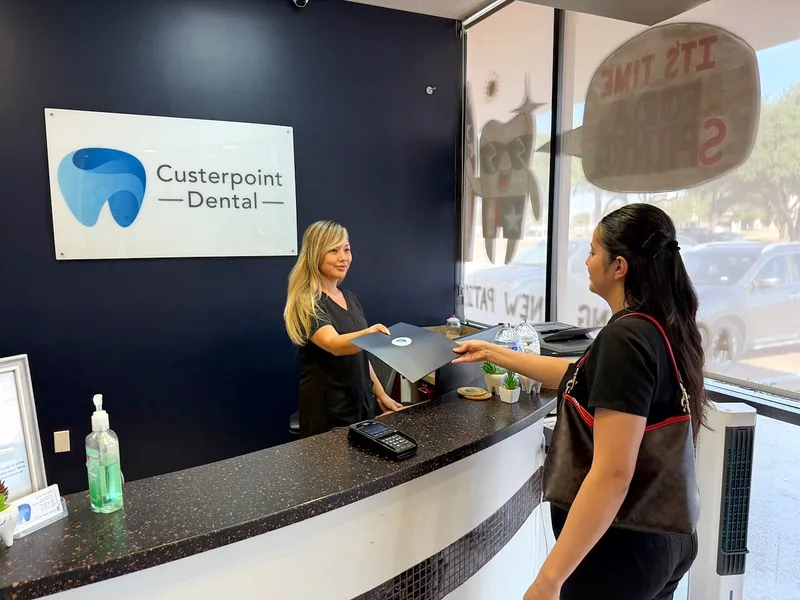 New Patient ExamsAn exam, scans on the screen and a written plan on your first visit.
 Drill Free DentistryTreating small cavities without the drill, when the tooth allows it.