Teeth whitening in Plano: pick the route that suits your teeth
If coffee, tea or the years have dulled your smile, professional whitening can usually lift it several shades. There are two professional routes and a pharmacy shelf, and the right one depends on your enamel, your timeline and how sensitive your teeth are. Your teeth are checked first, and you leave with a written, itemized quote. Nothing starts until you say so.
Do your teeth look more yellow in every photo?
It creeps up. Coffee, tea, red wine, and enamel that darkens a little with age. One day a photo makes you notice.
Yellow stain from food, drink and age responds well. Gray stain from certain medicines responds less. Crowns, veneers and fillings do not change at all.
You are checked first, you choose the route that suits you, and you can go home and think about it.
- “I am not giving up coffee”You do not have to. Go light for two days after whitening; touch-ups handle the rest.
- “Strips made my teeth ache”Strips are one size and unsupervised. With your teeth checked first, sensitivity is planned for, not discovered.
- “I have a date on the calendar”Tell us the date when you call. Two weeks ahead is ideal.
Does professional teeth whitening work?
Yes, for most natural stains. Professional whitening uses a peroxide gel stronger than store products to break down stain inside the enamel, and many people see a change of several shades. In-office whitening is usually one visit of about 60 to 90 minutes. Custom take-home trays take one to two weeks of daily wear. Results vary: yellow tones respond well, gray or medication-related stains less, and crowns, veneers and fillings do not whiten.
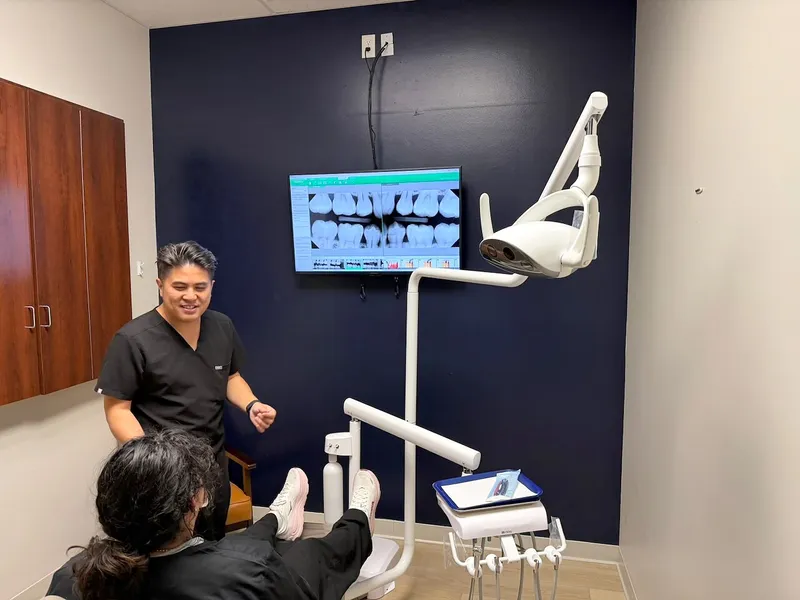
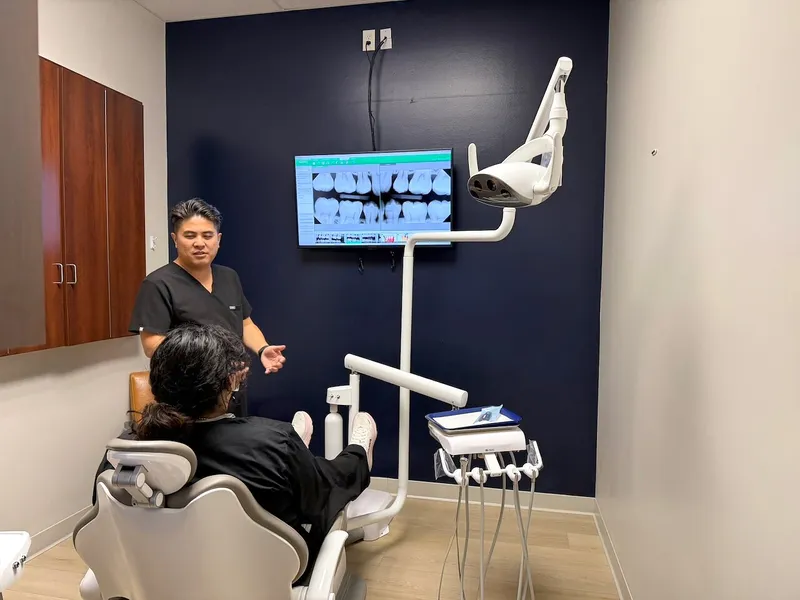
Your first visitYour teeth are checked and your starting shade is recorded before any gel goes near them.
Is whitening right for you?
Whitening works well for most adults with healthy teeth.
You may be a good fit if
- Your teeth have yellowed from coffee, tea, red wine, tobacco or age.
- Your enamel and gums are healthy, with no untreated cavities or exposed roots.
- You have few or no crowns, veneers or fillings in your front teeth, or plan to replace them after whitening.
What happens at your first visit
- A check for cavities, leaky fillings and exposed roots
- Your starting shade recorded with photos
- Both professional routes explained
- A written, itemized quote, including any gel refills
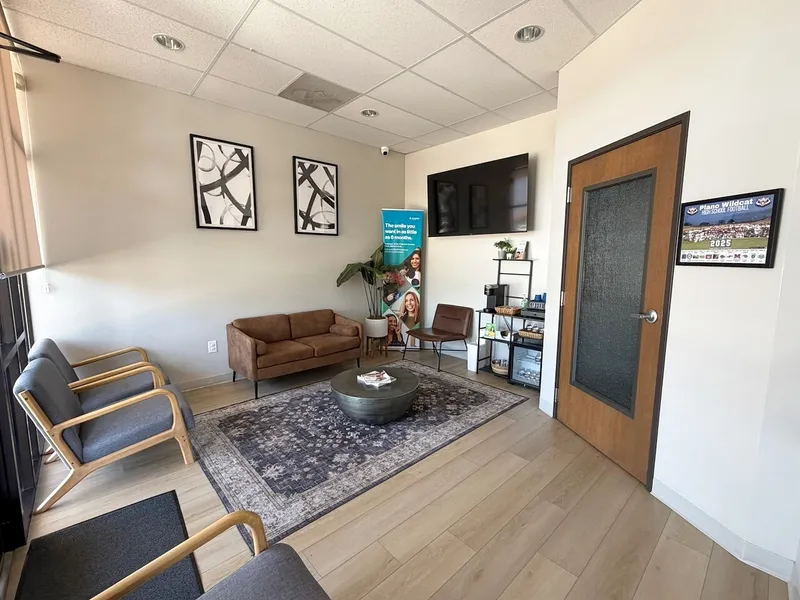
What is different about whitening with your dentist?
Someone looks at your teeth first and matches the plan to them. Results vary.
-
01
Several shades brighter
Professional-strength gel reaches stain inside the enamel that store products often cannot.
-
02
Even, edge to edge
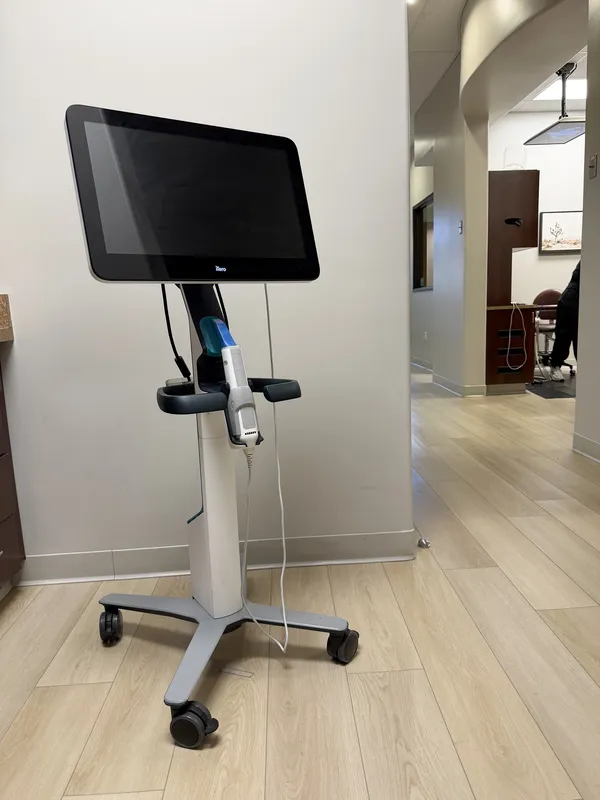
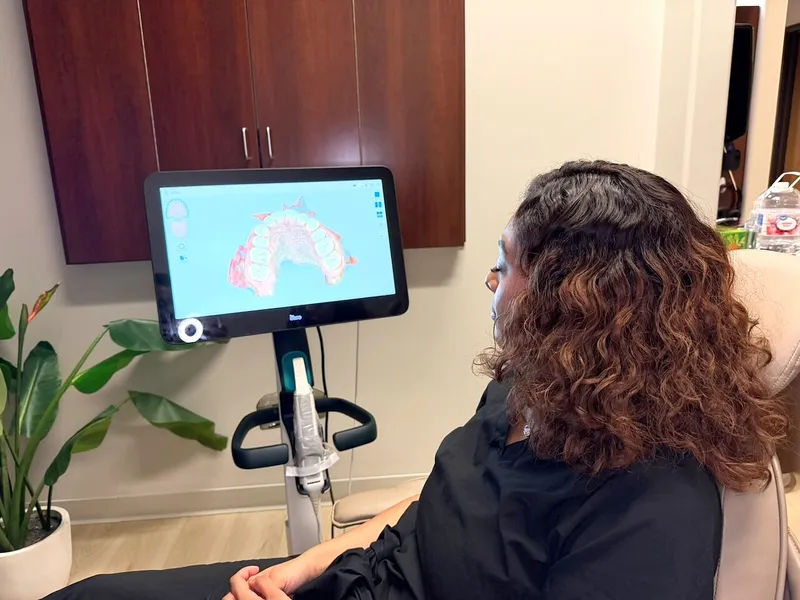
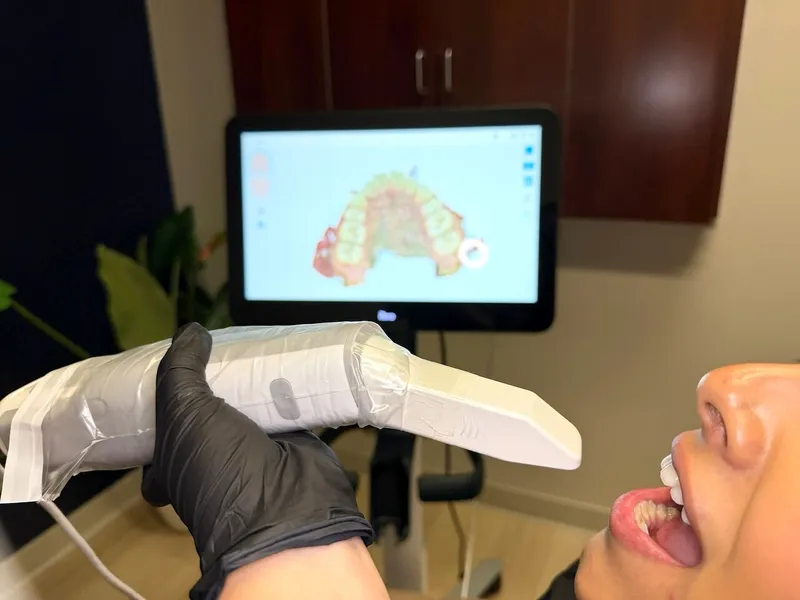
Custom trays from your iTero scan hold the gel against every curve and gap.
-
03
Your teeth are checked first
A cavity, a leaking filling or an exposed root is found before the gel is.
-
04
A plan for sensitivity
The strength can be lowered, the wear time shortened and the sessions spaced out.
-
05
A measured before and after
Your starting shade and photos go on the screen, so the change is judged honestly.
-
06
Touch-ups in your own trays
A night or two in your trays every few months usually holds the shade.
In-office, take-home or store-bought: which whitening is right for you?
All three use a peroxide gel to lift stain from inside the enamel.
| At a glance | Option 1In-office whitening | Most asked aboutCustom take-home trays | Option 3Store-bought strips |
|---|---|---|---|
| Strength | Highest concentration, applied by the dental team | Moderate, prescribed for home use | Lowest, sold over the counter |
| Time to result | Usually one visit of about 60 to 90 minutes | Usually one to two weeks of daily wear | Often several weeks, and not always even |
| Fit | Gums covered by a protective barrier | Trays made from your iTero scan | One-size strips that can miss curves and gaps |
| Sensitivity control | Managed in the chair | You control the wear time | Up to you |
| Supervision | Teeth checked first, watched throughout | Teeth checked first, with a follow-up visit | None |
| Touch-ups | Take-home trays often added | Reuse your trays with fresh gel | Buy another box |
Results vary with the type of stain, and many people combine both professional routes. Porcelain veneers cover stains that gel cannot shift. | |||
Reviewed by our own patients
Custerpoint Family Dental averages 4.8 stars across 234 public Google reviews, as of September 8, 2026, so you can read them yourself before you call. Results vary from person to person, so your exam covers what is realistic for your teeth.
Read the reviews on GoogleWhat happens when you whiten your teeth here?
Whitening runs in four steps, and the check at the start matters as much as the gel.
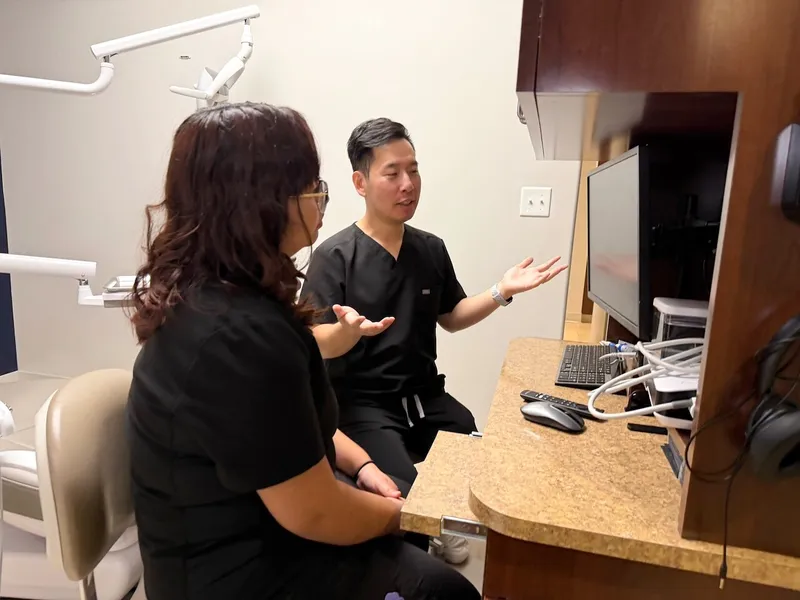
- 01
Check and record your shade
Dr. Tam or Dr. Chiem looks for cavities, leaky fillings and exposed roots, and records your starting shade with photos. If your teeth are already sensitive, say so now.
- 02
Clean first
Whitening works best on clean enamel. If you are due for a cleaning, it usually comes first, since plaque and tartar block the gel and can leave the result patchy.
- 03
Whiten
For in-office whitening, your gums are covered with a protective barrier and the gel is applied in timed rounds. You can ask to stop at any point. For take-home whitening, custom trays made from an iTero scan are worn with the prescribed gel each day.
- 04
Keep it
Results fade gradually, often over months to a few years, depending mostly on coffee, tea, wine and tobacco. A night or two in your trays every few months usually holds the shade.
No surprisesNothing is booked until you have a written quote and you feel ready.
How much does teeth whitening cost in Plano?
It depends on the route you choose and what your teeth need first, so nobody can give you a firm number before a short exam. In-office whitening costs more per session than take-home trays, though custom trays can be reused for years of touch-ups. A low advertised price may not include the exam, the trays or any refills.
What moves the number
- In-office whitening, take-home trays, or both
- Whether a cleaning or a small filling is needed first
- How much sensitivity management your teeth need
- How many touch-up gel refills you want
Good to knowInsurance almost always treats whitening as cosmetic. A cleaning or filling that comes first is often covered.
After your exam you get a written, itemized quote that lists the route, the trays and any gel refills.
Want the detail first? Our guide compares the whitening options, route by route.
Who checks your teeth, and what makes whitening precise?
Dr. Tam and Dr. Chiem check your teeth before any whitening starts.
 Dr. Larry TamGeneral dentist and ownerA Plano native and Texas A&M Baylor College of Dentistry graduate, caring for Dallas-area patients for more than ten years.
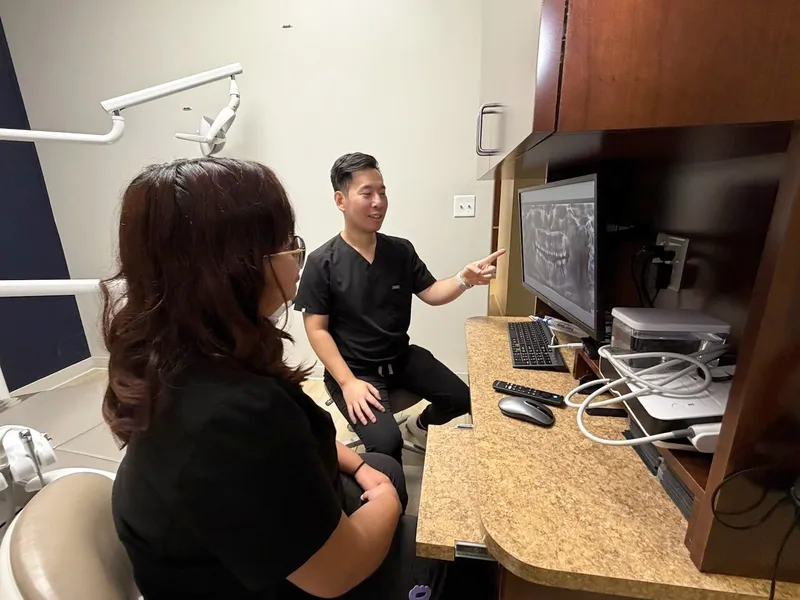
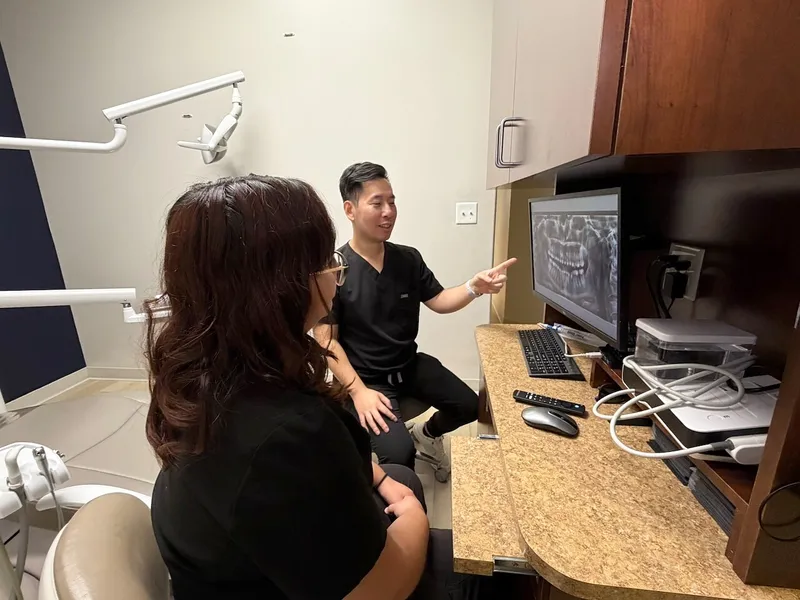
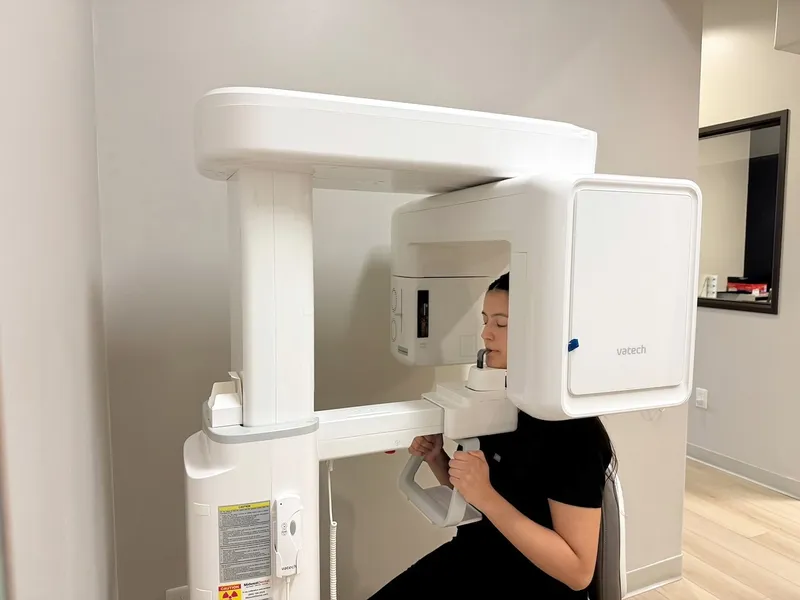
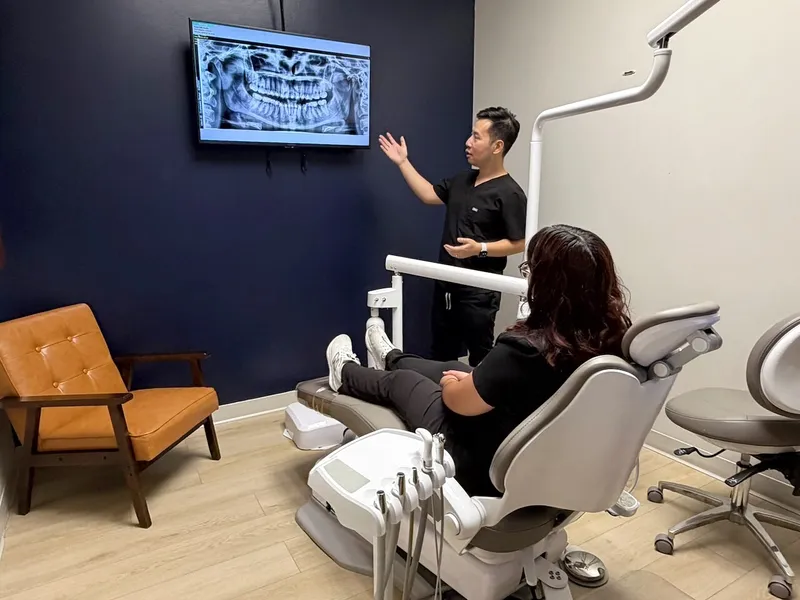
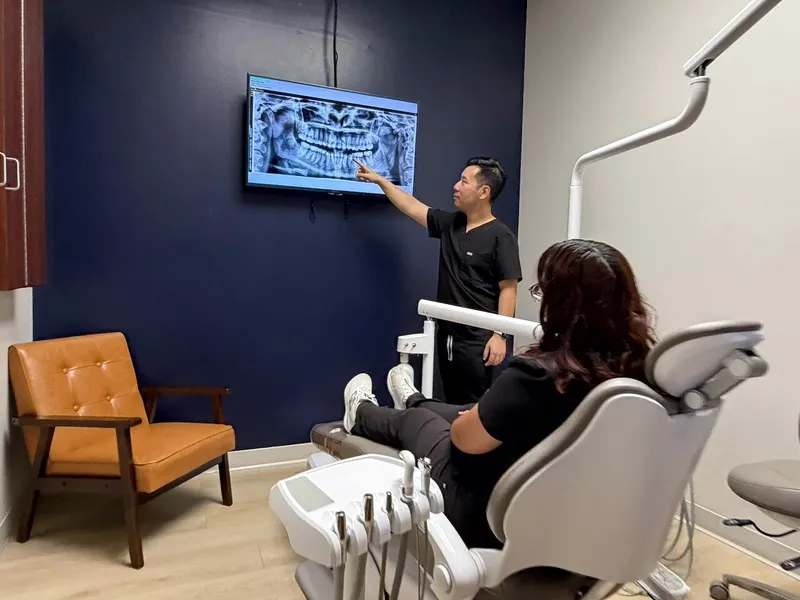
 Dr. Johnny ChiemGeneral dentistYears of clinical experience and a gentle, compassionate approach; he walks you through your X‑rays on the screen before anything is decided.
Whitening involves no needles and no drilling. Your gums are covered before the gel goes on, and you can ask to pause at any point. If your teeth are sensitive, tell us at the check.
- 01
iTero digital scanner
Scans your teeth in minutes with no impression putty, so your trays fit closely and hold the gel against enamel, not gums.
- 02
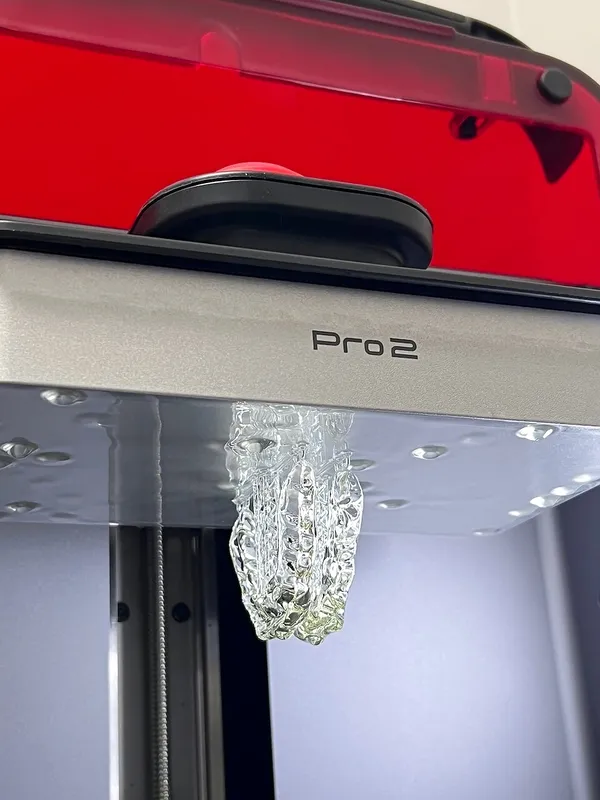
In-office 3D printing
Prints the models your trays are formed on here in the office.
- 03
Chairside screens
Your starting shade and photos go on the screen beside you, so the before and after are measured, not guessed.
Teeth whitening questions Plano patients ask us
Have one we have not covered? Call 972-265-9033 during office hours and you will reach the front desk.