Professional teeth whitening in Plano comes in two main forms: in-office whitening, which lightens natural enamel in a single visit, and custom take-home trays, which work gradually over one to two weeks. Store-bought strips help with mild surface stains. Whitening does not change crowns, veneers or fillings, and results vary from person to person.
What are your teeth whitening options in Plano?
You have three realistic routes: whitening in the dental chair, custom trays you wear at home, and over-the-counter products from the pharmacy.
All three use the same basic chemistry, a peroxide gel that breaks apart the stain molecules inside the enamel. What changes between them is the strength of the gel, how well it stays on your teeth, and whether a dentist has checked your mouth first.
- In-office whitening: a stronger gel applied by the dental team while your gums are protected, usually finished in one appointment.
- Custom take-home trays: thin trays made to fit your teeth, filled with a milder gel you wear for a set time each day.
- Store-bought strips and kits: low-strength gel on a one-size strip, best for light surface stains on straight teeth.
If you are in Plano and trying to decide, the right answer depends less on the product and more on what kind of stain you have and how quickly you want the change.
Why do teeth stain in the first place?
Most discoloration falls into two groups: stains on the surface of the tooth and stains inside it.
Surface stains come from coffee, tea, red wine, dark sodas and tobacco. They build up in the outer layer of enamel over years, and they usually respond well to any form of peroxide whitening.
Deeper stains are different. Teeth also darken naturally with age as enamel thins and the yellower dentin underneath shows through, and some discoloration comes from certain medications taken in childhood, excess fluoride, or a tooth that has been injured. These stains often respond slowly or unevenly to whitening, which is why an exam comes before any recommendation.
How do the three whitening options compare?
The same peroxide chemistry, delivered three different ways. Here is how they stack up for most adults.
| In-office whitening | Custom take-home trays | Store-bought strips | |
|---|---|---|---|
| How long it takes | One visit, typically one to two hours | Usually one to two weeks of daily wear | Often two to four weeks of daily use |
| Gel strength | Highest, applied by the dental team | Moderate, dentist prescribed | Lowest, sold over the counter |
| Fit on your teeth | Applied tooth by tooth | Made from a scan of your teeth | One size, may miss crowded teeth |
| Gum protection | Barrier placed before the gel | Trays trimmed to limit gum contact | Up to you |
| Checked by a dentist first | Yes | Yes | No |
| Best for | A fast change before an event | Gradual change and easy touch-ups | Mild surface stains |
Not sure which fits your teeth? A short exam settles it, and many people combine an in-office visit with trays for later touch-ups. | |||
How does in-office whitening work?
In-office whitening lightens your teeth in a single appointment using a concentrated gel that only a dental team can apply.
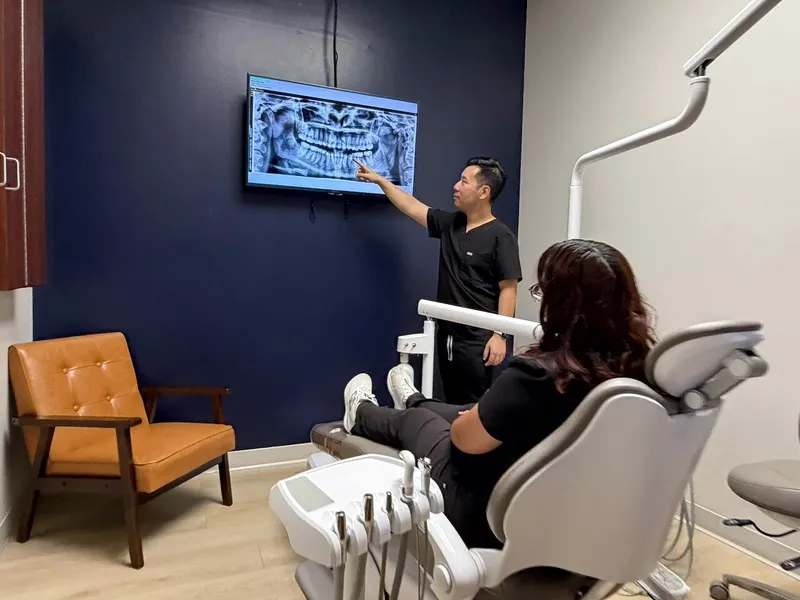
First we check for cavities, worn fillings or gum recession, because whitening gel on an open cavity or exposed root can be uncomfortable. Then a protective barrier goes over your gums, the gel is painted on in timed rounds, and your shade is compared against where you started.
It suits Plano professionals with a wedding, a work event or photos coming up, because the change is visible the same day. The tradeoff is that a stronger gel is more likely to cause short-term sensitivity.
How do custom take-home trays work?
Take-home trays whiten gradually, using a milder gel in trays made to fit your teeth exactly.
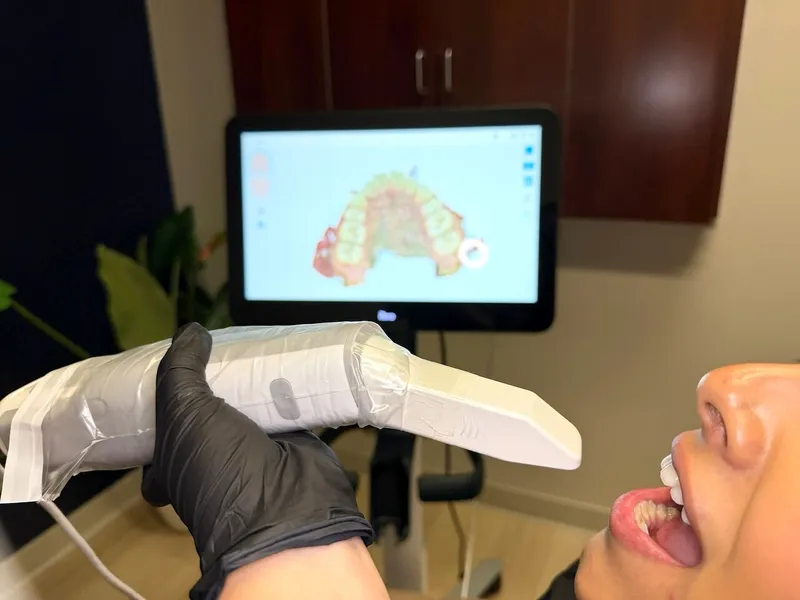
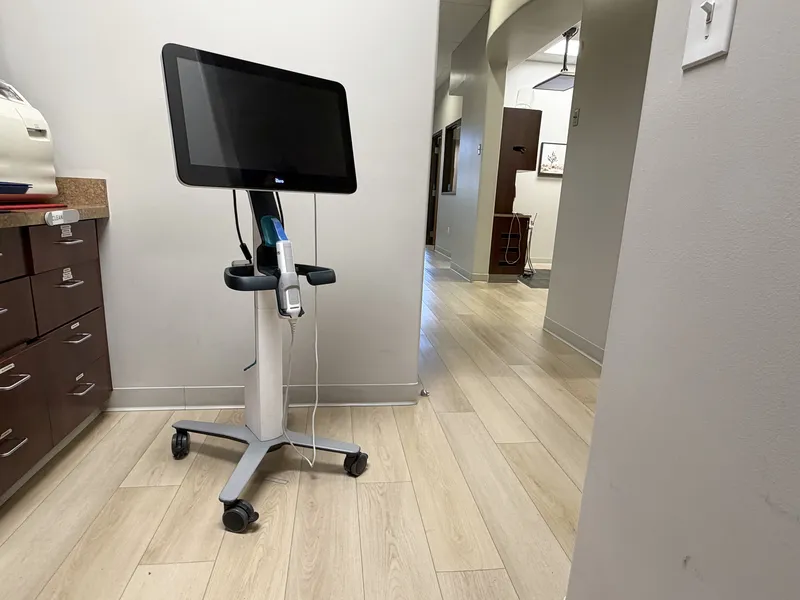
At Custerpoint Family Dental on Custer Road, we start with an iTero digital scan rather than a putty impression, so there is no goopy tray in your mouth. The custom trays hold the gel against every tooth and keep most of it off your gums, which is the main thing a one-size strip cannot do.
You wear the trays for a set time each day, usually for one to two weeks, and you can pause if your teeth feel sensitive. The trays keep working for you afterward: a few days of touch-up once or twice a year is often enough to hold your shade.
Do whitening strips and whitening toothpaste work?
Yes, for mild surface stains, though the change is usually smaller and slower than professional whitening.
Strips carry a low concentration of peroxide, and because they are flat, they tend to miss the edges of crowded or overlapping teeth. Whitening toothpaste works differently: most rely on mild abrasives that polish off surface stain rather than changing the color inside the tooth.
If you go the pharmacy route, look for products that carry the American Dental Association Seal of Acceptance, which means the maker submitted evidence of safety and effectiveness. And if strips cause sharp sensitivity or white patches on your gums, stop and let a dentist take a look.
Is teeth whitening safe, and will it make my teeth sensitive?
Peroxide whitening is generally considered safe for healthy adult teeth when it is used as directed, and it does not weaken enamel.
Sensitivity is the most common side effect. It usually feels like a brief zing to cold air or drinks, and it typically fades within a day or two after you stop. Using a toothpaste for sensitive teeth for a couple of weeks beforehand, or spacing out tray sessions, often helps.
Whitening is not a good idea over untreated cavities, cracked teeth or active gum disease. That is the practical reason a professional option starts with an exam: we fix what needs fixing first, so the whitening itself is comfortable.
What will whitening not change?
Whitening only works on natural tooth enamel, so crowns, veneers, bonding and tooth-colored fillings stay the shade they are today.
That matters if you have a crown on a front tooth. If you whiten the teeth around it, the crown can look darker by comparison, so the usual plan is to whiten first and then match any new restoration to your new shade.
Some deep stains also resist whitening no matter how long you try. When that happens, porcelain veneers or bonding can cover the front surface instead of trying to bleach through it. We will tell you honestly which situation you are in before you spend time on trays that cannot get you there.
How long do whitening results last?
Results typically last from several months to a few years, depending mostly on what you eat, drink and smoke.
Teeth slowly pick up new surface stain over time, and coffee and red wine are the usual culprits. That is one reason people who already own custom trays tend to keep their shade longer: a short touch-up is easy when the trays are sitting in a drawer.
How do you keep your teeth white after whitening?
Small daily habits do most of the work once your teeth reach the shade you want.
- Skip dark drinks and foods for the first 48 hours, when teeth pick up stain most easily.
- Rinse with water after coffee, tea or red wine, and use a straw for iced drinks when you can.
- Keep your regular cleanings in Plano, which polish away surface stain before it builds up.
- Use your custom trays for a short touch-up when you notice the shade drifting.
- If you use tobacco, whitening results fade much faster, and quitting helps your gums as well.
Which whitening option is right for you?
If you want the fastest visible change, in-office whitening is usually the answer. If you prefer a gradual change you control, custom trays are the better fit, and they make touch-ups simple.
If you have front crowns, veneers or stains that never budged with strips, the honest first step is an exam, because another box of strips is unlikely to change the result. Results vary with the type of stain and your habits.
Many patients come to us from across Plano, Allen and Richardson for whitening because the exam, the scan and the plan happen in one place. If you are weighing your options, the first step is a short visit so we can see what is causing the color. Call Custerpoint Family Dental at 972-265-9033 or book a visit online.