Tooth extraction in Plano: what to expect, start to finish
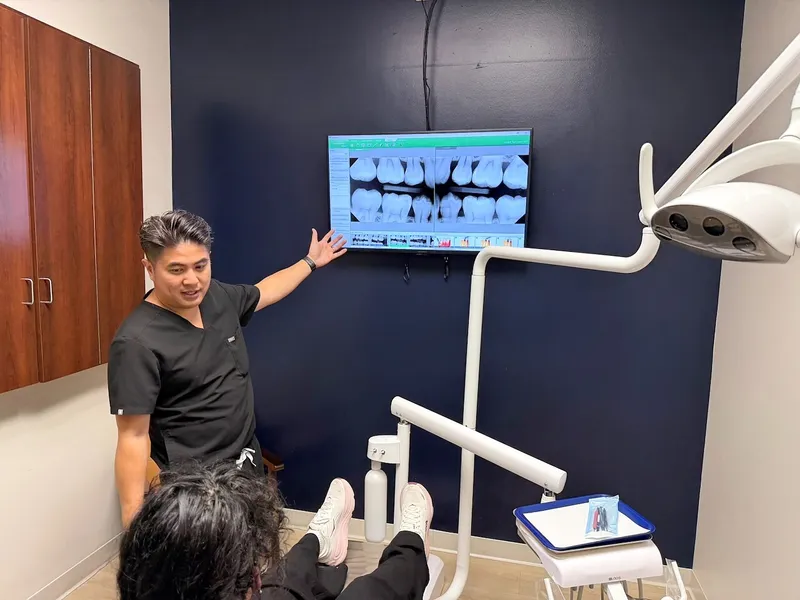
If a tooth is broken, aching or loose and you are worried it has to come out, the first visit is only a look. We take an X‑ray, show you the tooth on the screen and tell you plainly whether it can be saved. If removal is the honest answer, you hear how it would go and what would replace the tooth, in a written, itemized quote you take home. Nothing is booked until you feel ready.
Been told a tooth cannot be saved? Here is what that means
A broken or aching tooth is stressful, and the word extraction can make it worse. The reality is quieter than most people picture: a numbed tooth, steady pressure for a few minutes, gauze and a ride home.
Saving a tooth always comes first. If a root canal or a crown can realistically keep it, we say so and show you why. Removal is only recommended when a tooth is cracked below the gum, infected past repair, or too loose to stabilize.
Before anything is scheduled, you also hear what would replace the tooth. Then you can go home and think about it.
- “It broke while I was eating, and now it aches”A crack that reaches below the gum often cannot be rebuilt. An X‑ray settles it in one visit.
- “There is a swollen bump on the gum near it”That is usually an infection at the root. Some are fixed with a root canal, some are not. We tell you which.
- “I am scared of having a tooth pulled”Tell us when you call. We explain each step, numb the area fully and stop if you raise a hand.
What is a tooth extraction, and what replaces the tooth?
A tooth extraction is the removal of a tooth from its socket in the jawbone, under local anesthetic, when the tooth is too damaged, infected or crowded to keep. Most simple extractions take well under an hour, and the gum usually closes over in one to two weeks. Unless it is a wisdom tooth, the gap is then filled by an implant, a bridge or a partial denture, planned before the tooth comes out.
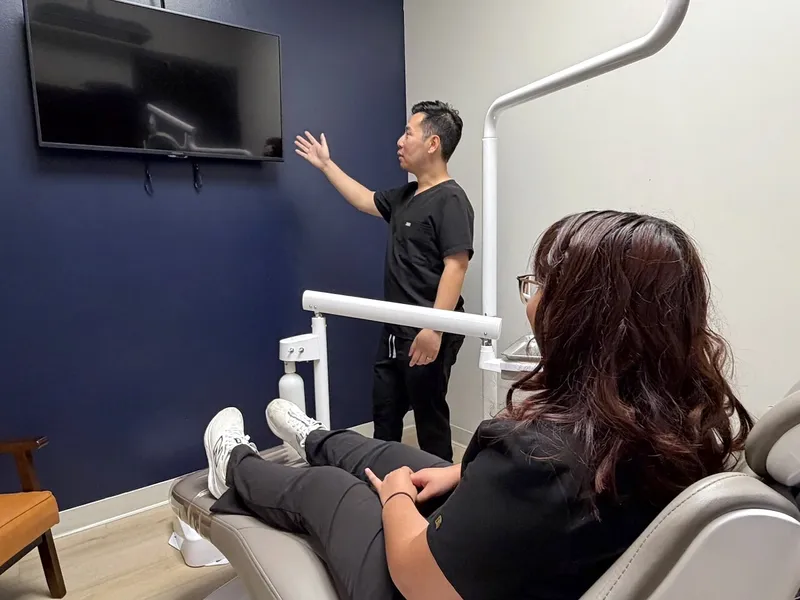
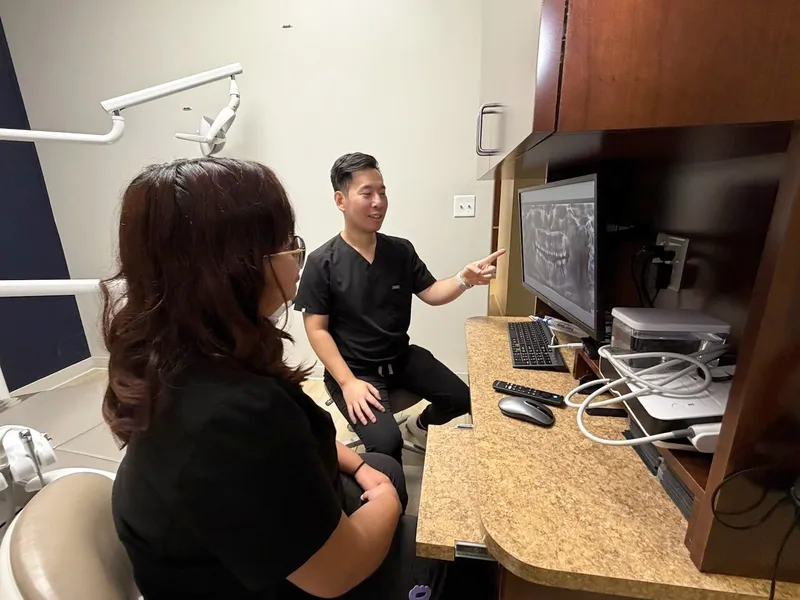
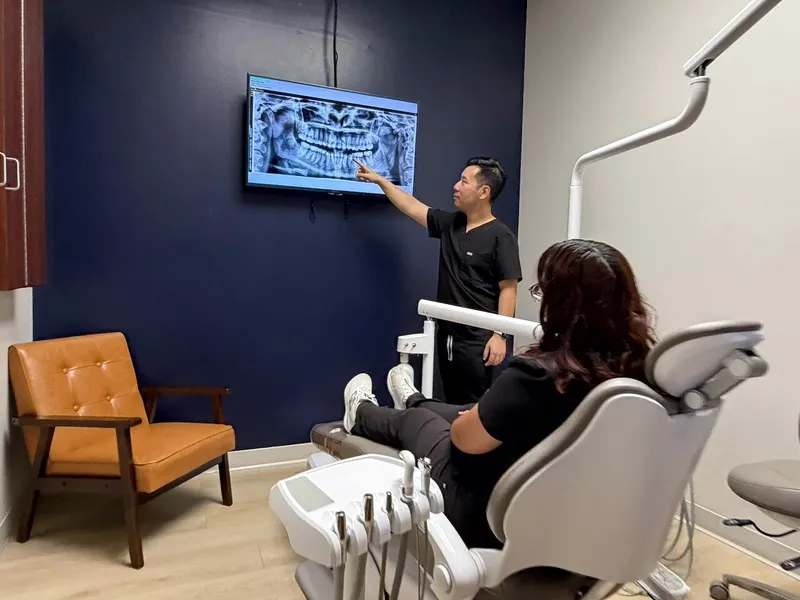
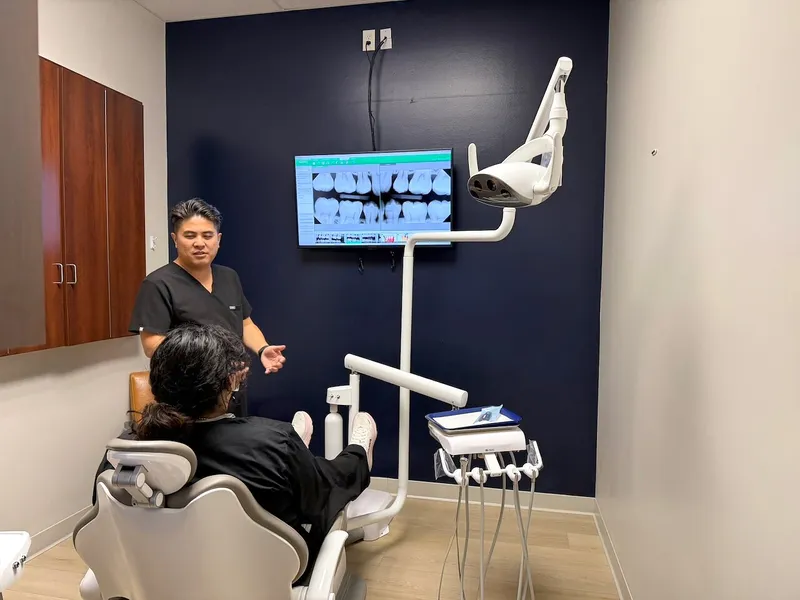
Your first visitWe look before we recommend anything, and you see the same X‑ray we do.
When is removing a tooth the right call?
Saving a tooth comes first whenever it is realistic. Removal tends to be the honest answer in three situations.
An extraction may make sense if
- The tooth is cracked below the gumline or broken beyond what a crown can rebuild.
- Infection has spread past what a root canal can fix, or gum disease has left the tooth too loose to stabilize.
- The tooth is in the way of an orthodontic, denture or implant plan, or it is an impacted wisdom tooth.
What happens at your first visit
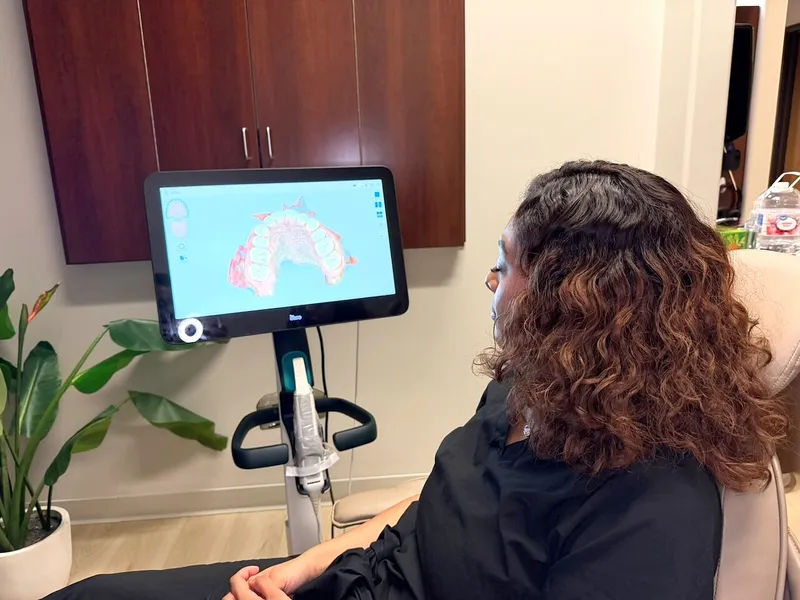
- An exam and X‑rays, with a 3D scan when roots sit near a nerve or the sinus
- A plain answer on whether the tooth can be saved
- The replacement options explained, from implant to partial
- A written, itemized quote to take home
Simple or surgical extraction: which will you need?
The difference is how the tooth is reached, not how serious your situation is. Your X‑ray usually settles it before the day, so there are no surprises in the chair.
| At a glance | Most asked aboutSimple extraction | Option 2Surgical extraction |
|---|---|---|
| Used when | The tooth is fully visible above the gum | The tooth is broken at the gumline, impacted, or has curved roots |
| How it is done | Gently loosened and lifted out | Reached through a small gum opening; the tooth may be divided into sections |
| Numbing | Local anesthetic; pressure, not sharp pain | Local anesthetic; comfort options talked through when you book |
| Stitches | Rarely needed | Often, usually the dissolving kind |
| Chair time | Usually shorter | Usually longer, depending on the tooth |
| Recovery | Most people feel normal within a few days | Often several days to a week of swelling |
| Where | In our office | In our office for most cases |
Not sure which applies to your tooth? An exam and an X‑ray settle it in one short visit. If the tooth can be saved instead, see root canals. | ||
Reviewed by our own patients
Custerpoint Family Dental averages 4.8 stars across 234 public Google reviews, as of September 8, 2026, so you can read them yourself before you call. Results vary from person to person, so your visit covers what is realistic for your tooth.
Read the reviews on GoogleWhat happens at a tooth extraction appointment?
A typical visit has five parts, and a simple extraction is often finished in less than an hour. We tell you what is coming before each part starts.
- 01
Exam and imaging
We examine the tooth and take X‑rays, plus a low-radiation 3D scan when the roots sit close to a nerve or the sinus. You see the images on the screen and hear why removal is recommended.
- 02
Numbing
The tooth and the gum around it are numbed with local anesthetic. You feel pressure, not sharp pain; if you do, raise a hand and we add more.
- 03
Removal
A simple extraction is gently loosened and lifted out, usually in a few minutes. A surgical extraction uses a small gum opening, or divides the tooth into sections, so it comes out with less force.
- 04
Protecting the socket
Gauze goes in to help a blood clot form. Stitches are placed when needed, and some sites get a bone graft to preserve the ridge for a future implant. You would know about a graft before the day.
- 05
Aftercare and follow-up
You go home with written instructions and our number to call. A follow-up is booked if stitches need checking or a replacement tooth needs planning.
How should you care for the site after an extraction?
Healing is mostly about protecting the blood clot for the first few days. We go over all of it before you leave.
- The first 24 hours
Protect the clot
Bite gently on the gauze for the time we give you, usually 30 to 45 minutes. Rest with your head raised and hold a cold pack on your cheek, 15 to 20 minutes on and off. No straws, smoking, vaping or hard rinsing. Soft, cool food only.
- Days two to seven
Let the gum close
Start gentle warm salt-water rinses the day after, unless we tell you otherwise. Take pain relief as directed and keep your tongue and fingers off the site. If pain gets worse after day three instead of better, call us.
- The following weeks
Plan the next step
The gum usually closes over in one to two weeks, while the bone keeps filling in for several months. If a replacement tooth is part of your plan, this is when we scan the site and confirm the timing.
If anything feels wrong at any point, call 972-265-9033. You will reach the front desk during office hours.
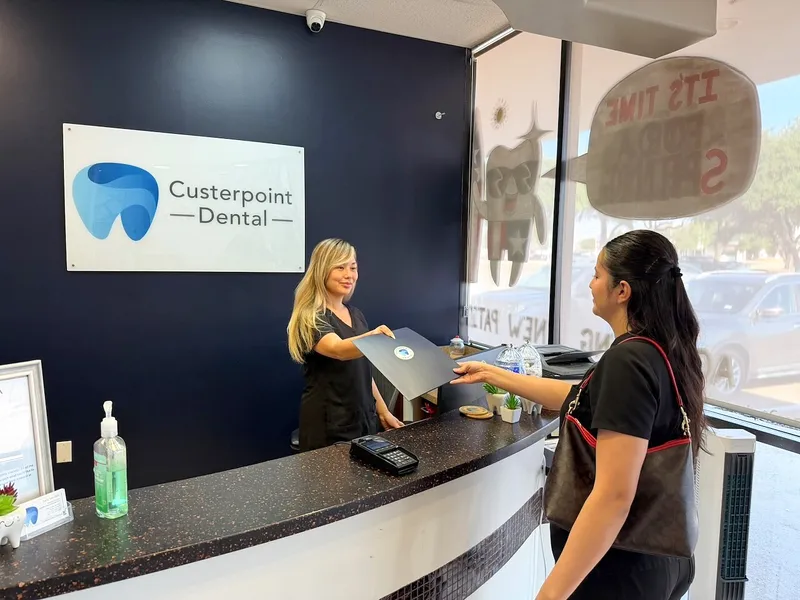
No surprisesNothing is booked until you have a written quote and you feel ready.
How much does a tooth extraction cost in Plano?
It depends mostly on how the tooth has to come out. A simple extraction of a visible tooth generally costs less than a surgical one that needs a gum opening or sectioning, and your X‑ray usually tells us which before you decide anything. The replacement tooth is quoted separately.
What moves the number
- Simple or surgical extraction, which the X‑ray usually settles
- Where the tooth sits and how its roots are shaped
- Whether a bone graft is placed to preserve the site for an implant
- Comfort options, if you ask for them when you book
Good to knowMany PPO plans cover part of an extraction, and the imaging is part of the quote.
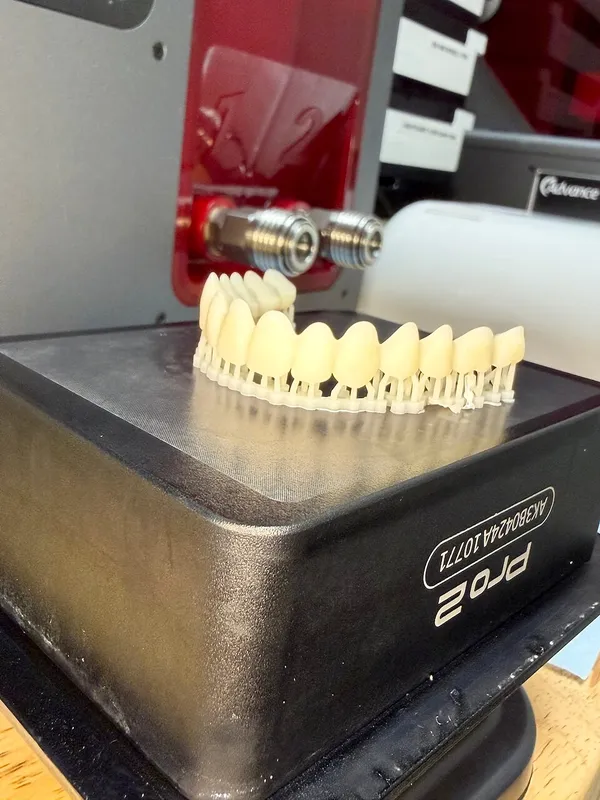
You get a written, itemized quote before treatment, with the extraction, any graft and the replacement listed separately, so you decide one step at a time.
Questions about coverage first? See insurance and financing.
Who removes the tooth, and how do they plan it?
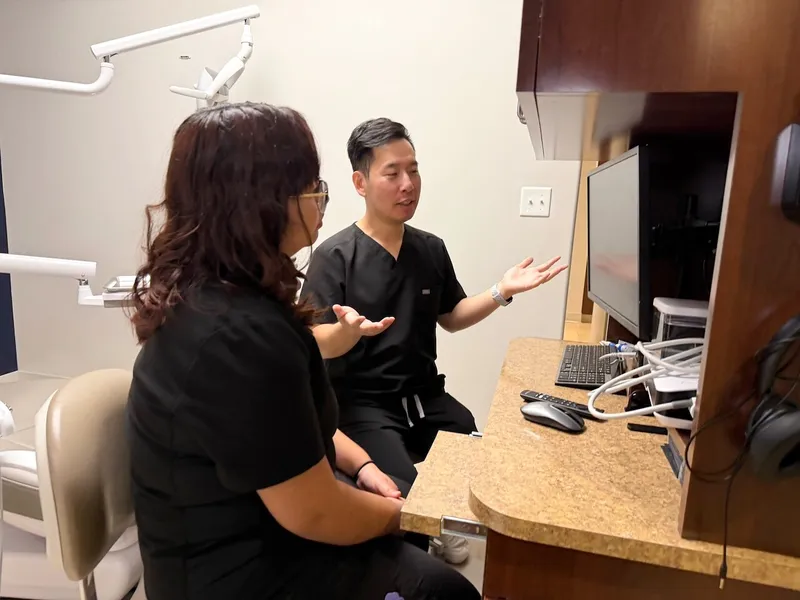
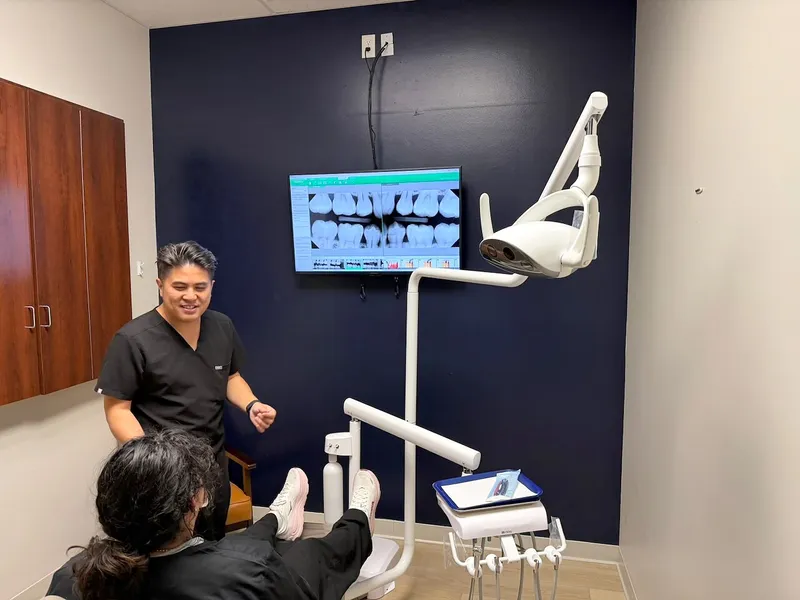
Dr. Tam and Dr. Chiem look at the roots on an X‑ray or a 3D scan before any tooth is removed, and show you what they see.
 Dr. Larry TamGeneral dentist and ownerA Plano native and Texas A&M Baylor College of Dentistry graduate, caring for Dallas-area patients for more than ten years.
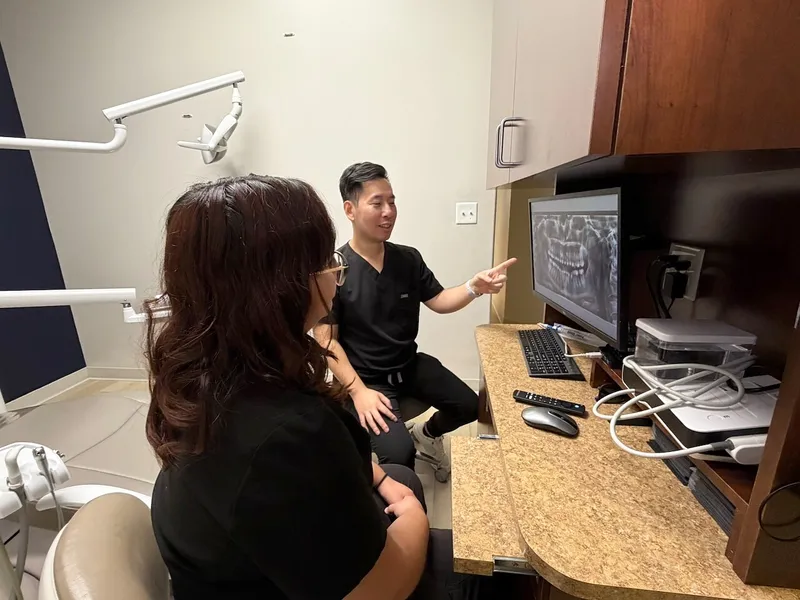
 Dr. Johnny ChiemGeneral dentistYears of clinical experience and a gentle, compassionate approach; he walks you through your X‑rays on the screen before anything is decided.
The area is numbed fully first, so most people feel pressure rather than pain. We explain each step, go at your pace and stop if you raise a hand. Tell us when you book and we will talk through your comfort options.
- 01
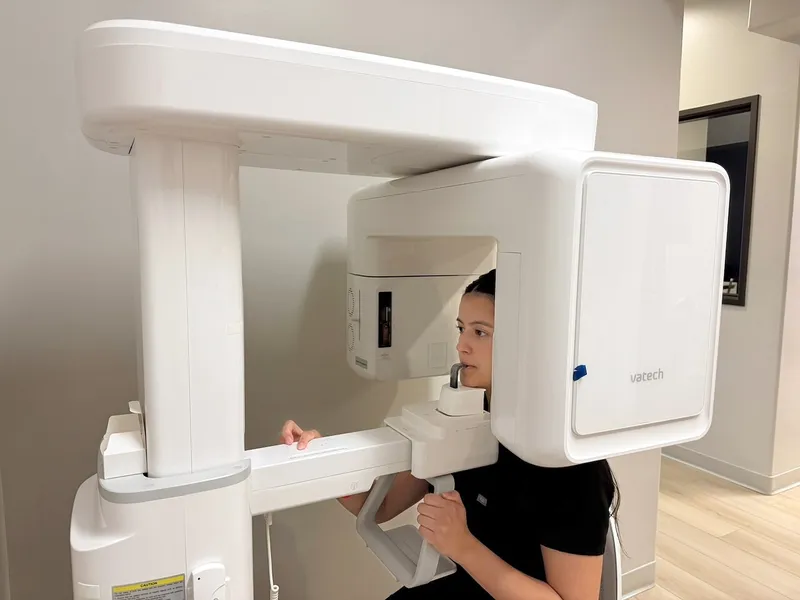
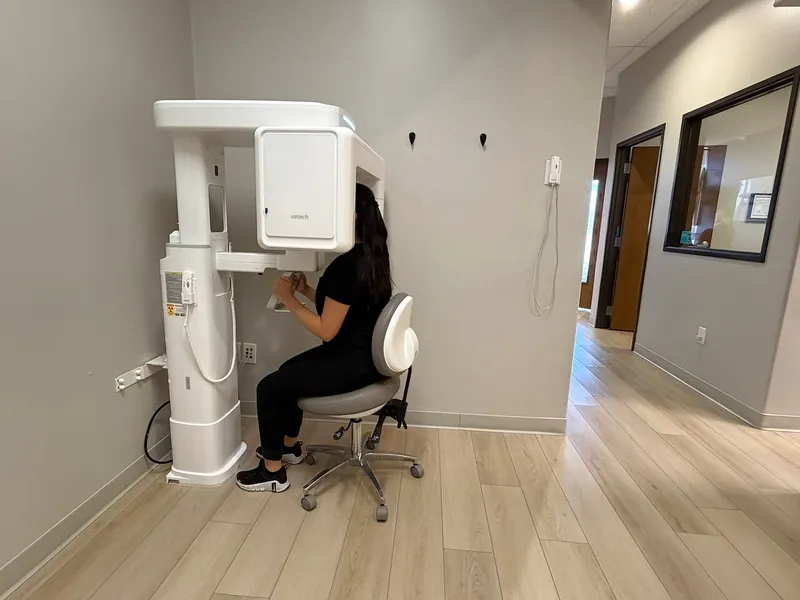
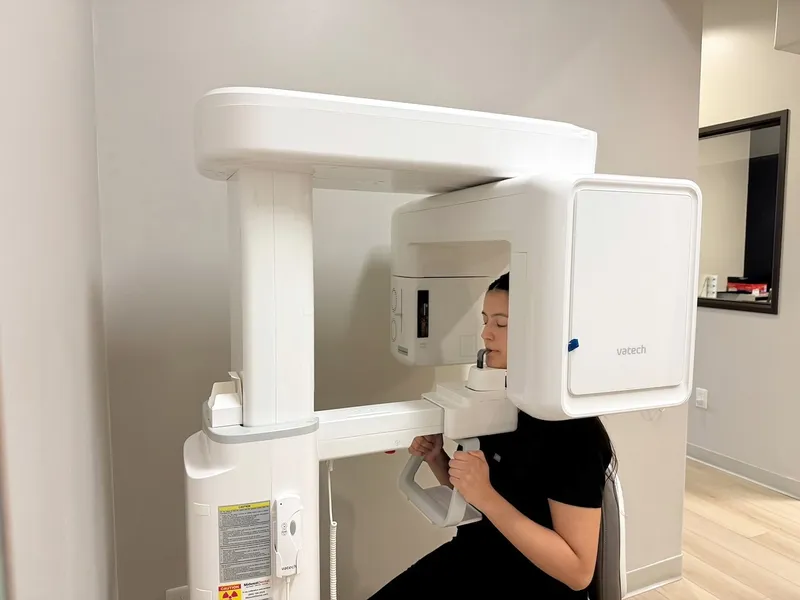
Low-radiation cone-beam CT
When a root sits close to a nerve or the sinus, a 3D scan shows exactly where it is, so the tooth comes out with the least force on the bone. It typically uses a lower dose than a medical CT.
- 02
Chairside screens
Your X‑ray or scan goes up on the screen beside the chair. You see the crack, the infection or the loose root for yourself, and hear why saving the tooth is or is not realistic.
Tooth extraction questions Plano patients ask us
Have one we have not covered? Call 972-265-9033 during office hours and you will reach the front desk.
 Root CanalsConsider it when the tooth still has enough healthy structure to save.
 Crowns & BridgesConsider it to rebuild a broken tooth or bridge a gap after removal.
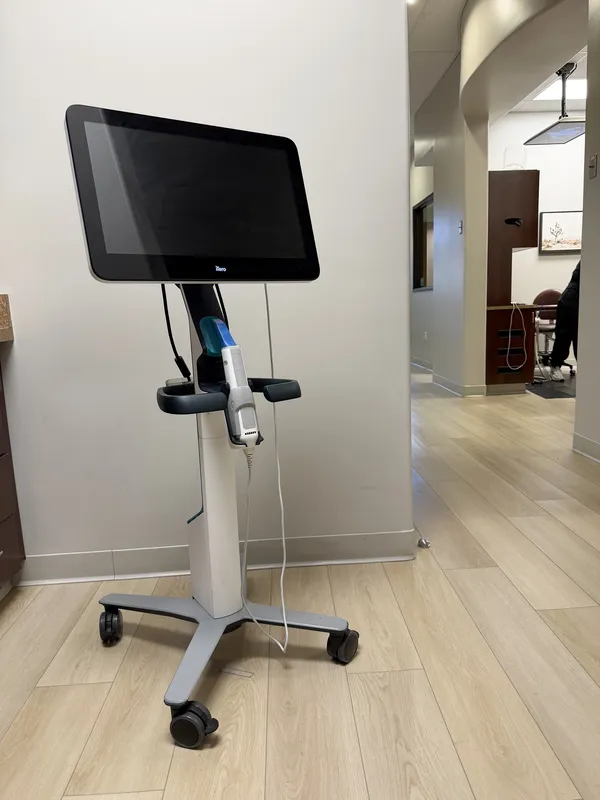
 Dental ImplantsA new root and tooth for a gap, planned on a low-radiation 3D scan.
 Wisdom Teeth Removal3D imaging maps the roots and nerve before removal.