
Deep cleaning and gum disease treatment in Plano
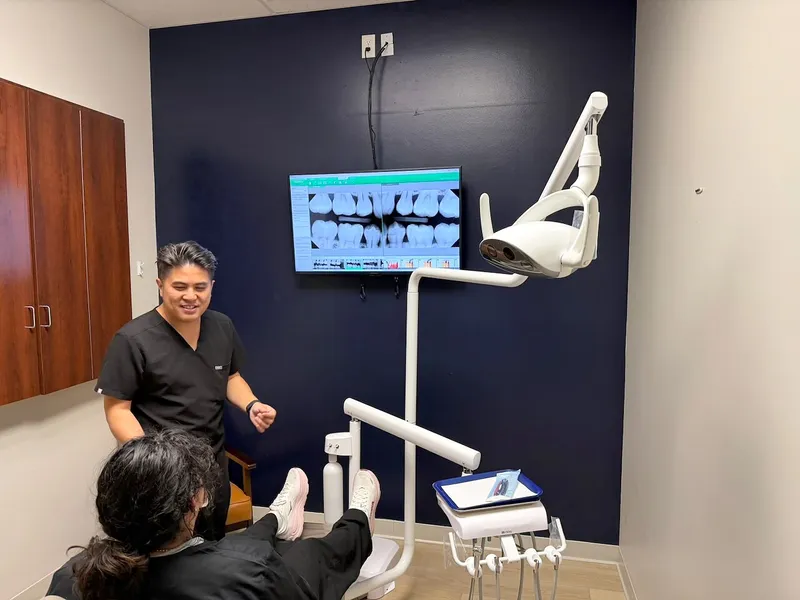
If your gums bleed when you brush, look puffy or have started to pull back from your teeth, you may be seeing early gum disease. It is common, it is usually quiet, and caught early it responds well. Your first visit is a gum exam with measurements you see on the screen, a plain explanation of what the numbers mean, and a written, itemized quote by area to take home. Nothing is booked until you feel ready.
Do your gums bleed when you brush? Here is what that usually means
Most people notice a little pink in the sink and decide it is nothing. Often it is the first sign of gum disease, an infection of the gums and the bone that hold your teeth, and it rarely hurts in the early stages.
You are not alone in it. The CDC estimates that nearly half of adults aged 30 and older have some form of gum disease, and lists it as a major cause of tooth loss in adults.
Caught early, gum disease usually responds well to a deep cleaning and steadier home care. A first visit simply measures where you stand, and then you can go home and think about it.
- “My gums bleed a little every time I floss”Bleeding is inflammation, not a sign you are flossing too hard.
- “My breath is bad no matter what I do”Bacteria settled below the gumline cannot be brushed away, and clearing the pockets usually ends it.
- “A tooth feels loose and I am scared of losing it”Tell us when you call; controlling the infection early often lets the gum firm up around the tooth again.
What is a deep cleaning (scaling and root planing)?
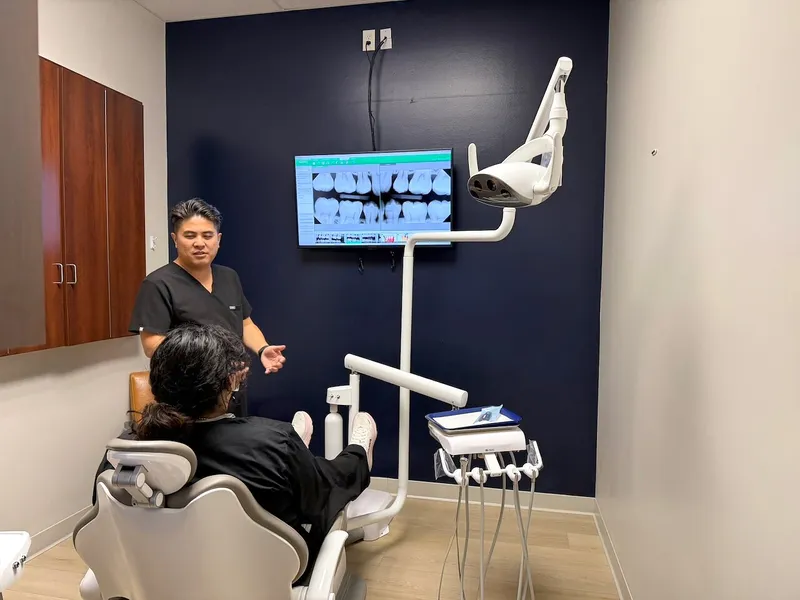
A deep cleaning, or scaling and root planing, removes hardened plaque and bacteria from below the gumline and smooths the tooth roots so the gums can tighten back around them. It is the standard first treatment for gum disease. The area being treated is numbed, and most people have it done over one or two visits, one side of the mouth at a time. About four to six weeks later we measure again to see how the gums have healed.
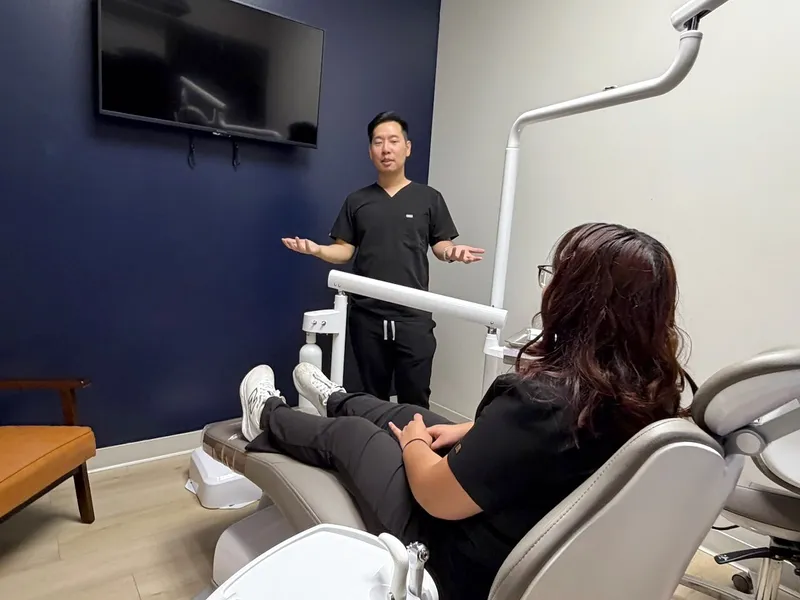
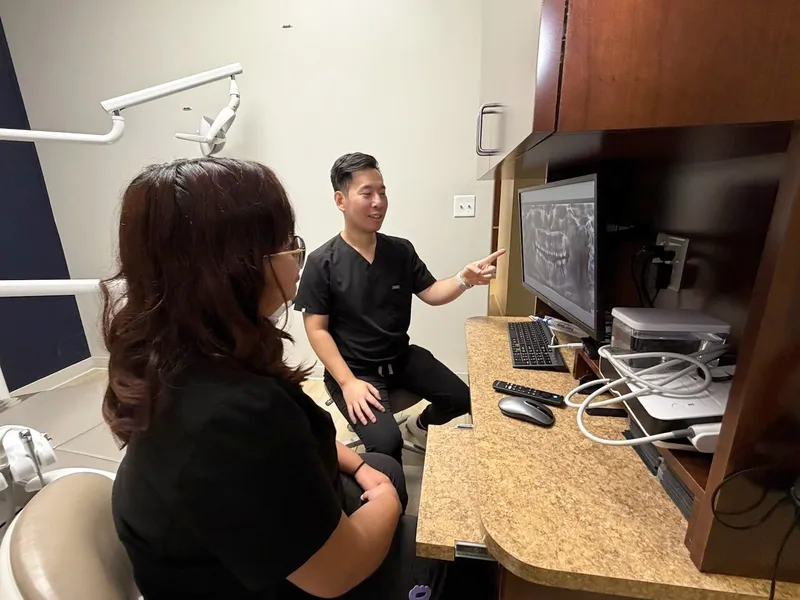
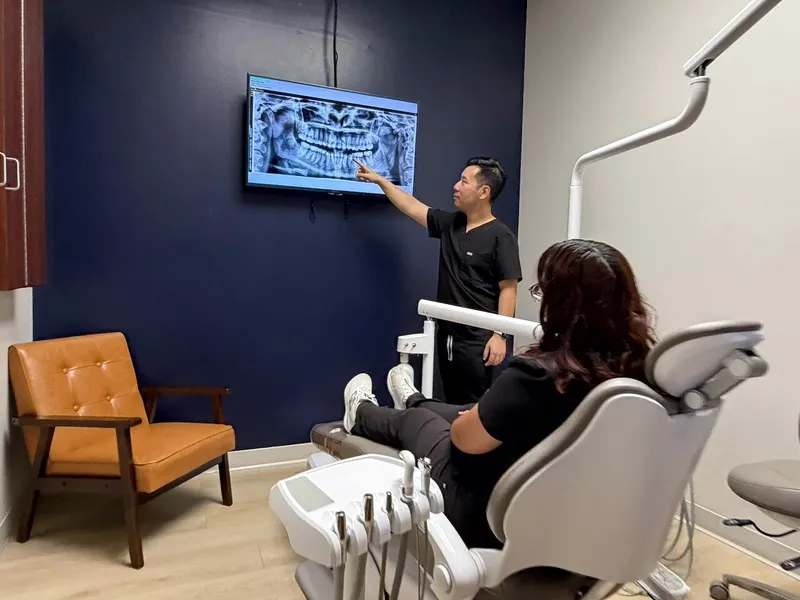
Your first visitYou see your own gum measurements on the screen before anything is recommended.
Are your gums showing any of these signs?
Gum disease is often quiet early on, so small signs are worth taking seriously.
A gum exam may be the right step if
- Your gums bleed when you brush or floss, or look red, swollen or tender.
- You have bad breath that brushing does not fix, or gums pulling back so your teeth look longer than they used to.
- A tooth feels loose, a hygienist has mentioned pockets of 4 millimeters or deeper, or it has been a few years since your last cleaning.
What happens at your first visit
- A small probe measures the pocket around each tooth
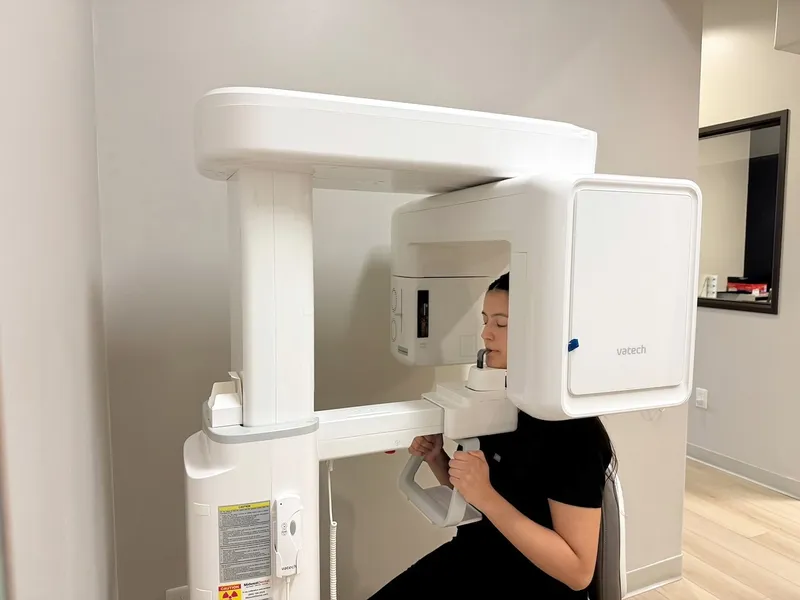
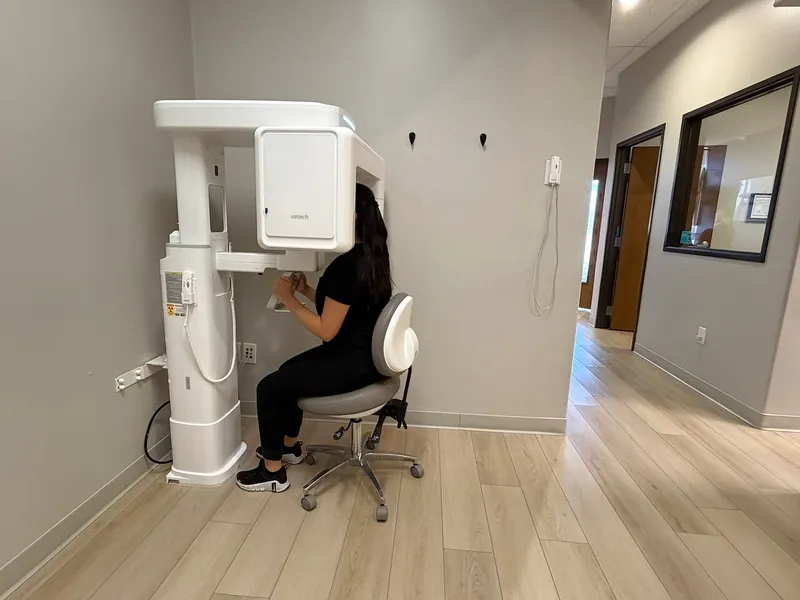
- X‑rays show whether any bone has been affected
- The numbers explained in plain words, on the screen
- A written, itemized quote by area to take home
What changes once your gums have healed?
Most people notice a few quiet, practical differences within a few weeks. Results vary with how advanced the disease was.
-
01
Less bleeding
As the inflammation settles and the tissue firms up, most people see the pink in the sink fade within a few weeks.
-
02
Fresher breath
Clearing bacteria out of the pockets often ends the bad taste or breath that brushing alone could not reach.
-
03
Tighter gums
Pockets frequently shrink as the gums heal, which makes your own brushing and flossing work better.
-
04
Teeth that stay put
Controlling gum disease helps protect the bone that anchors your teeth, which is how you keep them for decades.
-
05
Home care that works again
Once the roots are smooth and the pockets are shallower, a toothbrush and floss can reach what they are meant to.
-
06
Less inflammation to carry
The American Academy of Periodontology points to research linking gum disease with diabetes and heart disease, and keeping inflammation down is sensible.
Deep cleaning or regular cleaning: what is the difference?
Both happen in the hygiene chair, but they treat different problems. Your gum measurements, not a sales script, decide which one you need.
| At a glance | Most asked aboutScaling and root planing | Option 2Regular cleaning |
|---|---|---|
| Treats | Active gum disease (periodontitis) | Healthy gums or mild gingivitis |
| Where it cleans | Below the gumline, down the root surfaces | At and just below the gumline |
| Pocket depth | Typically 4 millimeters or deeper | Typically 1 to 3 millimeters |
| Numbing | Usually local anesthetic | Usually none needed |
| Visits | Often one or two, one side of the mouth at a time | One visit |
| Follow-up | A re-check in about 4 to 6 weeks, then maintenance often every 3 to 4 months | Usually every 6 months |
| Insurance | Often covered in part as a basic periodontal service | Often covered as preventive care |
A gum exam with pocket measurements answers it in one visit. If your gums measure healthy, see cleanings and preventive care. | ||
Reviewed by our own patients
Custerpoint Family Dental averages 4.8 stars across 234 public Google reviews, as of September 8, 2026, so you can read them yourself before you call. Results vary from person to person, so your visit covers what is realistic for your gums.
Read the reviews on GoogleHow does a deep cleaning work, and how do your gums heal?
Treatment usually runs in five stages over a few weeks, depending on how many areas need care.
- 01
Gum exam and measurements
A small probe measures the pocket around each tooth, X‑rays show whether bone has been affected, and the numbers go up on the chairside screen.
- 02
Numbing
The area being treated is numbed with local anesthetic so you stay comfortable. Many patients have one side of the mouth done per visit.
- 03
Scaling and root planing
Tartar and bacteria are removed from below the gumline with ultrasonic and hand instruments, then the roots are smoothed so plaque sticks less and the gums tighten back.
- 04
Re-check
About four to six weeks later we measure again, and the new numbers guide what comes next.
- 05
Periodontal maintenance
Ongoing cleanings, often every three to four months, keep bacteria from rebuilding in the pockets. If pockets stay deep, Dr. Tam will talk with you about seeing a periodontist.
What does healing feel like after a deep cleaning?
Most people are surprised by how ordinary it is, and we go over it with you before you leave.
- The first day or two
Tender, then settling
Your gums may feel tender and your teeth sensitive to cold while the tissue calms. Warm salt-water rinses, soft food and over-the-counter pain relief help.
- The first few weeks
Gums tightening
Bleeding usually eases and the gums firm up around the roots. Brush gently twice a day and floss daily, even if the gums feel tender; that steady home care makes the cleaning last.
- Ongoing
Maintenance, not a one-off
Your re-check at four to six weeks sets the rhythm: maintenance cleanings every three to four months at first, and for some a return to six months once the gums are stable.
If anything feels wrong at any point, call 972-265-9033. You will reach the front desk during office hours.
No surprisesNothing is booked until you have a written quote and you feel ready.
How much does a deep cleaning cost in Plano?
A deep cleaning is priced by the area treated, so your number depends on how much of your mouth needs it. Some people need one or two quadrants, others all four, and your measurements decide that before anything starts.
What moves the number
- How many quadrants, or quarters of the mouth, need scaling and root planing
- How deep the pockets are and how much tartar sits below the gumline
- Whether a localized antibiotic is recommended for a stubborn pocket
- How often maintenance visits are needed afterward
Good to knowX‑rays and a full gum exam are part of the quote if you are new here, and many PPO plans cover part of scaling and root planing.
Before treatment, you get a written, itemized quote by quadrant, with the portion your insurance is expected to pay.
Questions about coverage first? See insurance and financing.
Who treats your gums, and how do they measure the change?
Dr. Tam and Dr. Chiem read your measurements and X‑rays with you, and our hygienists, Maria and Azalea, do most of the hands-on work.
 Dr. Larry TamGeneral dentist and ownerA Plano native and Texas A&M Baylor College of Dentistry graduate, caring for Dallas-area patients for more than ten years.
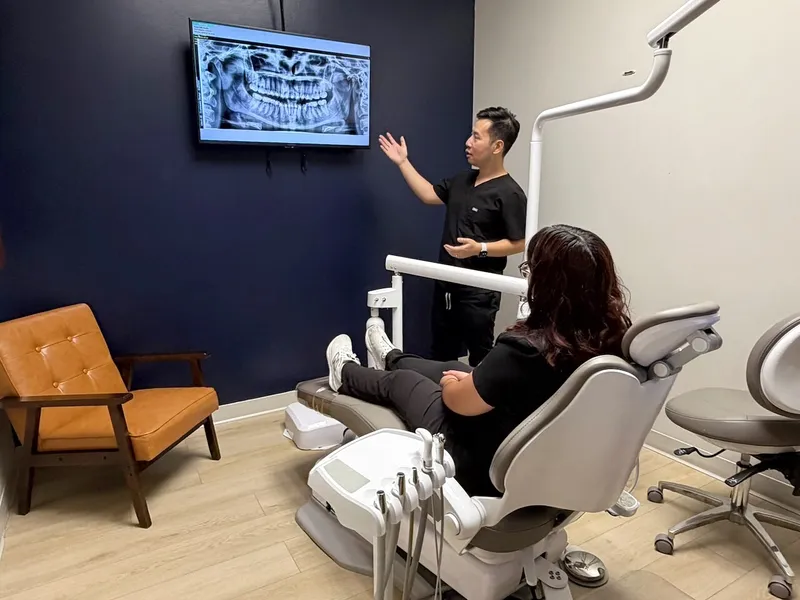
 Dr. Johnny ChiemGeneral dentistYears of clinical experience and a gentle, compassionate approach; he walks you through your X‑rays on the screen before anything is decided.
The area is numbed before scaling begins, so most people feel vibration and pressure rather than pain. We work one side of the mouth at a time, explain each step first and pause whenever you raise a hand.
- 01
Chairside screens
Your pocket measurements and X‑rays go up on the screen beside the chair, so you see which areas measure 4 millimeters or deeper and why a deep cleaning is or is not recommended.
- 02
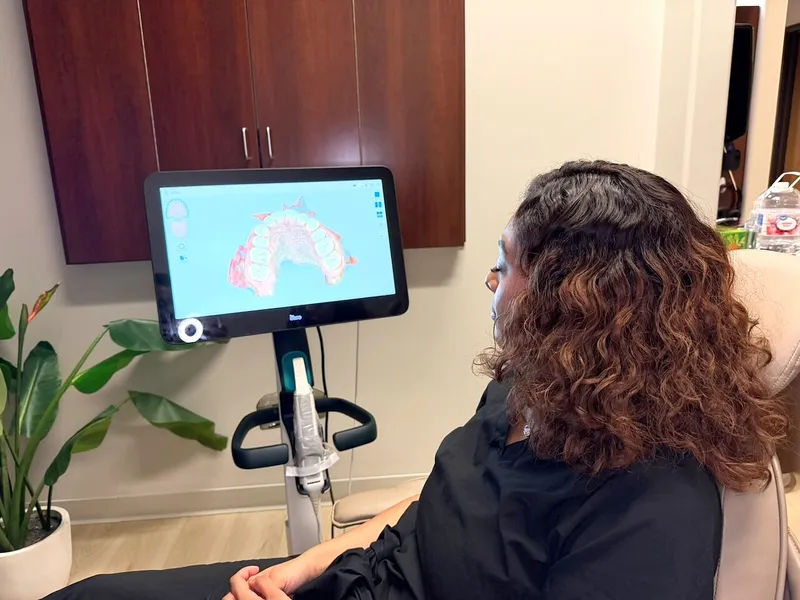
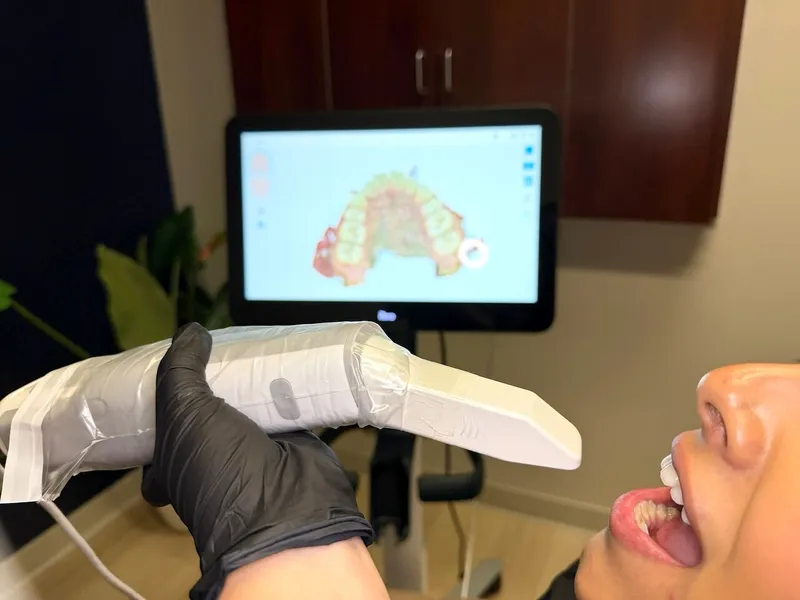
iTero digital scanner
A quick scan of your teeth and gums, with no goopy trays, gives us a record to compare against at your re-check.
Gum disease and deep cleaning questions Plano patients ask us
Have one we have not covered? Call 972-265-9033 during office hours and you will reach the front desk.

 Cleanings & Preventive CareConsider it when your gums measure healthy and a regular cleaning is enough.
 Tooth ExtractionsConsider it when a tooth has become too loose to save.
 New Patient ExamsAn exam, scans on the screen and a written plan on your first visit.
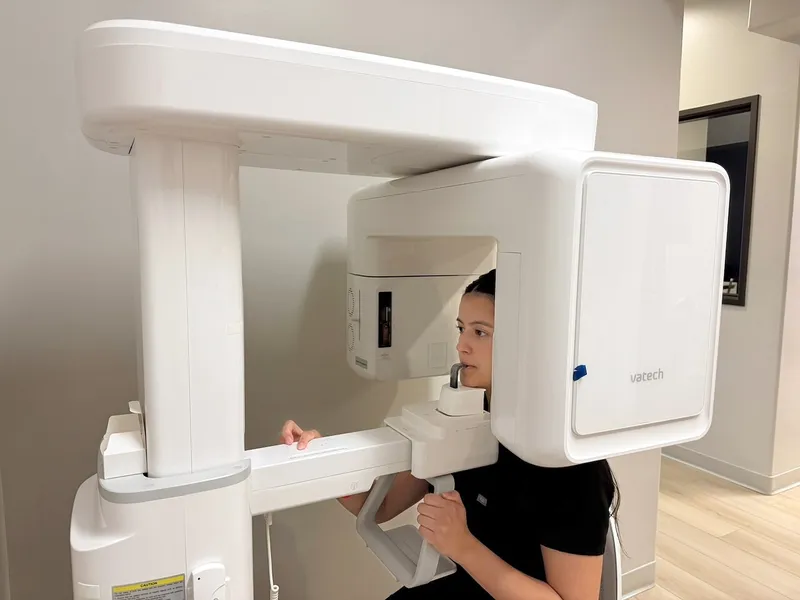
 Dental ImplantsA new root and tooth for a gap, planned on a low-radiation 3D scan.